Date: February 6, 2026
Ticker: Amazon.com, Inc. (NASDAQ: AMZN)
Introduction
On the morning of February 6, 2026, the market sent a clear and jarring message to Seattle: the "Efficiency Era" is officially over. Amazon.com, Inc. (NASDAQ: AMZN), a company that spent the better part of 2024 and 2025 aggressively trimming fat and regionalizing its logistics network, has pivoted back into a state of hyper-capital intensity. Following a Q4 2025 earnings report that missed on both top-line revenue and net margins, the stock plummeted nearly 9% in early trading.
The primary culprit was not a lack of growth, but rather the sheer scale of the bill for the future. CEO Andy Jassy stunned analysts by announcing a 2026 capital expenditure (Capex) guidance of $175 billion to $185 billion—a figure that exceeds the annual GDP of many sovereign nations. The market’s reaction reflects a growing "show-me-the-ROI" sentiment among investors who are beginning to fear that the generative AI arms race may be a bottomless pit for cash flow.
Historical Background
Founded in 1994 by Jeff Bezos as an online bookstore, Amazon has undergone more fundamental transformations than perhaps any other company in history. From the "Get Big Fast" mantra of the late 90s to the invention of the modern cloud via Amazon Web Services (AWS) in 2006, the company’s history is defined by its "Day 1" philosophy—a commitment to long-term thinking at the expense of short-term profits.
The transition from Bezos to Andy Jassy in 2021 marked a shift toward operational discipline. Jassy inherited a company that had overexpanded during the COVID-19 pandemic and spent the next three years correcting that course. By late 2024, Amazon had achieved record operating margins by optimizing its fulfillment network and cutting 27,000 corporate roles. However, as of today, the narrative has shifted again. Amazon is no longer just a retailer or a cloud provider; it is an infrastructure titan attempting to own the entire stack of the artificial intelligence economy.
Business Model
Amazon’s business model is a complex "flywheel" of four primary segments:
- Amazon Web Services (AWS): The company’s crown jewel and primary profit center. AWS provides on-demand cloud computing platforms and APIs. In 2025, it successfully moved from providing simple storage and compute to offering specialized AI hardware (Trainium/Inferentia) and software (Bedrock).
- Online Stores & Third-Party (3P) Services: The core e-commerce engine. While first-party sales remain huge, the higher-margin 3P services—where Amazon takes a cut of sales and provides fulfillment (FBA)—now account for over 60% of units sold.
- Advertising: A high-margin juggernaut that has become the company's third pillar. Amazon leverages its massive trove of consumer data to sell highly effective sponsored products and Prime Video ads.
- Subscription Services: Primarily Amazon Prime, which serves as the "glue" for the ecosystem, ensuring customer loyalty through fast shipping, streaming, and groceries.
Stock Performance Overview
Over the last decade, AMZN has been a cornerstone of the "Magnificent Seven," though its path has been volatile:
- 10-Year Performance: Investors who held from 2016 have seen gains of approximately 750%, vastly outperforming the S&P 500.
- 5-Year Performance: The stock struggled with a "lost period" between 2021 and 2022 but surged in 2023-2024 as the AI narrative took hold, rising roughly 110% in that window.
- 1-Year Performance: Entering 2026, the stock was up 18% year-over-year, hitting an all-time high of $254 in November 2025. However, today’s 9% drop has wiped out nearly six months of gains, bringing the ticker back to the $170 range.
Financial Performance
The Q4 2025 earnings report revealed a company in the midst of a massive transition.
- Revenue: $182.4 billion, a 9% increase year-over-year, but below the $185.5 billion consensus.
- AWS Growth: AWS grew at 17%, a deceleration from the 19% seen in Q3, suggesting that competitors like Microsoft Azure are successfully chipping away at Amazon’s lead in the AI training space.
- Operating Income: $12.1 billion, which missed estimates as the cost of building out the "Project Rainier" AI clusters began to hit the bottom line.
- The Capex Bombshell: The guidance of $175B–$185B for 2026 is the largest single-year investment in corporate history. For context, this is nearly double Amazon’s total Capex from just three years ago.
Leadership and Management
Andy Jassy’s leadership is currently under the microscope. While he earned high marks for the "Efficiency Era" of 2023-2024, his current strategy is a high-stakes bet on vertical integration. Jassy’s "manager-to-contributor" ratio reduction and his flattening of the corporate hierarchy were designed to make Amazon "act like a startup" again. However, the decision to spend $180 billion in a single year suggests a "Bet the House" mentality that has unsettled the more conservative elements of the institutional investor base. CFO Brian Olsavsky has defended the spend, citing "unprecedented demand" for GenAI inference, but the lack of immediate revenue offsets in the Q4 report has created a credibility gap.
Products, Services, and Innovations
The focus of Amazon’s innovation is now centered on the "Three-Tier AI Stack":
- Infrastructure: The launch of Trainium3 chips in late 2025 was intended to reduce reliance on Nvidia. Early benchmarks show a 40% cost-to-performance improvement for training large language models.
- Bedrock: This platform allows customers to build AI apps using models from Anthropic, Meta, and even OpenAI (following the 2025 partnership).
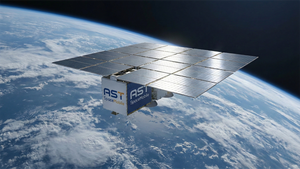
- Project Kuiper: Amazon’s satellite internet constellation. While often overshadowed by AI, Kuiper represents a multi-billion dollar bet on global connectivity that is finally nearing commercial launch in late 2026.
- Rufus & Alexa+: The AI-powered shopping assistant and the "agentic" version of Alexa have seen high engagement, but monetization remains in the experimental phase.
Competitive Landscape
Amazon faces a "war on all fronts":
- In Cloud: Microsoft (NASDAQ: MSFT) and Google (NASDAQ: GOOGL) have used their first-mover advantage in LLMs (ChatGPT and Gemini) to capture enterprise mindshare.
- In Retail: The rise of Temu and TikTok Shop has forced Amazon to lower prices and increase marketing spend, squeezing retail margins.
- In Logistics: Walmart (NYSE: WMT) has leveraged its physical store footprint to offer a competitive grocery and rapid-delivery service that rivals Prime in many suburban markets.
Industry and Market Trends
The broader industry is moving from "Training" to "Inference." In 2024 and 2025, companies spent billions training models. In 2026, the focus is on running those models efficiently at scale. Amazon’s massive Capex is a bet that inference—the actual use of AI by consumers and businesses—will require a level of data center capacity that only a few companies on earth can provide. Furthermore, the "regionalization" of supply chains continues to be a macro driver, as Amazon moves closer to a "same-hour" delivery model in major metro areas.
Risks and Challenges
- Capital Overhang: The $180 billion Capex plan threatens to turn Free Cash Flow (FCF) negative for the first time in years, potentially leading to credit rating pressure.
- Regulatory Scrutiny: The FTC’s ongoing "Big Tech" antitrust suit remains a dark cloud. Any forced divestiture of AWS would fundamentally break the Amazon flywheel.
- Execution Risk: Building data centers and launching satellites (Kuiper) are physically intensive and prone to delays. Any slippage in the Kuiper launch timeline or Trainium3 yields could be catastrophic.
Opportunities and Catalysts
- The OpenAI Pivot: The landmark 2025 agreement to host OpenAI workloads on AWS has the potential to bring a massive influx of high-margin traffic to the cloud segment.
- Prime Video Monetization: Advertising on Prime Video is still in its early innings. If Amazon can successfully transition its 200 million+ Prime members into an ad-supported tier, the revenue potential is billions in high-margin growth.
- Supply Chain as a Service: Amazon is increasingly opening its logistics network to non-Amazon sellers (Buy with Prime), turning a cost center into a massive revenue generator.
Investor Sentiment and Analyst Coverage
Wall Street is currently divided. Bullish analysts (e.g., Goldman Sachs, JP Morgan) maintain "Buy" ratings, arguing that the Capex is a "generational land grab" that will secure Amazon's dominance for 20 years. Conversely, bearish voices are growing, with some comparing the current AI spend to the overcapacity of the fiber-optic boom in 2000. Institutional ownership remains high (~60%), but today’s sell-off was fueled by heavy volume from hedge funds that are rotating into "value" sectors as the AI trade becomes increasingly expensive.
Regulatory, Policy, and Geopolitical Factors
The geopolitical landscape for 2026 is fraught with risk. The "Chip Wars" with China have made the procurement of specialized components more expensive. Domestically, the debate over AI safety and copyright could lead to new regulations that increase the compliance costs for AWS. Furthermore, the European Union's Digital Markets Act (DMA) continues to challenge Amazon's ability to self-preference its products, potentially capping the growth of its private-label brands.
Conclusion
Amazon’s Q4 earnings and the subsequent stock price decline on February 6, 2026, mark a pivotal moment. The company has moved beyond the "low-hanging fruit" of operational efficiency and is now asking investors to fund a massive, high-risk infrastructure build-out. For the long-term investor, the thesis remains that Amazon is the only company with the scale to win the AI infrastructure, logistics, and retail trifecta. However, for the next 12 to 18 months, the stock is likely to remain under pressure as the market waits for the first signs of a return on its $180 billion investment. Investors should watch AWS operating margins and the progress of Project Kuiper as the primary indicators of whether this gamble is paying off or if Amazon has finally found a project too big even for its massive balance sheet.
This content is intended for informational purposes only and is not financial advice.