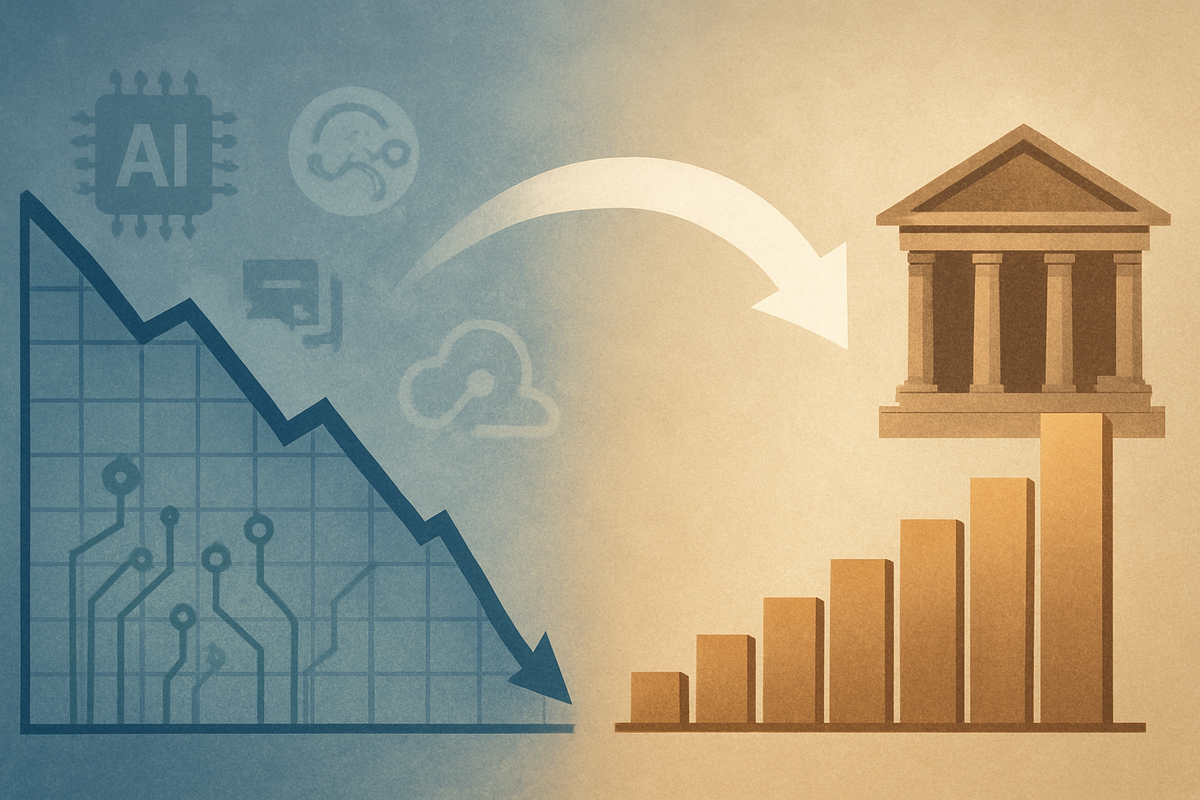
The technology-heavy Nasdaq Composite, a bellwether for the innovation sector, has recently experienced a significant and decisive downward move, marking a sharp recalibration in market sentiment as of December 15, 2025. This downturn, a stark contrast to the robust upward momentum seen earlier in the year, is primarily fueled by intensifying "AI bubble" fears, a series of disappointing corporate earnings and guidance from key tech players, and a notable "Great Rotation" of capital out of speculative growth stocks into more stable value plays. The immediate implications are profound, signaling an end to the narrow market leadership dominated by a handful of tech giants and ushering in an era of increased scrutiny on valuations and tangible returns for technology companies.
This market shift indicates a crucial inflection point, particularly for technology stocks that have enjoyed years of unprecedented growth. Investors are increasingly demanding sustainable business models and clear monetization pathways, moving away from the "growth at all costs" mentality that previously propelled valuations to dizzying heights. The divergence between the surging Dow Jones Industrial Average and the slumping Nasdaq highlights a broader market rebalancing, suggesting a potential shift in leadership and a more diversified investment landscape as 2026 approaches.
Unpacking the December Downslide: AI Bubble Fears and Earnings Reality Checks
The recent decisive downward move in the Nasdaq Composite can be traced to a potent combination of factors that converged in early to mid-December 2025. Foremost among these is the escalating concern over an "AI bubble," a sentiment that gained significant traction as the year progressed and culminated in a wave of panic selling. The first ten days of December witnessed the Nasdaq Composite's worst two-week performance in five years, plummeting over 12%, with highly speculative AI stocks often seeing their values cut by 30-50% or more, and even established tech giants experienced declines of 15-20%. This widespread correction underscores a growing investor skepticism about the sustainability of current AI valuations.
Compounding these "AI bubble" fears were a series of disappointing corporate earnings reports and cautious guidance from major technology companies. Oracle (NYSE: ORCL), for instance, delivered an earnings report in December 2025 that revealed lower-than-expected cloud revenue growth. More alarmingly for investors, Oracle projected a staggering 40% increase in AI-related capital expenditure to $50 billion for 2026, raising concerns about its ballooning debt and the uncertain timeline for returns on such massive AI investments. This report served as a "barometer for artificial-intelligence risk," sending its shares tumbling and casting a shadow over the sector. Similarly, Broadcom (NASDAQ: AVGO), despite beating estimates, flagged margin pressure due to a rising mix of lower-margin custom AI chips, leading to a significant drop in its stock.
Further exacerbating the tech sector's woes were weaker-than-expected revenue guidance from Cognitron Inc. (NASDAQ: CGTR) in September, citing slower enterprise adoption and increased competition, and a downgrade of QuantumChips Corp. (NYSE: QCHP) from "Strong Buy" to "Hold" in early November due to unsustainable valuations and rising semiconductor inventory. These signals collectively pointed to a potential slowdown in the AI chip market and triggered broader sell-offs. While the Federal Reserve did implement a 25 basis point rate cut in December, intended to ease monetary policy, this positive catalyst was quickly overshadowed by the tech sector's specific concerns, failing to stem the tide of the downturn.
The confluence of these factors has initiated what market observers are calling a "Great Rotation" of capital. Investors are systematically pulling funds from high-flying, growth-oriented AI and technology stocks and reallocating them into more stable, fundamentally sound "value plays." This strategic shift indicates a profound recalibration of market leadership, moving away from the narrow dominance of a few tech giants that characterized much of the earlier part of 2025.
Winners and Losers in the Tech Sector's Reckoning
The recent decisive downturn in the Nasdaq Composite and the broader "Great Rotation" of capital are creating a clear delineation between potential winners and losers within the technology sector and beyond. Companies with inflated valuations based primarily on speculative AI potential are facing significant headwinds, while those demonstrating tangible returns, robust business models, or operating in less speculative segments may find themselves in a relatively stronger position.
The primary "losers" in this environment are likely to be highly valued AI companies, particularly those with exorbitant Price-to-Earnings (P/E) ratios that far exceed market averages. Companies like Palantir Technologies (NYSE: PLTR), Advanced Micro Devices (NASDAQ: AMD), and even Broadcom (NASDAQ: AVGO) – despite its solid performance – are facing intense scrutiny regarding their valuations. The market is becoming less forgiving of heavy investments in AI infrastructure that lack immediate or clear monetization pathways, as exemplified by Oracle's recent stock performance following its substantial AI capital expenditure projections. Start-ups and smaller, less established AI firms that relied heavily on investor enthusiasm for future potential without a strong revenue base are particularly vulnerable to this shift in sentiment.
Conversely, the "Great Rotation" is benefiting sectors outside of speculative tech, particularly traditional "value plays" and companies with strong fundamentals and consistent cash flows. Within the tech sphere, however, there are nuanced opportunities. Certain technology hardware and infrastructure segments appear to be showing renewed momentum. The upcoming Nasdaq 100 reconstitution, effective December 22, will see the addition of companies like Seagate Technology (NASDAQ: STX) and Western Digital Corp. (NASDAQ: WDC), both of which have seen gains of over 200% in 2025. This reflects selective investor interest in essential hardware components that underpin the broader digital economy, regardless of the immediate AI hype cycle. These companies provide the foundational technology, making them less susceptible to the speculative swings of pure AI software or service providers.
Furthermore, established tech giants with diversified revenue streams and proven profitability, even if they experienced initial declines, may be better positioned to weather the storm. Companies that can demonstrate a clear path to integrating AI into their existing, profitable business models without over-leveraging or over-spending on speculative ventures will likely be favored. This period of recalibration will compel many tech companies to re-evaluate their investment strategies, focusing more on efficiency, profitability, and sustainable growth rather than solely on market share or speculative future potential.
Broader Implications: A Shifting Market Landscape
The recent decisive downward move in the Nasdaq Composite is not merely a sector-specific correction; it signals a profound shift in the broader market landscape, with significant implications for industry trends, competitive dynamics, and even regulatory considerations. This event marks a critical inflection point, moving away from the concentrated growth driven by a handful of "Magnificent Seven" tech giants towards a more diversified and perhaps more cautious investment environment.
One of the most striking wider significances is the growing intramarket divergence. As the Nasdaq Composite grappled with its slump, the Dow Jones Industrial Average surged to record highs as of mid-December 2025, reflecting robust strength in traditional, value-oriented sectors. This stark contrast underscores the "Great Rotation" of capital, where investors are actively reallocating funds from overvalued growth segments into more stable, fundamentally sound equities. This indicates a potential shift in market leadership, challenging the narrative of tech dominance that has prevailed for much of the past decade. The S&P 500 Equal Weight, Dow Jones, and Russell 2000 all hitting fresh all-time highs recently, even amidst the tech pullback, further solidifies this trend.
The event also has significant ripple effects on competitors and partners within the tech ecosystem. Companies that are heavily reliant on partnerships with or investments from the now-scrutinized AI and growth tech firms may face increased pressure. Venture capital funding for highly speculative AI start-ups could become scarcer, demanding clearer business plans and faster paths to profitability. This recalibration could also foster a more competitive environment, forcing companies to innovate more efficiently and differentiate their offerings beyond mere AI integration. Furthermore, the increased scrutiny on tech valuations might lead to a slowdown in M&A activities involving highly priced targets.
From a regulatory or policy perspective, this market correction could bring renewed attention to antitrust concerns and the concentration of power within the tech sector. If the "AI bubble" fears lead to a more fragmented or competitive AI landscape, it might alleviate some immediate regulatory pressures. However, the sheer scale of investment in AI infrastructure, as seen with Oracle's $50 billion projection, could still prompt discussions around national competitiveness, data privacy, and ethical AI development, potentially leading to new guidelines or regulations in the coming years. Historically, periods of market exuberance followed by sharp corrections often lead to increased calls for regulatory oversight, aiming to prevent future speculative bubbles.
Comparing this to historical precedents, the current situation bears some resemblance to the dot-com bust of the early 2000s, where inflated valuations for internet companies, often lacking clear profitability, eventually corrected sharply. While the underlying technology (AI) and market maturity are different, the pattern of speculative fervor giving way to a demand for tangible returns is a recurring theme in financial history. This suggests that the market is currently undergoing a necessary cleansing, distinguishing between genuinely transformative technologies with viable business models and those propelled primarily by hype.
What Comes Next: Navigating the Tech Landscape
As the market grapples with the fallout from the Nasdaq's recent downturn, several scenarios and possibilities emerge for the short-term and long-term trajectory of technology stocks and the broader financial landscape. The immediate future will likely be characterized by continued volatility and a discerning eye from investors, while the long-term outlook will hinge on how tech companies adapt to this new era of scrutiny.
In the short-term, we can expect continued valuation scrutiny across the tech sector, particularly for companies with high P/E ratios and those heavily reliant on future AI potential rather than current profitability. This could lead to further price corrections for individual stocks and potentially sector-wide underperformance for speculative segments of the tech market. Investors will be closely watching upcoming earnings reports for signs of sustainable growth, efficient capital allocation, and clear monetization strategies for AI investments. The "Great Rotation" is likely to persist, with capital continuing to flow into value-oriented sectors and potentially into specific, less speculative sub-sectors within tech, such as infrastructure and hardware providers with strong fundamentals.
For the long-term, tech companies will need to implement significant strategic pivots or adaptations. The era of "growth at all costs" appears to be waning, replaced by a demand for profitability, efficiency, and demonstrable return on investment. This means a greater focus on cost management, disciplined R&D, and a clear articulation of how AI investments translate into tangible business value. Companies that can successfully integrate AI into their core operations to enhance productivity, reduce costs, or unlock new, profitable revenue streams will be the long-term winners. Those that continue to chase speculative AI ventures without a solid business foundation may struggle to attract or retain investor confidence.
This period also presents both market opportunities and challenges. The challenge lies in navigating a more cautious investor environment and potentially slower growth for some segments. However, for astute investors, the corrections could create opportunities to acquire high-quality tech companies with strong fundamentals at more reasonable valuations. For companies themselves, the opportunity lies in refining their business models, focusing on sustainable innovation, and building resilient operations that can withstand market fluctuations. The demand for tangible returns will foster a healthier, more competitive tech ecosystem in the long run, rewarding genuine innovation and sound business practices.
Potential scenarios range from a "soft landing" where the tech sector gradually stabilizes and re-establishes growth on more sustainable foundations, to a more protracted period of consolidation and shake-out, especially among less established or highly leveraged AI firms. The ultimate outcome will depend on macroeconomic factors, further Federal Reserve policy decisions, and critically, the ability of tech companies to demonstrate real value and profitability from their AI endeavors.
Wrap-up: Recalibration and the Road Ahead for Tech
The recent decisive downward move in the Nasdaq Composite serves as a powerful reminder of the cyclical nature of financial markets and the inherent risks associated with speculative bubbles. The market's recalibration, driven by "AI bubble" fears, disappointing earnings, and a significant "Great Rotation" of capital, marks a pivotal moment for the technology sector and the broader investment landscape as of December 15, 2025.
The key takeaways from this event are clear: the era of unrestrained growth at any cost for tech companies, particularly in the AI space, is likely over. Investors are now demanding tangible returns, robust business models, and clear pathways to profitability. The divergence between the surging Dow and the slumping Nasdaq highlights a fundamental shift in market leadership, signaling a move away from the concentrated dominance of a few tech giants towards a more diversified and value-conscious investment approach. This rebalancing is a healthy, albeit painful, process that aims to correct inflated valuations and foster more sustainable growth.
Moving forward, the market will likely remain volatile as it continues to digest these shifts. Tech companies that can demonstrate disciplined capital allocation, efficient innovation, and a clear return on their AI investments will be better positioned for long-term success. This period will separate the truly transformative AI applications with viable business models from those that were largely fueled by hype. The broader market, while experiencing a tech pullback, shows resilience in other sectors, suggesting a re-allocation of capital rather than a wholesale market collapse.
Investors should watch for several key indicators in the coming months: the continued performance of value stocks versus growth stocks, further earnings reports from major tech players for signs of improved guidance and profitability, and any shifts in Federal Reserve policy that could impact liquidity and investor sentiment. Special attention should also be paid to how tech companies adapt their strategies, focusing on efficiency and sustainable growth. The market is entering a new phase, demanding a more discerning and fundamentals-driven approach to investing in the technology sector.
This content is intended for informational purposes only and is not financial advice