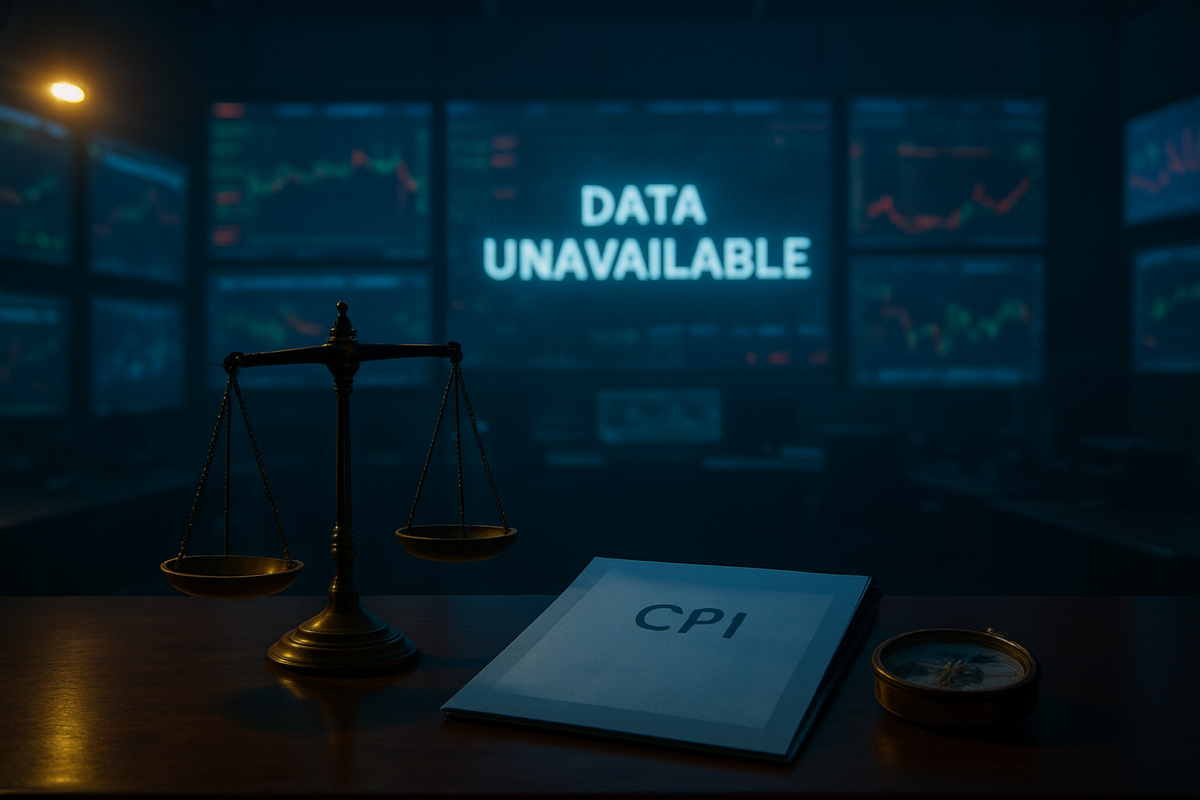
The United States economy is finally emerging from a period of unprecedented statistical darkness. Following the conclusion of the longest government shutdown in American history—a 43-day impasse that paralyzed Washington from October 1 to November 12, 2025—the release of the November Consumer Price Index (CPI) data today, December 18, 2025, has provided the first clear look at the nation's inflationary health in over two months. The "data blackout" forced the Federal Reserve and Wall Street to operate on guesswork, private-sector proxies, and historical trends, creating a vacuum that tested the resilience of the global financial system.
The immediate implications of this reporting gap have been profound. For the first time in the history of the Bureau of Labor Statistics (BLS), the October CPI report was canceled entirely because field agents were unable to collect price data during the shutdown. This left the Federal Open Market Committee (FOMC) to make its December interest rate decision while "flying blind," relying on a "bridge" report that skipped an entire month of economic activity. While the markets have shown surprising resilience, the lack of transparency has introduced a new layer of "information risk" that investors are still struggling to price.
The Longest Silence: A Timeline of the Great Impasse
The crisis began on October 1, 2025, when a legislative deadlock over the 2026 fiscal year budget reached a breaking point. The core of the dispute centered on aggressive disagreements regarding Affordable Care Act (ACA) health insurance subsidies and Medicaid funding. As the clock struck midnight, approximately 900,000 federal workers were furloughed, and the machinery of the U.S. government ground to a halt. Unlike previous short-term funding gaps, this standoff persisted for six weeks, shattering the previous record for the longest shutdown.
The impact on economic reporting was immediate and severe. The September CPI report, originally scheduled for mid-October, was delayed until October 24. More critically, the October Jobs Report and the October CPI were scrapped entirely. The BLS stated that because prices were not tracked in real-time during the peak of the shutdown, any retrospective data would be statistically unreliable. This forced the agency to release a combined "bridge" report today, December 18, which showed a two-month inflation change rather than the traditional month-over-month update.
Market participants were left in a state of high-stakes speculation. Major financial institutions, including JPMorgan Chase & Co. (NYSE: JPM) and The Goldman Sachs Group, Inc. (NYSE: GS), scrambled to fill the void by deploying proprietary "nowcasting" models that tracked credit card spending and private-sector payroll data. However, these proxies could not fully replicate the authoritative weight of official government statistics, leading to a volatile "guessing game" in the bond market where Treasury Inflation-Protected Securities (TIPS) faced significant liquidity hurdles.
Winners and Losers in the Information Vacuum
In the absence of official data, the market's "flight to quality" and "flight to tech" became the defining themes. NVIDIA Corporation (NASDAQ: NVDA) and other mega-cap technology firms emerged as winners, as investors pivoted toward companies with massive cash reserves and growth trajectories that seemed decoupled from immediate U.S. fiscal policy. The S&P 500 managed a 3% gain in October, driven largely by the AI sector, as traders bet that the shutdown would eventually force the Federal Reserve into a more dovish stance.
Conversely, the "losers" were found in sectors most dependent on government stability and regulatory clarity. Lockheed Martin Corporation (NYSE: LMT) and other defense contractors faced uncertainty as contract payments were delayed and new authorizations were frozen. The healthcare sector also took a hit; Pfizer Inc. (NYSE: PFE) issued disappointing guidance for 2026 just this week, citing the broader economic instability and the suspension of key regulatory approvals during the 43-day freeze. Small-cap stocks, represented by the Russell 2000, significantly lagged behind their larger peers, as these companies are more sensitive to the immediate "chilling effect" the shutdown had on consumer confidence.
Gold also emerged as a primary beneficiary of the chaos. As the legislative impasse dragged into November, the precious metal reached a historic all-time high of over $4,300 per ounce. Investors sought a safe haven not just from inflation, but from the perceived dysfunction of the U.S. political system. The SPDR Gold Shares (NYSE Arca: GLD) saw massive inflows as the "data vacuum" made traditional currency and bond valuations increasingly difficult to justify.
A "Data-Dependent" Fed Without Data
The wider significance of this event lies in the challenge it posed to the Federal Reserve's "data-dependent" philosophy. Since the post-pandemic inflation surge, Chair Jerome Powell has consistently emphasized that the Fed would move only when the data provided a clear path. The 2025 shutdown stripped that path away. In an unprecedented move on December 10, the Fed cut interest rates by 25 basis points despite the lack of an October CPI report. Powell described the move as "risk management," an attempt to provide a cushion for a labor market that appeared to be softening based on anecdotal evidence.
This event fits into a broader trend of increasing political polarization affecting global financial stability. The shutdown has raised questions about the reliability of the U.S. as a "risk-free" benchmark. The volatility in the TIPS market, which relies directly on CPI for pricing, highlighted how a lack of government reporting can impair the functionality of sophisticated financial instruments. Historically, the 2025 shutdown will be compared to the 2018-2019 impasse, but the total cancellation of core inflation reports marks a new and more dangerous precedent for market transparency.
Furthermore, the "hangover effect" of the shutdown is expected to distort economic figures well into the first quarter of 2026. Economists warn that the November and December data may be "noisy" due to the sudden surge in government spending post-reopening and the backlog of administrative tasks. This ripple effect means that the Fed may not have a "clean" read on the economy until the spring of 2026, keeping market uncertainty elevated for months to come.
The Road Ahead: 2026 and Beyond
As we move toward 2026, the market must adapt to a "new normal" of fiscal volatility. In the short term, the release of today's cooler-than-expected November CPI—coming in at 2.7% year-over-year—has provided a relief rally, suggesting that inflation continued to moderate despite the political noise. However, the long-term challenge remains: how to value assets when the primary source of economic truth is subject to political hostage-taking.
Strategic pivots are already underway. Institutional investors are likely to increase their reliance on alternative data providers like MSCI Inc. (NYSE: MSCI) and private payroll processors to hedge against future government reporting failures. We may also see a push for "fallback provisions" in financial contracts that reference CPI, ensuring that markets can continue to function even if the BLS is shuttered. The Fed, meanwhile, has signaled a "wait-and-see" approach for its January meeting, projecting only one additional rate cut as they wait for full "economic visibility" to return.
Summary and Investor Outlook
The 43-day shutdown of 2025 was more than a political stunt; it was a systemic shock that blinded the world's most important central bank and forced a fundamental re-evaluation of market data. The key takeaways for investors are the resilience of mega-cap tech in times of fiscal chaos and the vital role of "safe haven" assets like gold when political institutions falter.
Moving forward, the market appears to be on a recovery path, but the "data hangover" will persist. Investors should watch for the January employment report, which will be the first "clean" jobs data in months, and monitor the 10-year Treasury yield, which currently sits at 4.13%. While the immediate crisis has passed, the 2025 shutdown has left a lasting scar on the market’s trust in the consistency of federal reporting—a factor that will likely be priced into "political risk" premiums for years to come.
This content is intended for informational purposes only and is not financial advice.