SAN FRANCISCO – As of February 6, 2026, the global financial landscape has shifted into a new, higher gear, defined by what analysts are calling the "AI Capital Expenditure Supercycle." A series of blockbuster reports from leading financial institutions and technology giants has confirmed a staggering reality: global spending on data centers and artificial intelligence infrastructure is now on a locked-in trajectory to reach $4 trillion by 2030. This massive reallocation of global wealth is fundamentally rewriting the rules of the semiconductor market and sending shockwaves through the energy sector.
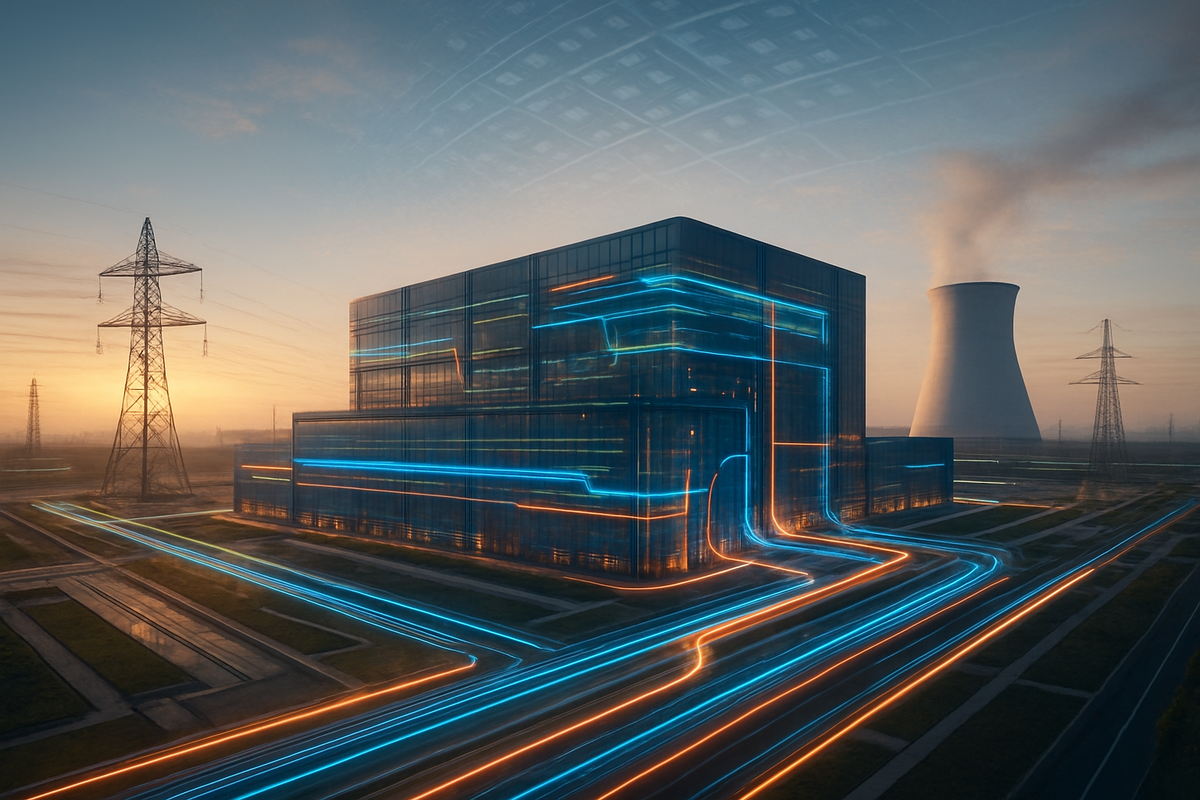
The immediate implications are profound. This $4 trillion "physicality" shift—a term coined by Barclays to describe the transition from software to heavy hardware infrastructure—is now estimated to contribute a full 1% to total U.S. GDP growth. However, this growth comes at a steep price. As hyperscalers and sovereign nations race to build "AI factories," the world has hit a "Power Wall," where the availability of electricity and advanced memory chips has replaced logic-processor throughput as the primary bottleneck for the digital age.
The Dawn of the $4 Trillion Era
The current mania reached a fever pitch this week as consensus formed around the $4 trillion figure. Originally proposed as a bold "best-case scenario" by Nvidia Corp. (NASDAQ: NVDA) CEO Jensen Huang in late 2024, the estimate has since been validated by McKinsey & Company and Goldman Sachs. The logic is simple yet expansive: the world’s existing $1 trillion data center install base is being entirely replaced and expanded to support accelerated computing. Industry experts note that we are no longer just building servers; we are building a new class of industrial infrastructure.
The timeline leading to this moment was accelerated by the 2025 "Sovereign AI" rush, where nations began treating computational power as a critical national resource akin to oil. Hyperscalers like Microsoft Corp. (NASDAQ: MSFT), Alphabet Inc. (NASDAQ: GOOGL), Meta Platforms Inc. (NASDAQ: META), and Amazon.com Inc. (NASDAQ: AMZN) are expected to spend over $345 billion in 2026 alone. This "global construction rush" has triggered an unprecedented surge in demand for everything from specialized cooling systems to high-voltage transformers. Initial market reactions in early 2026 have been a mix of awe and anxiety, as investors cheer the massive revenues for chipmakers while worrying about the inflationary pressure on energy and raw materials.
Winners and Losers in the Infrastructure Gold Rush
In this supercycle, the "winners" are those who control the physical limits of the expansion. Taiwan Semiconductor Manufacturing Co. (NYSE: TSM) remains the undisputed king of the foundry space, but the spotlight has shifted toward its CoWoS (Chip on Wafer on Substrate) advanced packaging capacity. As TSMC works to double this capacity again in 2026, it is joined by memory giants like Micron Technology (NASDAQ: MU) and SK Hynix (KRX: 000660), both of whom have announced that their entire 2026 supply of High-Bandwidth Memory (HBM) is already sold out. Samsung Electronics (OTC: SSNLF) has also seen its market cap soar as it triples HBM production to meet the demands of Nvidia’s next-generation "Rubin" architecture.
However, the "Power Wall" has created a new class of AI winners: the utilities. Constellation Energy (NASDAQ: CEG) and Vistra Corp. (NYSE: VST) have seen their valuations skyrocket as they sign "behind-the-meter" deals to provide dedicated nuclear power to data center campuses. Vertiv Holdings (NYSE: VRT) has similarly emerged as a vital player, with its liquid cooling systems becoming mandatory for the high-density racks that now define the industry. On the losing side, consumer electronics manufacturers are feeling the squeeze; the "cannibalization" of DRAM capacity for AI use has led to a 40-60% price hike in memory for PCs and smartphones, potentially stifling a recovery in the broader tech consumer market.
A Structural Shift in Global Industry
The significance of this $4 trillion forecast extends far beyond the balance sheets of tech firms. It represents a broader industry trend where "digital" and "physical" infrastructure are merging. Historically, the 1990s fiber-optic boom provides a precedent, but analysts at Goldman Sachs argue the current cycle is more sustainable because it is backed by the cash flows of the world's most profitable companies rather than speculative startups. Yet, the ripple effects are causing friction. In regions like Northern Virginia’s "Data Center Alley," wholesale energy prices have more than doubled since 2020, leading to a surge in "local energy price anxiety."
Regulatory and policy implications are also mounting. Governments are now forced to choose between supporting the AI boom and protecting residential energy costs. The PJM Interconnection, the largest grid operator in the U.S., saw capacity auction prices surge by over 800% in late 2025, with 63% of that increase attributed directly to data center demand. This has led to calls for new federal policies on grid modernization and expedited permitting for nuclear restarts. The era of cheap, abundant electricity for all may be a casualty of the race for artificial intelligence.
The Road to 2030: Scenarios and Strategic Pivots
Looking ahead to the remainder of 2026 and beyond, the market must prepare for a series of strategic pivots. In the short term, the transition to HBM4 memory will be the key technological milestone to watch. Long-term, the industry is moving toward "energy autonomy," where data center operators will not just consume power but will become power producers themselves, investing heavily in Small Modular Reactors (SMRs) and massive battery storage systems.
The primary challenge will be the potential for a "supply gap" in 2027 if grid infrastructure cannot keep pace with silicon production. We may see a scenario where the most valuable commodity in the world is not the AI chip itself, but the permit to connect a data center to a high-voltage power line. Companies that fail to secure long-term energy contracts today may find themselves "stranded" with high-end hardware but no way to turn it on. Market opportunities will likely emerge in "Edge AI," as developers look for ways to run models locally to bypass the power-hungry central data centers.
Navigating the Supercycle
The key takeaway for 2026 is that the AI revolution has moved from the laboratory to the power plant. The $4 trillion forecast is no longer a dream; it is a blueprint for the global economy. For investors, the focus must shift from searching for the "next Nvidia" to identifying the companies that facilitate the movement of electrons and the cooling of silicon. The market is moving into a phase of "forced growth," where the limits are physical—land, power, and specialized packaging—rather than just software innovation.
Moving forward, the lasting impact of this supercycle will be a permanently higher baseline for energy costs and a redesigned global supply chain for semiconductors. Investors should watch for upcoming Q2 earnings calls from the hyperscalers to see if their capital expenditure guidance continues to climb, and keep a close eye on the PJM capacity auctions and TSMC’s monthly revenue reports. The AI supercycle is here, and its foundation is being built with concrete, copper, and nuclear fuel.
This content is intended for informational purposes only and is not financial advice.