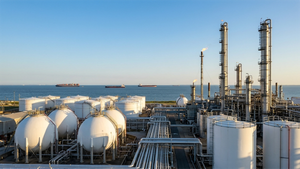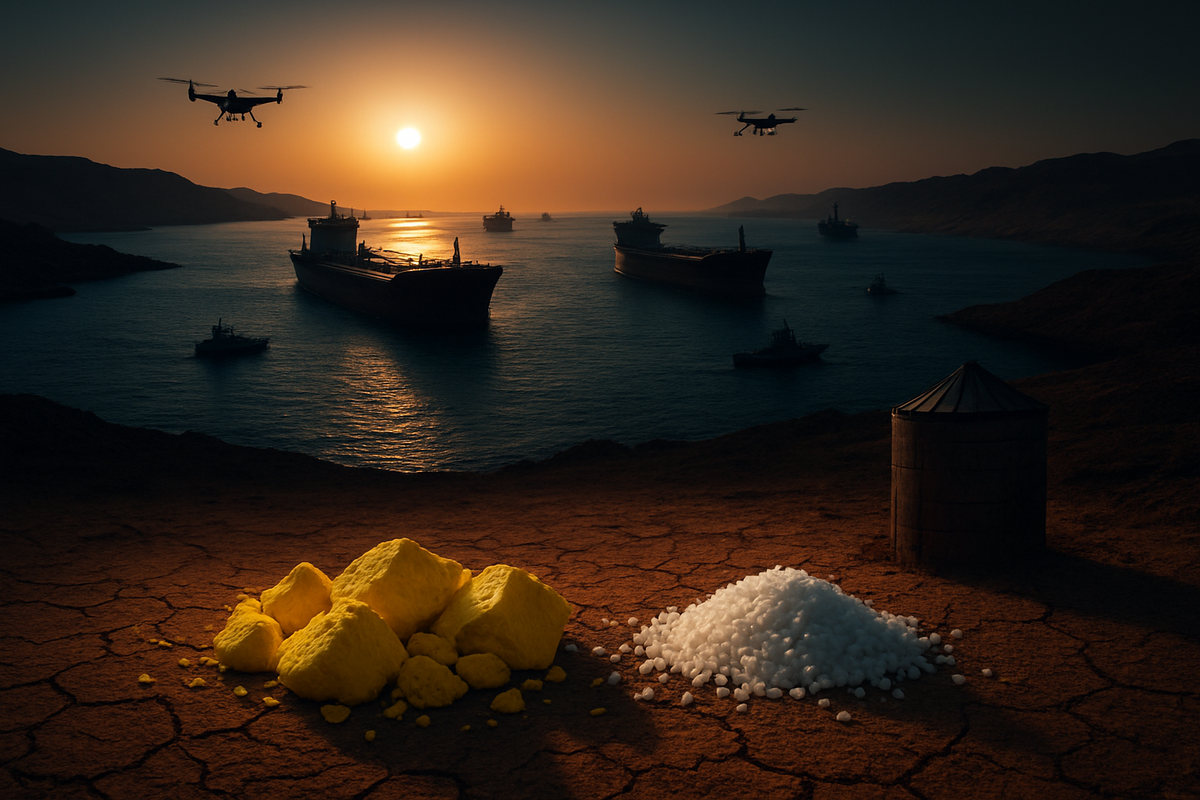
As of March 17, 2026, the global economy is grappling with a supply chain shock that few saw coming, yet every household will eventually feel. While the world's attention initially pivoted toward the spike in crude oil prices following the Iranian Revolutionary Guard Corps' (IRGC) blockade of the Strait of Hormuz on March 2, a far more insidious crisis has emerged in the shadows: the total paralysis of the global fertilizer trade. The "Invisible Fertilizer Crisis," as it is now being termed by market analysts, has severed the primary artery for 44% of global seaborne sulfur and 43% of the world's urea, sending shockwaves through the agricultural sector just as the critical 2026 Northern Hemisphere planting season begins.
The immediate implications are staggering. In just one week following the blockade, urea prices at the New Orleans (NOLA) import hub surged by 32%, jumping from $516 to over $680 per metric ton. This is not merely a logistical delay; it is a structural collapse of the inputs required to feed the planet. With the Strait of Hormuz effectively a "no-go" zone for commercial shipping due to layered denial strategies—including drone swarms and naval mines—the agricultural world is facing a deficit that cannot be filled by domestic production alone, threatening a global food security catastrophe by the time the 2026 harvest arrives.
A Week of Chaos: The Timeline of the Blockade
The crisis began in earnest on March 2, 2026, following a series of escalations in the Persian Gulf. In a move that caught global markets off guard, the IRGC declared the Strait of Hormuz closed to all traffic, citing "Operation Epic Fury," a retaliatory stance against Western and Israeli regional interests. Within 72 hours, over 200 vessels—many of them specialized bulk carriers—were stranded, unable to exit the Gulf or enter to pick up critical cargoes. Unlike oil, which can occasionally be rerouted via pipelines across Saudi Arabia, fertilizer components like urea and sulfur are primarily moved by sea, leaving no immediate alternative for the massive volumes produced in Qatar and the UAE.
Key players in the region, such as the Qatar Fertiliser Company (QAFCO) and Saudi Arabia’s SABIC, have been forced to declare force majeure as their storage facilities hit maximum capacity. The timing could not be worse for U.S. farmers. The "shipping lag" for Gulf-originated fertilizer is typically four to six weeks. With the blockade now entering its third week, the window for these nutrients to reach the American Midwest in time for the April and May planting window has effectively slammed shut. The market's reaction was swift and violent; fertilizer dealers across the Mississippi Delta and the corn belt have frozen price quotes, unable to predict where the ceiling for input costs might lie.
Market Winners and Losers: A Tale of Two Geographies
The impact on public companies has been bifurcated, creating a stark divide between those with domestic North American production and those reliant on global trade loops. CF Industries (NYSE: CF) has emerged as a primary beneficiary of the crisis. As a U.S.-based nitrogen producer that utilizes low-cost domestic natural gas, CF is insulated from the Strait of Hormuz blockade while benefiting from the massive surge in global urea and ammonia prices. Investors have flocked to the stock, which saw a 15% gain in the first ten days of the blockade, as the company’s domestic supply becomes the only reliable source for American farmers.
Conversely, The Mosaic Company (NYSE: MOS) faces a complex and challenging landscape. While Mosaic is a powerhouse in phosphate production, the "Invisible Crisis" highlights a critical vulnerability: sulfur. Sulfur is an essential input for producing Diammonium Phosphate (DAP) and Monoammonium Phosphate (MAP). With 44% of the world's seaborne sulfur supply currently locked behind the IRGC blockade, Mosaic is facing significant production headwinds. Analysts estimate that a prolonged shortage of sulfur could lead to a $250 million EBITDA hit for the company in the first half of 2026 alone, as they scramble to find alternative, more expensive sources of the yellow mineral.
Nutrien (NYSE: NTR) sits in a middle ground but leans toward the winning side. As the world’s largest producer of potash and a major nitrogen player in Canada, Nutrien provides a "safe haven" for agricultural investors. The company’s vertically integrated retail network in the U.S. gives it an edge in distributing what little supply remains, though even they are warning of logistical bottlenecks as rail and river transport systems are pushed to their limits to compensate for missing maritime imports. Meanwhile, international players like Yara International (OTC: YARIY) are struggling with the loss of Middle Eastern urea, which is essential for their European and Asian blending operations.
Wider Significance: From Nutrient Shortage to Food Insecurity
This event marks a significant departure from historical precedents like the 2022 fertilizer spike. While that crisis was driven by energy costs, the 2026 crisis is a physical availability crisis. The sheer volume of sulfur and urea passing through the Strait of Hormuz makes it a single point of failure for the global food system. This highlights a broader industry trend toward "nitrogen nationalism," where countries with domestic resources are likely to restrict exports to ensure their own food security, further exacerbating global price volatility.
The ripple effects are already being felt in the commodities markets. Corn, a nitrogen-intensive crop, has seen futures prices soar as farmers discuss "crop switching"—moving acreage from corn to soybeans, which require significantly less fertilizer. If this trend holds, the 2026 harvest will see a massive shortfall in corn production, driving up the cost of livestock feed and, eventually, consumer prices for meat and dairy. Regulators are now facing pressure to intervene, with some calling for the invocation of the Defense Production Act to prioritize fertilizer transport and manufacturing within the United States.
What Comes Next: Strategic Pivots and Scenarios
In the short term, the market remains in a state of "price discovery," where no one knows how high urea can go. If the blockade is not lifted by mid-April, the 2026 planting season for the Northern Hemisphere will be fundamentally altered. Farmers will be forced to apply sub-optimal levels of nutrients, which will inevitably lead to lower yields. Long-term, this crisis will likely accelerate the development of "Green Ammonia" and localized fertilizer production technologies that do not rely on centralized Middle Eastern hubs or massive sulfur imports.
Strategic pivots are already underway. Companies are looking at increasing sulfur recovery from domestic oil refining and exploring new phosphate mining opportunities in North Africa and North America that are less dependent on the Hormuz chokepoint. However, these are multi-year projects that offer no relief for the current crisis. The most likely scenario involves a period of extreme food inflation through the end of 2026 and into 2027, as the supply chain catches up to the reality of a fractured geopolitical landscape.
Final Assessment: What Investors Should Watch
The "Invisible Fertilizer Crisis" is a stark reminder that the modern world is built on a foundation of soil nutrients that are often taken for granted. For investors, the takeaway is clear: geographic location of production is now just as important as the commodity itself. The decoupling of the global fertilizer trade will continue to favor domestic producers like CF Industries and Nutrien, while creating extreme volatility for diversified players like Mosaic.
In the coming months, keep a close eye on the "corn-to-soybean" ratio and the weekly NOLA fertilizer price indices. Any further escalation in the Strait of Hormuz will only tighten the noose on global food supplies. This is no longer just a Middle Eastern geopolitical event; it is a fundamental shift in the economics of how we feed the world. The 2026 harvest is currently being decided in the waters of the Persian Gulf, and the results may be more painful than anyone anticipated.
This content is intended for informational purposes only and is not financial advice.