As of February 6, 2026, the traditional landscape of geopolitical analysis is undergoing a radical transformation. While cable news pundits and academic experts grapple with the nuances of diplomatic cables and legislative posturing, a more precise—and often more brutal—barometer has emerged: the prediction market. In the first week of February, these markets have become the primary "truth signal" for two of the most volatile issues of the year: the escalating military tensions with Iran and the ongoing paralysis of the U.S. government.
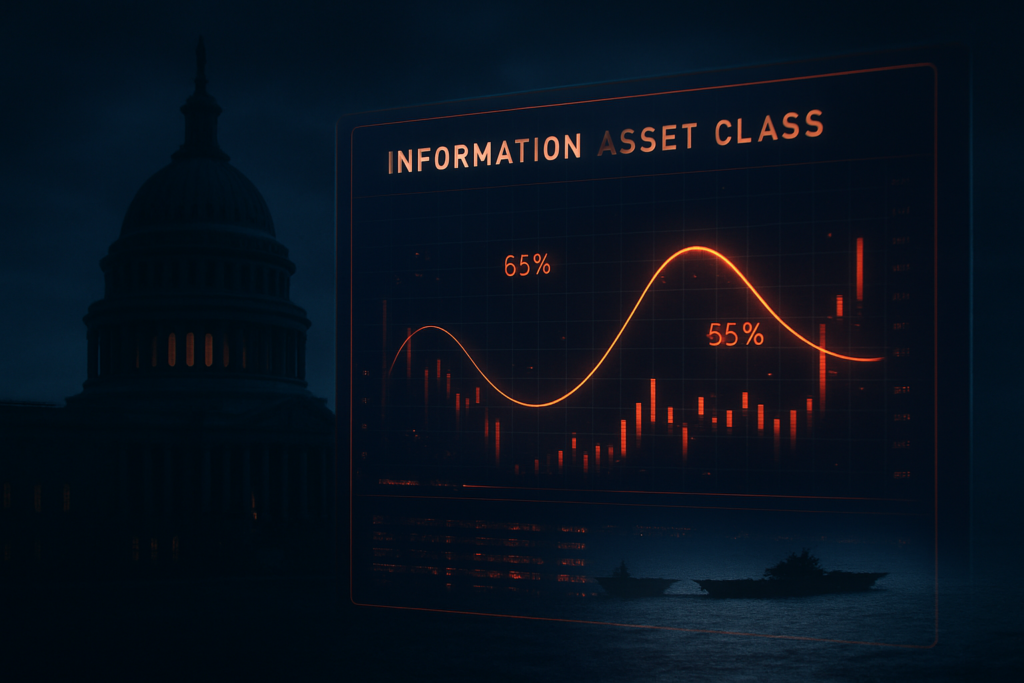
Currently, Polymarket and Kalshi are pricing the likelihood of another U.S. government shutdown at 65%, following a peak of 73% in late January. Simultaneously, the probability of a U.S. strike on Iran by mid-summer has climbed to a significant 55%, even as short-term traders "fade the heat" of an immediate conflict. This shift represents more than just a new way to gamble; it marks the maturation of prediction markets into a bona fide "Information Asset Class" that consistently outperforms traditional forecasting models by aggregating real-time data through the lens of financial risk.
The Market: What's Being Predicted
The current focus of global traders is split between the "Maximum Pressure" campaign in the Persian Gulf and the domestic budget gridlock in Washington. On Polymarket, the world’s largest decentralized prediction platform, the market for a "U.S. strike on Iran" has seen its volume swell past $182 million. While the odds for a strike by the end of February sit at a relatively low 29%, the "By June 30" contract is trading at 55%, suggesting that traders expect the current naval standoff to reach a breaking point within the next quarter.
Domestically, the U.S. government is currently navigating a partial shutdown that began on January 31, 2026. On Kalshi—the first regulated prediction market in the U.S.—the "Government Shutdown Extension" contract is the most liquid asset on the platform. Traders are currently pricing a 65% chance that the Department of Homeland Security (DHS) will remain unfunded past the upcoming February 14 deadline. These markets are no longer dominated by retail hobbyists; the involvement of major financial institutions and platforms like Interactive Brokers (NASDAQ: IBKR) and Robinhood (NASDAQ: HOOD), which both integrated prediction products in late 2024, has brought unprecedented liquidity and professional rigor to these forecasts.
Why Traders Are Betting
The 73% probability peak for the current shutdown wasn't driven by general political malaise, but by a specific catalyst known as the "Minneapolis Incident." Following the fatal shooting of a U.S. citizen, Alex Pretti, by Border Patrol agents in late January, Senate Democrats withdrew support for the DHS funding bill. Prediction market traders identified this "black swan" event instantly, spiking the shutdown odds 40 points higher in a single afternoon—hours before mainstream political analysts realized the legislative path forward had vanished.
In the geopolitical sphere, the 55% odds for an Iran strike are being influenced by the deployment of the USS Abraham Lincoln and its surrounding carrier strike group to the Gulf of Oman. However, a significant "whale" position—recently flagged by the tracking tool Unusual Whales—has placed $5 million on "No strike by February 28." These sophisticated traders are betting that the current naval posturing is a high-stakes negotiating tactic designed to force Iran back to the table in Oman, rather than a precursor to immediate kinetic action. This "fading the heat" strategy highlights the depth of analysis within these markets, where participants must distinguish between political theater and actual intent.
Broader Context and Implications
The rise of the "Information Asset Class" finds its roots in the 2024 U.S. Presidential Election. During that cycle, traditional pollsters and cable news networks labeled the race a "dead heat" or "too close to call" well into election night. In contrast, prediction markets had consistently priced a 60% probability of a Republican sweep for weeks. The most famous example was "Théo," a French trader who used "neighbor polling" techniques to identify hidden voter support, eventually netting over $80 million on Polymarket.
This historical accuracy has forced a shift in how the public and policymakers view these platforms. Unlike pundits, who face no financial penalty for being wrong, prediction market participants are incentivized to seek out the most accurate, unvarnished truth. This has led to a "virtuous cycle" of accuracy: as the markets prove more reliable, they attract more capital, which in turn leads to even more precise pricing. However, this success has also brought regulatory scrutiny. The Commodity Futures Trading Commission (CFTC) continues to monitor these markets for potential "insider trading" by government officials, especially following reports of high-accuracy trades originating from sensitive diplomatic zones.
What to Watch Next
The coming weeks will be a crucible for these markets. The February 14 budget deadline is the next major milestone for the government shutdown contracts. If a bipartisan deal regarding DHS reform remains elusive by February 12, expect the 65% odds to surge toward 90% as "lame duck" legislative sessions begin to stall.
Regarding Iran, the key signal will be the conclusion of the Oman diplomatic talks. If the Sultanate of Oman issues a "no progress" statement, the June 30 strike odds are expected to climb toward 70%. Traders are also closely watching the movement of the USS Abraham Lincoln; any repositioning toward the Strait of Hormuz will likely trigger an immediate price jump in the conflict-related contracts.
Bottom Line
The current pricing of a 73% shutdown peak and a 55% chance of mid-year conflict with Iran confirms that prediction markets have transcended their origins as "betting sites." They are now essential tools for navigating an increasingly complex world where traditional media often lags behind the reality of the ground. By forcing participants to "put their money where their mouth is," these markets strip away the partisan bias and "hopium" that often cloud expert analysis.
As we move through 2026, the success of these platforms as an "Information Asset Class" suggests that the most accurate news of the future won't be found in a headline, but in a price chart. Whether it’s the survival of a government or the start of a war, the smartest money in the room is already telling us what happens next.
This article is for informational purposes only and does not constitute financial or betting advice. Prediction market participation may be subject to legal restrictions in your jurisdiction.
PredictStreet focuses on covering the latest developments in prediction markets. Visit the PredictStreet website at https://www.predictstreet.ai/.