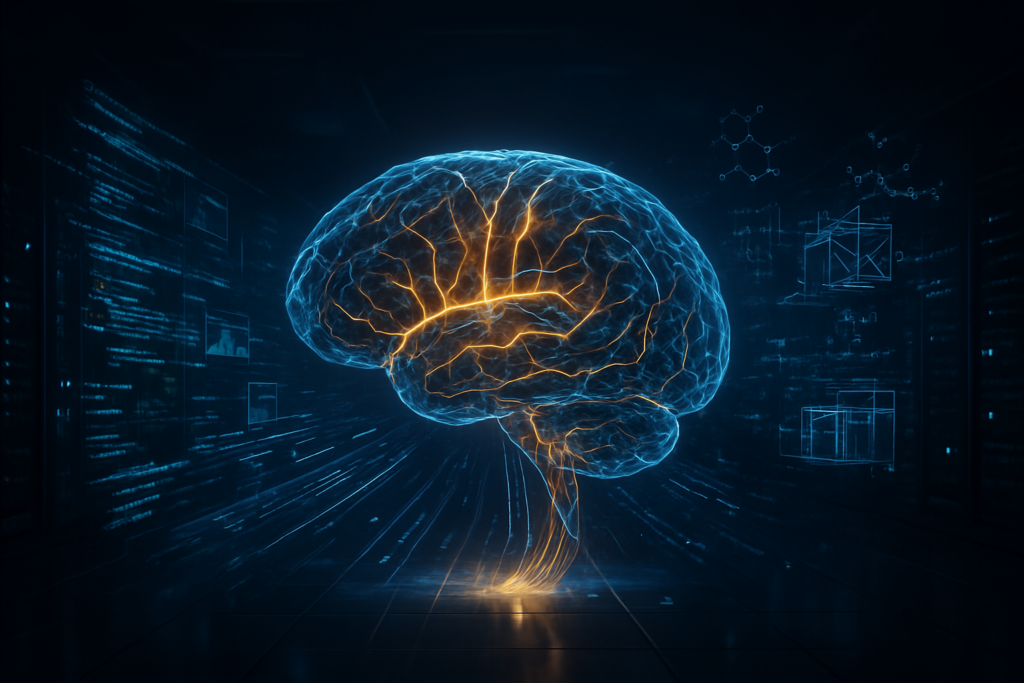
As of January 2026, the artificial intelligence landscape has undergone its most profound transformation since the launch of ChatGPT. OpenAI has officially moved its flagship model, GPT-5 (and its latest iteration, GPT-5.2), into full-scale production following a strategic rollout that began in late 2025. This release marks the transition from "generative" AI—which predicts the next word—to what OpenAI CEO Sam Altman calls a "Thinking Engine," a system capable of complex, multi-step reasoning and autonomous project execution.
The arrival of GPT-5 represents a pivotal moment for the tech industry, signaling the end of the "chatbot era" and the beginning of the "agent era." With capabilities designed to mirror doctoral-level expertise in specialized fields like molecular biology and quantum physics, the model has already begun to redefine high-end professional workflows, leaving competitors and enterprises scrambling to adapt to a world where AI can think through problems rather than just summarize them.
The Technical Core: Beyond the 520 Trillion Parameter Myth
The development of GPT-5 was shrouded in secrecy, operating under internal code names like "Gobi" and "Arrakis." For years, the AI community was abuzz with a rumor that the model would feature a staggering 520 trillion parameters. However, as the technical documentation for GPT-5.2 now reveals, that figure was largely a misunderstanding of training compute metrics (TFLOPs). Instead of pursuing raw, unmanageable size, OpenAI utilized a refined Mixture-of-Experts (MoE) architecture. While the exact parameter count remains a trade secret, industry analysts estimate the total weights lie in the tens of trillions, with an "active" parameter count per query between 2 and 5 trillion.
What sets GPT-5 apart from its predecessor, GPT-4, is its "native multimodality"—a result of the Gobi project. Unlike previous models that patched together separate vision and text modules, GPT-5 was trained from day one on a unified dataset of text, images, and video. This allows it to "see" and "hear" with the same level of nuance that it reads text. Furthermore, the efficiency breakthroughs from Project Arrakis enabled OpenAI to solve the "inference wall," allowing the model to perform deep reasoning without the prohibitive latency that plagued earlier experimental versions. The result is a system that can achieve a score of over 88% on the GPQA (Graduate-Level Google-Proof Q&A) benchmark, effectively outperforming the average human PhD holder in complex scientific inquiries.
Initial reactions from the AI research community have been a mix of awe and caution. "We are seeing the first model that truly 'ponders' a question before answering," noted one lead researcher at Stanford’s Human-Centered AI Institute. The introduction of "Adaptive Reasoning" in the late 2025 update allows GPT-5 to switch between a fast "Instant" mode for simple tasks and a "Thinking" mode for deep analysis, a feature that experts believe is the key to achieving AGI-like consistency in professional environments.
The Corporate Arms Race: Microsoft and the Competitive Fallout
The release of GPT-5 has sent shockwaves through the financial markets and the strategic boardrooms of Silicon Valley. Microsoft (NASDAQ: MSFT), OpenAI’s primary partner, has been the immediate beneficiary, integrating "GPT-5 Pro" into its Azure AI and 365 Copilot suites. This integration has fortified Microsoft's position as the leading enterprise AI provider, offering businesses a "digital workforce" capable of managing entire departments' worth of data analysis and software development.
However, the competition is not sitting still. Alphabet Inc. (NASDAQ: GOOGL) recently responded with Gemini 3, emphasizing its massive 10-million-token context window, while Anthropic, backed by Amazon (NASDAQ: AMZN), has doubled down on "Constitutional AI" with its Claude 4 series. The strategic advantage has shifted toward those who can provide "agentic autonomy"—the ability for an AI to not just suggest a plan, but to execute it across different software platforms. This has led to a surge in demand for high-performance hardware, further cementing NVIDIA (NASDAQ: NVDA) as the backbone of the AI era, as its latest Blackwell-series chips are required to run GPT-5’s "Thinking" mode at scale.
Startups are also facing a "platform risk" moment. Many companies that were built simply to provide a "wrapper" around GPT-4 have been rendered obsolete overnight. As GPT-5 now natively handles long-form research, video editing, and complex coding through a process known as "vibecoding"—where the model interprets aesthetic and functional intent from high-level descriptions—the barrier to entry for building complex software has been lowered, threatening traditional SaaS (Software as a Service) business models.
Societal Implications: The Age of Sovereign AI and PhD-Level Agents
The broader significance of GPT-5 lies in its ability to democratize high-level expertise. By providing "doctoral-level intelligence" to any user with an internet connection, OpenAI is challenging the traditional gatekeeping of specialized knowledge. This has sparked intense debate over the future of education and professional certification. If an AI can pass the Bar exam or a medical licensing test with higher accuracy than most graduates, the value of traditional "knowledge-based" degrees is being called into question.
Moreover, the shift toward agentic AI raises significant safety and alignment concerns. Unlike GPT-4, which required constant human prompting, GPT-5 can work autonomously for hours on a single goal. This "long-horizon" capability increases the risk of the model taking unintended actions in pursuit of a complex task. Regulators in the EU and the US have fast-tracked new frameworks to address "Agentic Responsibility," seeking to determine who is liable when an autonomous AI agent makes a financial error or a legal misstep.
The arrival of GPT-5 also coincides with the rise of "Sovereign AI," where nations are increasingly viewing large-scale models as critical national infrastructure. The sheer compute power required to host a model of this caliber has created a new "digital divide" between countries that can afford massive GPU clusters and those that cannot. As AI becomes a primary driver of economic productivity, the "Thinking Engine" is becoming as vital to national security as energy or telecommunications.
The Road to GPT-6 and AI Hardware
Looking ahead, the evolution of GPT-5 is far from over. In the near term, OpenAI has confirmed its collaboration with legendary designer Jony Ive to develop a screen-less, AI-native hardware device, expected in late 2026. This device aims to leverage GPT-5's "Thinking" capabilities to create a seamless, voice-and-vision-based interface that could eventually replace the smartphone. The goal is a "persistent companion" that knows your context, history, and preferences without the need for manual input.
Rumors have already begun to circulate regarding "Project Garlic," the internal name for the successor to the GPT-5 architecture. While GPT-5 focused on reasoning and multimodality, early reports suggest that "GPT-6" will focus on "Infinite Context" and "World Modeling"—the ability for the AI to simulate physical reality and predict the outcomes of complex systems, from climate patterns to global markets. Experts predict that the next major challenge will be "on-device" doctoral intelligence, allowing these powerful models to run locally on consumer hardware without the need for a constant cloud connection.
Conclusion: A New Chapter in Human History
The launch and subsequent refinement of GPT-5 between late 2025 and early 2026 will likely be remembered as the moment the AI revolution became "agentic." By moving beyond simple text generation and into the realm of doctoral-level reasoning and autonomous action, OpenAI has delivered a tool that is fundamentally different from anything that came before. The "Thinking Engine" is no longer a futuristic concept; it is a current reality that is reshaping how we work, learn, and interact with technology.
As we move deeper into 2026, the key takeaways are clear: parameter count is no longer the sole metric of success, reasoning is the new frontier, and the integration of AI into physical hardware is the next great battleground. While the challenges of safety and economic disruption remain significant, the potential for GPT-5 to solve some of the world's most complex problems—from drug discovery to sustainable energy—is higher than ever. The coming months will be defined by how quickly society can adapt to having a "PhD in its pocket."
This content is intended for informational purposes only and represents analysis of current AI developments.
TokenRing AI delivers enterprise-grade solutions for multi-agent AI workflow orchestration, AI-powered development tools, and seamless remote collaboration platforms.
For more information, visit https://www.tokenring.ai/.