Deploying a reliable water quality monitoring system requires more than just selecting the right sensors. Ensuring their long-term stable operation and data accuracy in complex aquatic environments is the real challenge. Today, we'll discuss how to select and maintain water quality sensors from a practical perspective.
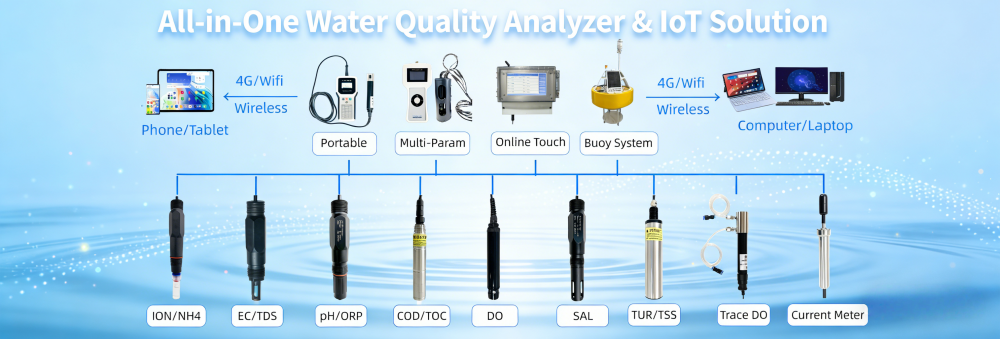
Step 1: Smart Selection - No Best, Only Most Suitable
Selecting sensors isn't just about accuracy and range; it's about whether they're 'adapted' to your water environment. Here are key considerations:
Principle Determines Application Scenario:
Dissolved Oxygen (DO) Measurement: Traditional electrode methods require flow, consume oxygen, and need regular electrolyte replacement. For static ponds or low-flow waters, fluorescence method sensors (such as those using fluorescence lifetime technology) are superior. They don't consume oxygen, require no warm-up, have no flow requirements, and minimal maintenance. For aquaculture environments prone to biofouling, choose specialized models with antibacterial membranes directly.
Turbidity/Suspended Solids (TSS) Measurement: For colored waters or environments susceptible to ambient light interference, choose optical sensors using 90° or 135° scattering principles with anti-interference design. Check if they specify 'usable under direct sunlight' to avoid expensive shading structures.
Comprehensive Indicators (like COD): UV absorpt Ion Sensors require no chemical reagents, produce no secondary pollution, and have low operating costs suitable for long-term monitoring. Confirm if their range (e.g., 0-1500mg/L or 0-500mg/L) covers your water quality fluctuations.
Interface and System Compatibility:
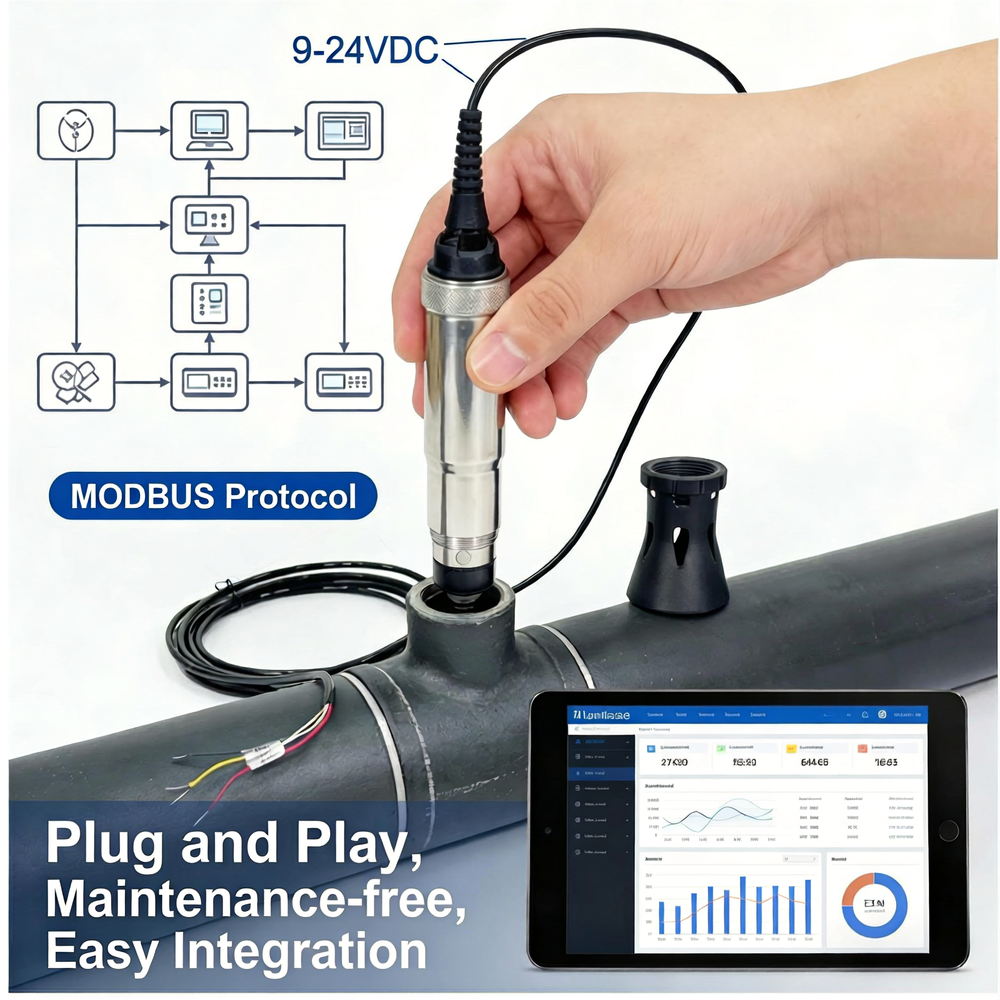
Modern projects emphasize integration and scalability. Prioritize sensors with digital outputs (like RS-485, MODBUS RTU protocol). This standard interface allows easy integration of different parameter sensors into the same multi-parameter analyzer or data logger, making future additions or replacements extremely flexible.
Material and Protection Rating:
For long-term immersion in seawater, sewage, or aquaculture waters, housing material is crucial. For most corrosive environments, 316L stainless steel is a reliable choice. Also confirm the sensor's protection rating (like IP68) as it directly affects long-term reliability underwater.
Step 2: Intelligent Maintenance - From Firefighting to Prevention
After installation, maintenance aims to shift from 'frequent rescue' to 'preventive care'.
Combat the Greatest Enemy: Biofouling
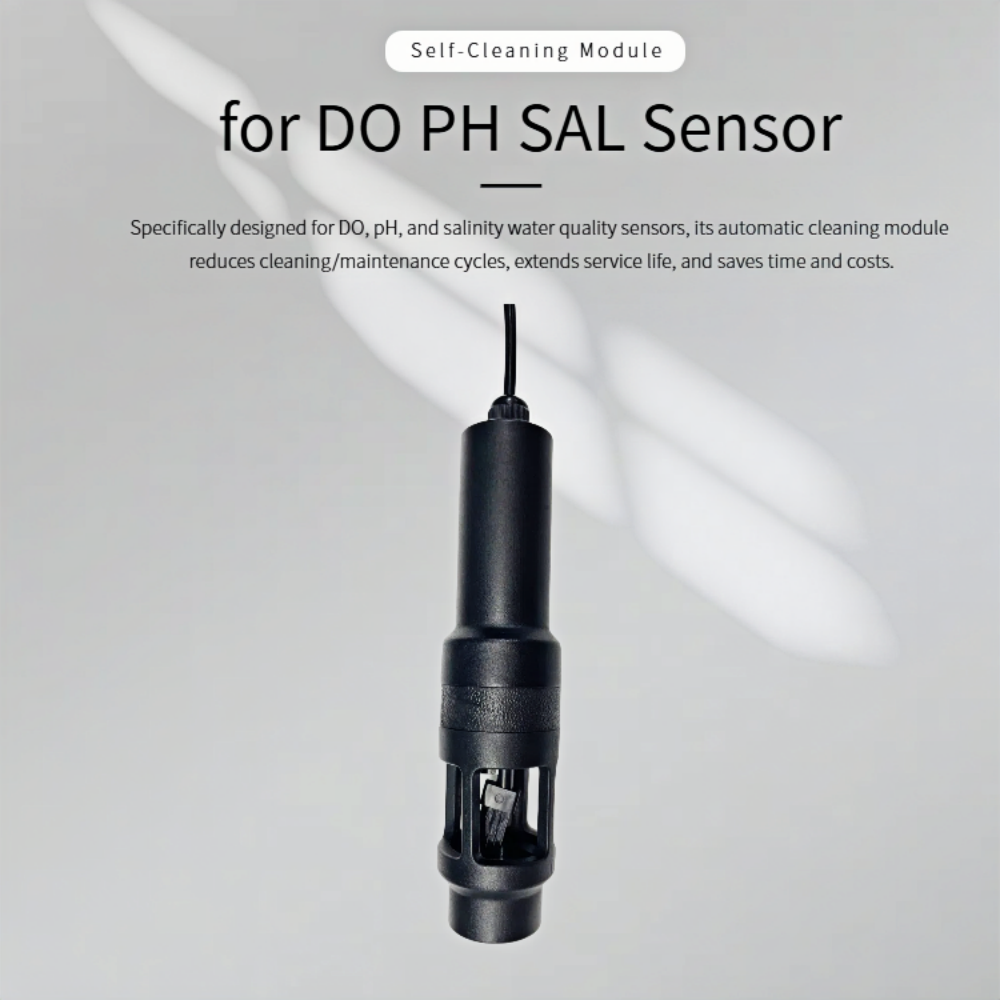
This is the main cause of performance degradation in optical sensors and membrane electrodes. Besides choosing antibacterial membranes, the most effective tool is automatic cleaning devices. For instance, equip critical sensors (like DO, pH) with timed automatic rotating brushes (e.g., set to clean every 6 hours) to effectively remove early algae and biofilm attachment, extending manual cleaning cycles from weeks to months.
Calibration Strategy: Finding Balance Between Accuracy and Efficiency
Not all sensors need frequent calibration.
Fluorescence DO and optical sensors: High stability, long calibration intervals (up to months), usually requiring only periodic air or zero-point calibration.
Electrode sensors (like pH, ORP, ion-selective electrodes): Need more regular calibration. Use their multi-point calibration and custom calibration solution functions to develop calibration plans based on actual water quality ranges for more accurate data.
Daily Inspection Checklist:
Data Patrol: Watch for irregular, drastic data fluctuations indicating probe fouling or failure.
Physical Inspection: Regularly check if optical windows or membrane surfaces are visibly covered, and if cables are intact.
System Backup: Use data storage and alarm functions in analyzers or cloud platforms to set alarm thresholds for key parameters, enabling 'unmanned' anomaly alerts.
Summary: Building Sustainable Monitoring Systems
Selecting water quality sensors essentially means choosing the most 'resilient' sensory organs for your specific water body. Scientific maintenance maximizes sensor service life through technical means (like automatic cleaning, digital calibration) and institutionalized checks.
An excellent monitoring system's value lies not just in initial data accuracy, but in the continuity and comparability of data over months or years. Considering future maintenance costs and convenience during project planning often saves significant manpower and resources in subsequent operations, making technology a reliable partner for silently safeguarding water security.
Media Contact
Company Name: Qingdao Luminsens Marine Technology Co., Ltd.
Email: Send Email
Country: China
Website: https://www.luminsens-sensor.com/