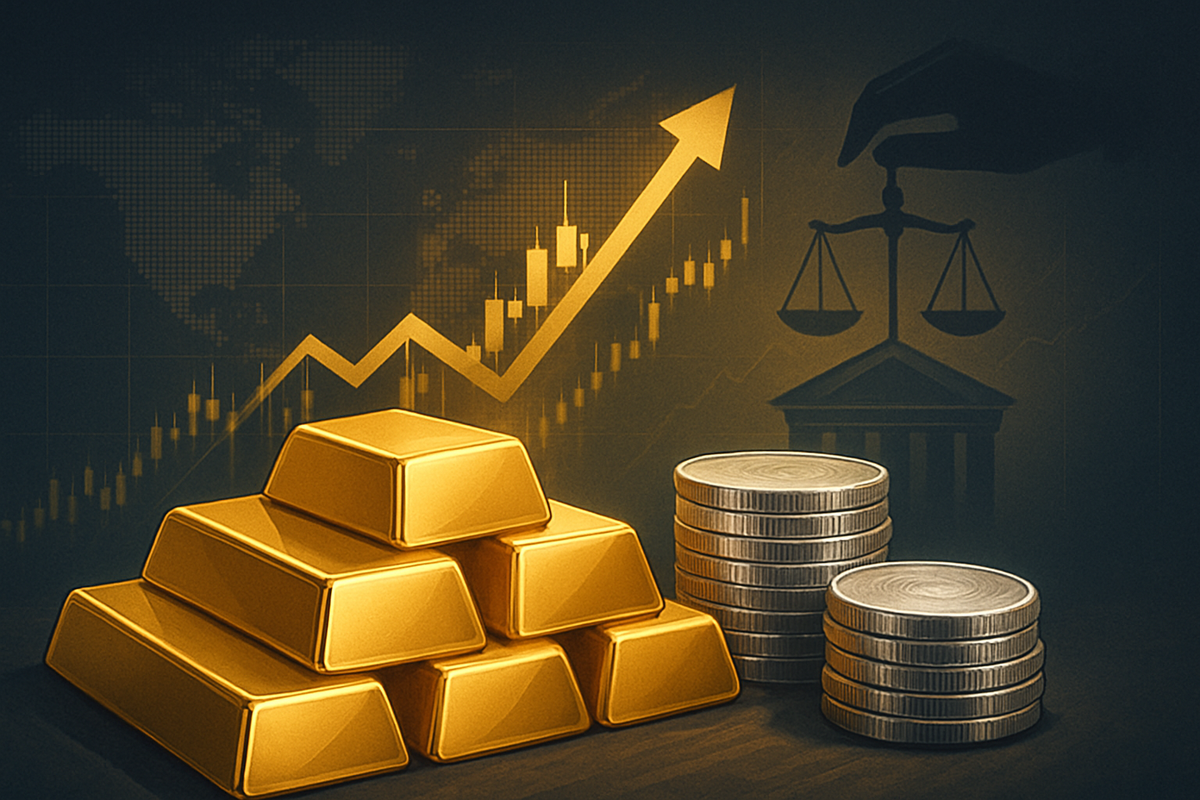
The global financial landscape has been gripped by unprecedented volatility in the precious metals sector, with gold and silver prices experiencing dramatic increases throughout 2024 and 2025. This surge, fueled by a complex interplay of geopolitical tensions, global economic uncertainty, and robust safe-haven demand, has prompted finance ministries worldwide to assess their strategies for market stabilization. In a significant move, the Indian Finance Ministry has outlined its approach, emphasizing market-driven pricing while implementing targeted measures aimed at consumer relief and reducing reliance on physical imports, signaling a nuanced stance on managing the burgeoning precious metals market.
The immediate implications of the Ministry's response are multifaceted. While reaffirming a non-interventionist policy on direct price control, the government has focused on structural adjustments such as a reduction in customs duty on gold imports and the active promotion of alternative investment avenues like Sovereign Gold Bonds (SGBs) and Gold Exchange-Traded Funds (ETFs). These actions are designed to cushion consumers from the sharp price hikes, foster a shift from physical to financial gold, and ultimately enhance the nation's economic stability by moderating import dependence. As gold touched an astounding $4,345.98 USD per troy ounce and silver breached $64 per troy ounce in mid-December 2025, the Ministry's strategy aims to navigate these turbulent waters without disrupting the fundamental market dynamics.
Detailed Coverage: Navigating the Bullion Boom
The period of late 2024 and 2025 has been characterized by a dramatic ascent in precious metal values. Gold prices surged over 60% year-to-date in 2025, positioning it for its strongest annual performance since 1979, reaching over $4,300 per troy ounce by mid-December 2025. Silver's rally was even more spectacular, doubling in price since January 2025 and hitting new record highs above $64 per troy ounce. This unprecedented surge is attributed to persistent geopolitical tensions, global economic uncertainties, and aggressive gold accumulation by central banks, coupled with a robust industrial demand for silver.
In response to this volatility, the Indian Finance Ministry took a key step in July 2024 by reducing the customs duty on gold imports from 15% to 6%. This measure was primarily aimed at providing consumer relief by making gold more affordable domestically and aligning local prices with international benchmarks, while also curbing illegal imports. The Ministry emphasized that precious metal prices are market-driven and not subject to government intervention, but it continues to promote financial instruments like the Gold Monetization Scheme (GMS), Gold ETFs, and Sovereign Gold Bonds to mobilize idle domestic gold and reduce import dependence. The Reserve Bank of India (RBI) has also been a significant player, increasing its gold holdings as part of its foreign exchange reserves, though these purchases are primarily from international markets.
Key global players have also influenced the market. China's Ministry of Industry and Information Technology (MIIT) and other government bodies released an action plan in June 2025 to boost gold and silver output and resources. More significantly, Chinese insurance regulators mandated in February 2025 that large insurers must hold a minimum of 1% of their substantial assets in physical gold, a strategic move to diversify away from US dollar assets. The People's Bank of China (PBOC) has consistently accumulated gold reserves throughout 2025, acting as a "price-insensitive buyer" and providing strong underlying support for gold prices.
Initial market reactions have seen widespread price surges and record highs for both metals. While the Indian duty cut was welcomed, the overwhelming global price increases meant that the country's import bill for gold still rose significantly, highlighting the dominance of international factors. The US Federal Reserve's (NYSE: FED) monetary policy, including rate cuts initiated in September 2024 and continuing into December 2025, has generally acted as a tailwind for precious metals by weakening the dollar and making non-yielding assets more attractive. Geopolitical events, such as a US government shutdown in October and November 2025, consistently triggered safe-haven demand, pushing prices to new peaks.
Market Movers: Winners and Losers in the Precious Metals Rush
The current climate of volatile and surging gold and silver prices creates distinct opportunities and challenges for various public companies across the financial ecosystem. Understanding these dynamics is crucial for investors navigating the precious metals market.
Mining Companies are at the forefront of this market shift. Low-cost producers with efficient operations and robust balance sheets stand to gain significantly. Companies like Barrick Gold (NYSE: GOLD) or Newmont Corporation (NYSE: NEM), with their vast reserves and established infrastructure, could see substantial increases in profit margins and cash flows as the price of their core products rises. Primary silver producers, given silver's strong industrial demand and projected supply deficits, may experience outsized benefits. Additionally, royalty and streaming companies, which provide upfront capital to miners in exchange for future metal deliveries at lower costs, benefit immensely from rising spot prices without direct exposure to mining operational inflation. Conversely, high-cost producers or those facing operational challenges, such as geopolitical instability in their mining regions or environmental liabilities, may struggle, as their profit margins could be eroded despite higher commodity prices.
Jewelry Retailers face a more nuanced impact. Luxury brands with strong pricing power and established brand loyalty, such as Tiffany & Co. (NYSE: TIF) (a subsidiary of LVMH Moët Hennessy Louis Vuitton SE, EPA: MC), may be able to pass on increased raw material costs to affluent consumers without significantly impacting demand. Retailers with diversified product offerings, including more affordable alternatives or custom design services, can adapt to changing consumer preferences as pure gold and silver jewelry becomes more expensive. However, smaller retailers and those heavily reliant on gold- and silver-exclusive lines are particularly vulnerable. Higher acquisition costs for raw materials can severely shrink their profit margins if they cannot raise retail prices accordingly, potentially leading to reduced sales volumes as consumers seek more budget-friendly options.
Investment Firms are also significantly affected. Firms with substantial holdings in physical gold and silver, or those managing popular gold/silver-backed Exchange Traded Funds (ETFs) such as SPDR Gold Shares (NYSEARCA: GLD) or iShares Silver Trust (NYSEARCA: SLV), will see their assets under management (AUM) grow and potentially higher returns, attracting more investors. Firms specializing in commodity trading and derivatives can capitalize on market volatility through strategic use of futures and options, offering hedging solutions to other market participants. Conversely, investment firms with limited exposure to precious metals might see lower comparative returns if gold and silver continue to outperform other asset classes. Poor risk management or an over-reliance on specific market conditions, such as betting heavily on declining prices, could lead to substantial losses in this volatile environment.
Broader Implications: A Shift in Global Financial Tides
The finance ministry's responses to the gold and silver price volatility, though often non-interventionist in direct price control, carry profound wider significance, reflecting and influencing several broader industry trends of late 2024 and 2025. This period has underscored the enduring role of precious metals as a safe haven amidst global economic and geopolitical turbulence.
The most prominent broader industry trend is the de-dollarization movement and aggressive central bank buying. Central banks worldwide, particularly those in BRICS nations (Brazil, Russia, India, China, South Africa) and other emerging economies, have been accumulating gold at an unprecedented pace. This trend, clearly visible through the Reserve Bank of India's (RBI) increased gold holdings and the People's Bank of China's (PBOC) consistent acquisitions, signifies a strategic diversification away from the U.S. dollar (USD) as the primary reserve asset. Finance ministries, in coordination with their central banks, view these reserves as crucial for strengthening confidence in their domestic currencies and enhancing external economic stability, creating a lasting impact on international reserve management and global financial architecture.
Ripple effects are felt across various sectors. For the jewelry and bullion industry, particularly in consumer-heavy nations like India, the customs duty cut in July 2024 provided some relief, but the sheer force of global price increases still led to a higher import bill by value, despite potentially lower volumes. This highlights the industry's continued advocacy for further policy adjustments to maintain affordability and combat illegal trade. For mining companies, the elevated prices mean increased profitability for those with efficient operations, while also encouraging exploration and development of new projects. Financial institutions and investors face heightened risks related to disclosure and suitability, leading to increased scrutiny from regulators to prevent market manipulation amidst speculative interest and large ETF flows.
Regulatory and policy implications are also emerging. Silver's designation as a "critical mineral" in some jurisdictions, such as the US critical minerals list, provides a legal framework for potential government intervention during severe price dislocations or national security concerns. This distinguishes the current market from past events where such explicit frameworks might have been absent, suggesting a more proactive regulatory stance if volatility becomes extreme. Finance ministries will likely continue to utilize import/export duties and other trade policies as levers to manage domestic supply, demand, and prices, balancing consumer interests, domestic industry support, and national economic stability. Furthermore, their fiscal policies, by influencing inflation expectations, indirectly impact central bank monetary policy, which in turn significantly affects precious metal prices.
Historically, the current market dynamics draw comparisons to past periods of economic uncertainty. While fears of gold confiscation, as seen in the 1930s, are largely considered misplaced today due to gold's smaller share of global financial wealth, the discussions around a potential "silver short squeeze" in 2024-2025 evoke memories of the 1980 Hunt Brothers attempt. However, experts characterize the current silver market as more of an "orderly price discovery" driven by fundamental supply-demand imbalances and robust industrial demand rather than pure speculative panic. The current environment also mirrors historical patterns where anticipated or actual interest rate cuts by central banks, like the Federal Reserve's actions in late 2025, correlate with strengthening precious metal prices due to reduced real yields, making gold and silver more attractive compared to interest-bearing assets.
The Road Ahead: What Comes Next for Gold and Silver
The outlook for gold and silver markets in the short and long term remains largely bullish, albeit with an expectation of continued volatility. Finance ministries and market participants alike will need to remain agile and adaptive to navigate the evolving landscape.
In the short-term (late 2025 - mid 2026), both gold and silver are expected to maintain an upward bias, potentially consolidating at their elevated levels. Gold, having surpassed $4,300 per ounce, may see consolidation around the $4,000-$4,100 range, with analysts suggesting "buying on dips." Silver, which hit a record near $60 per ounce in December 2025, is also likely to experience continued strength. This near-term momentum is underpinned by ongoing expectations of central bank interest rate cuts, persistent global inflation, and the lingering geopolitical tensions that fuel safe-haven demand.
Looking further into the long-term (2026 and beyond), the trajectory for precious metals appears predominantly positive. Gold is projected to average around $4,753 per ounce for the full year 2026 by some institutions, with more optimistic forecasts reaching $5,000 or even $8,900 by 2030, driven by sustained central bank buying, a weakening US dollar, and continued geopolitical instability. Silver is also expected to perform strongly, potentially outperforming gold in certain phases. Forecasts for silver in 2026 range from $43 to $65 per ounce, with some aggressive predictions hinting at $100 per ounce, largely propelled by its critical role in the green energy transition and persistent supply deficits.
Strategic pivots and adaptations are essential for both investors and finance ministries. Investors are increasingly advised to maintain a diversified portfolio with a strategic allocation to precious metals (typically 5-10%) as a hedge against inflation and market volatility. This includes a mix of physical bullion, coins, and paper assets like ETFs, coupled with disciplined risk management. For finance ministries, the ongoing trend of reserve diversification, particularly increasing gold holdings, will continue as a strategic tool to hedge against geopolitical uncertainties and reduce reliance on dollar-denominated assets. Continuous monitoring of global economic indicators, inflation trends, and geopolitical developments will be crucial to inform fiscal and monetary policy adjustments aimed at maintaining currency stability and external economic resilience.
Market opportunities abound, primarily driven by gold and silver's roles as inflation hedges and safe havens. The "Industrial Super-Cycle" for silver, fueled by demand from solar panels, electric vehicles, and AI data centers, presents a unique growth opportunity distinct from gold. Conversely, challenges include the sensitivity of precious metals to interest rate changes (unexpected hawkish shifts could temper gains), the risk of broad market liquidations during severe downturns, and potential supply chain disruptions, especially for silver. Speculative volatility, particularly in the smaller silver market, also poses a risk.
Potential scenarios range from the most likely outcome of persistent high prices and volatility, where finance ministries may continue to use fiscal interventions like duty cuts and enhance market monitoring, to a moderate price correction, which would reduce the pressure for direct government interventions. In the event of a severe market disruption or crisis, governments might resort to more aggressive fiscal and monetary measures, further emphasizing the strategic importance of precious metal reserves to maintain confidence in national financial systems.
Outlook 2026: Enduring Significance and Investor Vigilance
The tumultuous period of late 2024 and 2025 has firmly re-established gold and silver as indispensable assets in the global financial landscape. The finance ministry's response, characterized by targeted fiscal adjustments and a commitment to market-driven pricing, underscores a pragmatic approach to managing domestic economic stability amidst unprecedented international volatility.
Key takeaways from this period include the undeniable influence of geopolitical tensions and global economic uncertainty on safe-haven demand, the significant impact of aggressive central bank gold purchases as a strategic diversification away from the US dollar, and silver's dual role as both a monetary metal and a critical industrial commodity in the burgeoning green energy and technology sectors. The Indian Finance Ministry's customs duty cut on gold imports in July 2024, alongside its promotion of financial gold instruments, highlights a proactive strategy to mitigate consumer burden and manage import dependence, rather than direct price control.
Moving forward into 2026, the market is expected to remain generally bullish for both gold and silver, though perhaps with a more measured pace of gains following the exceptional rally of 2025. Gold is projected to continue its ascent, potentially averaging $4,753/oz for the year, driven by persistent inflation concerns, ongoing central bank buying, and a potentially weaker US dollar. Silver, with its strong industrial demand and structural supply deficits, is also anticipated to perform robustly, with forecasts ranging from $43 to $65 per ounce and even higher, potentially outperforming gold in certain market conditions.
The lasting impact of these events is a reinforced appreciation for precious metals as crucial components of diversified portfolios and national reserves. The de-dollarization trend, propelled by central bank actions, is a structural shift that will continue to influence global financial architecture for years to come. For silver, its accelerating demand from the "new energy revolution" solidifies its position as a strategically vital commodity, making its market dynamics uniquely compelling.
Investors should watch for several key indicators in the coming months (late 2025 - early 2026):
- Monetary Policy Shifts: Closely monitor the pace and extent of Federal Reserve (NYSE: FED) interest rate cuts, as lower real yields generally provide a tailwind for precious metals.
- Inflation Data: Persistent inflation above target levels will continue to bolster gold's appeal as a hedge.
- Geopolitical Developments: Any escalation or de-escalation of global conflicts or trade frictions will directly impact safe-haven demand.
- Central Bank Buying: Track reports from the World Gold Council and individual central bank announcements regarding gold acquisitions.
- Industrial Demand for Silver: Keep an eye on growth in the solar PV, electric vehicle, and AI data center sectors, which are major drivers of silver consumption.
- Gold-Silver Ratio: This ratio can indicate relative value. If silver continues to show strength relative to gold, a declining ratio could signal further outperformance by silver.
- Supply Dynamics: Watch for any changes in mined production or recycling rates, particularly for silver, where supply is less elastic.
- Investment Flows: Track inflows into gold and silver-backed ETFs, as these reflect investor sentiment and demand.
- US Dollar Strength: A weaker US dollar generally makes dollar-denominated commodities like gold and silver more attractive to international buyers.
- China's Economic Outlook: As a major consumer of commodities, China's economic growth and property sector stability will impact demand for industrial metals, including silver.
While 2025 delivered unprecedented gains, the fundamental drivers supporting gold and silver are expected to persist, making these precious metals a compelling part of diversified investment portfolios in the coming months and into 2026.
This content is intended for informational purposes only and is not financial advice