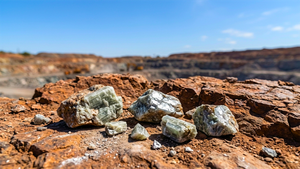
As 2025 draws to a close, the Canadian mining sector is basking in the glow of a historic "super-cycle" that has seen gold and silver prices reach levels once considered unthinkable. With spot gold trading near $4,500 per ounce and silver surging toward $75 per ounce, the industry is experiencing a massive windfall, driven by a perfect storm of geopolitical instability, aggressive central bank diversification, and a fundamental shift in global monetary policy. For Canadian producers, who have long wrestled with high operational costs and regulatory hurdles, the current environment has transformed balance sheets and ignited a wave of consolidation not seen in decades.
The implications for the Toronto Stock Exchange (TSX) and the broader Canadian economy are profound. As the world’s premier destination for mining finance, Canada is currently the epicenter of a global rush for "monetary insurance." With the Federal Reserve implementing a series of interest rate cuts throughout 2025 and persistent concerns over U.S. fiscal sustainability, investors have flocked to the relative safety of precious metals. For the "reliable" giants of the North, this has resulted in record free cash flows, aggressive dividend hikes, and a renewed mandate to expand production at any cost.
The 2025 Metal Frenzy: A Timeline of the Breakout
The journey to $4,500 gold was not a straight line, but rather an acceleration of trends that began in early 2024. The year 2025 opened with gold at approximately $2,623, but a series of "black swan" events throughout the spring and summer catalyzed the current rally. The transition to a new U.S. administration in early 2025 introduced aggressive tariff rhetoric and public disputes with key allies, including Canada. This diplomatic volatility, combined with escalating conflicts in Eastern Europe and the Middle East, created a permanent "risk-on" premium for safe-haven assets.
By mid-2025, the narrative shifted from geopolitical fear to institutional necessity. The People’s Bank of China and other major central banks accelerated their "de-dollarization" efforts, purchasing gold at a pace 50% higher than the previous year. This institutional floor prevented any significant price corrections, even as the Federal Reserve pivoted toward monetary easing. When the Fed delivered its third rate cut of the year in September, the "opportunity cost" of holding non-yielding metals vanished, sending gold into a vertical ascent that culminated in an all-time high of $4,584 in late December.
Silver’s performance has been even more dramatic, outperforming gold in percentage terms with a 150% gain year-to-date. The "white metal" touched a record peak of $86.00 earlier this month before settling near $75. This rally was fueled by a unique "double-tailwind": intense speculative demand from retail investors seeking a cheaper alternative to gold, and a growing industrial shortage as silver remains a critical component in the global energy transition. For the Canadian mining sector, this price environment has turned marginal projects into high-margin cash cows overnight.
Winners of the Super-Cycle: From Seniors to Streamers
The primary beneficiaries of this price surge have been the senior producers with unhedged exposure to the spot market. Agnico Eagle Mines Limited (TSX: AEM) has emerged as the clear market darling, with its stock price soaring approximately 135% over the last 12 months. By maintaining a strict "no-hedge" policy, Agnico captured the full upside of the rally, reporting a net cash position of over $2.1 billion by the third quarter of 2025. The company’s ability to keep its All-In Sustaining Costs (AISC) near $1,300/oz while selling gold for over $4,000 has created some of the widest margins in the history of the industry.
Barrick Gold Corporation (TSX: ABX / NYSE: GOLD) also saw a dramatic turnaround in 2025. After a sluggish performance in the previous year, Barrick’s free cash flow tripled in the latter half of 2025, reaching $1.5 billion in Q3 alone. The company’s management responded by authorizing a $1 billion share buyback program and raising its base dividend by 25% in November. Meanwhile, Wheaton Precious Metals Corp. (TSX: WPM) has demonstrated the power of the streaming model. Because Wheaton’s costs to acquire metals are pre-negotiated at fixed prices, its margins expanded exponentially as prices rose, sending its stock to a new 52-week high of $124.50.
The year was also defined by massive M&A activity as companies raced to consolidate reserves. In November 2025, Coeur Mining, Inc. (NYSE: CDE) finalized a $7 billion acquisition of New Gold Inc. (TSX: NGD), creating a North American powerhouse with a combined market cap near C$20 billion. Similarly, the merger between Equinox Gold Corp. (TSX: EQX) and Calibre Mining Corp. (TSX: CXB) created Canada’s second-largest gold producer by output, consolidating major new mines in Ontario and Newfoundland. On the silver side, Pan American Silver Corp. (TSX: PAAS) solidified its dominance by acquiring MAG Silver Corp. (TSX: MAG) in a definitive agreement that consolidated the world-class Juanicipio asset.
A New Era of Policy and Historical Precedents
The current environment is not just a product of market forces; it is also the result of a significant shift in Canadian federal policy. Throughout 2025, the federal government under Prime Minister Mark Carney introduced a "one project, one process" model designed to accelerate mining approvals. This regulatory pivot, aimed at securing economic sovereignty, has shortened permitting timelines by up to 50% in key regions like Ontario’s "Ring of Fire." Furthermore, the expansion of the Indigenous Loan Guarantee Program to $10 billion has transformed the industry landscape, allowing Indigenous communities to take equity stakes in major mines, moving the needle from simple consultation to true economic partnership.
From a historical perspective, the 2025 rally has finally broken the "inflation-adjusted ceiling" that has haunted gold for decades. When adjusted for inflation, the 1980 gold peak of $850 is equivalent to roughly $3,600 in today’s dollars. By shattering the $4,000 mark, gold has entered a "new era of structural strength," signaling that the market no longer views it as a mere commodity, but as a primary global currency. Silver, however, remains an outlier. Despite its nominal record of $75, it still sits far below its 1980 inflation-adjusted peak of roughly $170. This discrepancy is a primary driver for the aggressive silver M&A seen this year, as investors bet on a "ratio compression" where silver eventually catches up to gold’s historic gains.
The ripple effects are being felt across the competitive landscape. As senior producers flush with cash look to the future, the focus has shifted toward "junior" explorers who hold the next generation of high-grade deposits. This has led to a "buy vs. build" mentality, as it is currently faster and often cheaper for a major to buy a junior with a proven resource than to navigate the multi-year process of discovering and developing a new mine from scratch.
Looking Ahead to 2026: Targets and Transitions
As we enter 2026, the market is closely watching a handful of "mid-tier" companies that are widely considered the next takeover targets. NexGold Mining Corp. (TSXV: NEXG) is at the top of many analysts' lists, with two advanced Canadian assets—Goldboro in Nova Scotia and Goliath in Ontario—that offer a combined production potential of 200,000 ounces per year. Similarly, Snowline Gold Corp. (TSXV: SGD) is viewed as a "big ticket" target in the Yukon, with senior producers like Agnico Eagle or Newmont Corporation (TSX: NGT) rumored to be preparing bids in the C$2–3 billion range as the Rogue project hits new milestones.
However, the path forward is not without risks. The primary challenge for 2026 will be managing "cost creep." While margins are currently record-breaking, the high price of gold often leads to labor shortages and higher prices for mining equipment and services. Furthermore, if the Federal Reserve were to pivot back to a hawkish stance in response to a sudden economic rebound, the "debasement trade" could lose some of its luster. Investors should also keep a close eye on the "silver-to-gold ratio," which remains historically wide; a sudden "catch-up" trade in silver could see the white metal outperform the rest of the sector in the first half of 2026.
Strategic pivots are already underway. Many companies are using their 2025 windfalls to invest in "green mining" technologies, such as electric haulage fleets and on-site renewable energy, to mitigate the long-term impact of carbon taxes and environmental regulations. These investments are no longer just about ESG compliance; they are about long-term operational resilience in an era of high energy costs.
Final Assessment: A Golden Age for the TSX
The 2025 precious metals surge has been a transformative event for the Canadian mining industry, validating the "long-term value" thesis of the sector’s most reliable players. The combination of record-high prices, a more efficient regulatory environment, and a wave of strategic consolidation has created a robust foundation for the years ahead. While the extreme price volatility of late 2025 may eventually give way to a period of consolidation, the structural drivers—geopolitical tension and fiscal instability—show no signs of abating.
For investors, the key takeaway is that the "quality" of a company’s balance sheet and its jurisdictional safety have become the most important metrics. The shift toward Canadian-focused assets is a reflection of a world that increasingly values stability and transparency. As we move into 2026, the "Great Northern Bull Run" appears to have plenty of room to run, provided companies remain disciplined with their newfound capital.
Investors should watch for the next wave of M&A in the junior space and keep a close eye on the "Mark Carney" government’s implementation of the $2 billion Critical Minerals Sovereign Fund, which is set to launch in early 2026. In a world of uncertainty, the Canadian mining sector has once again proven to be the ultimate safe haven.
This content is intended for informational purposes only and is not financial advice.