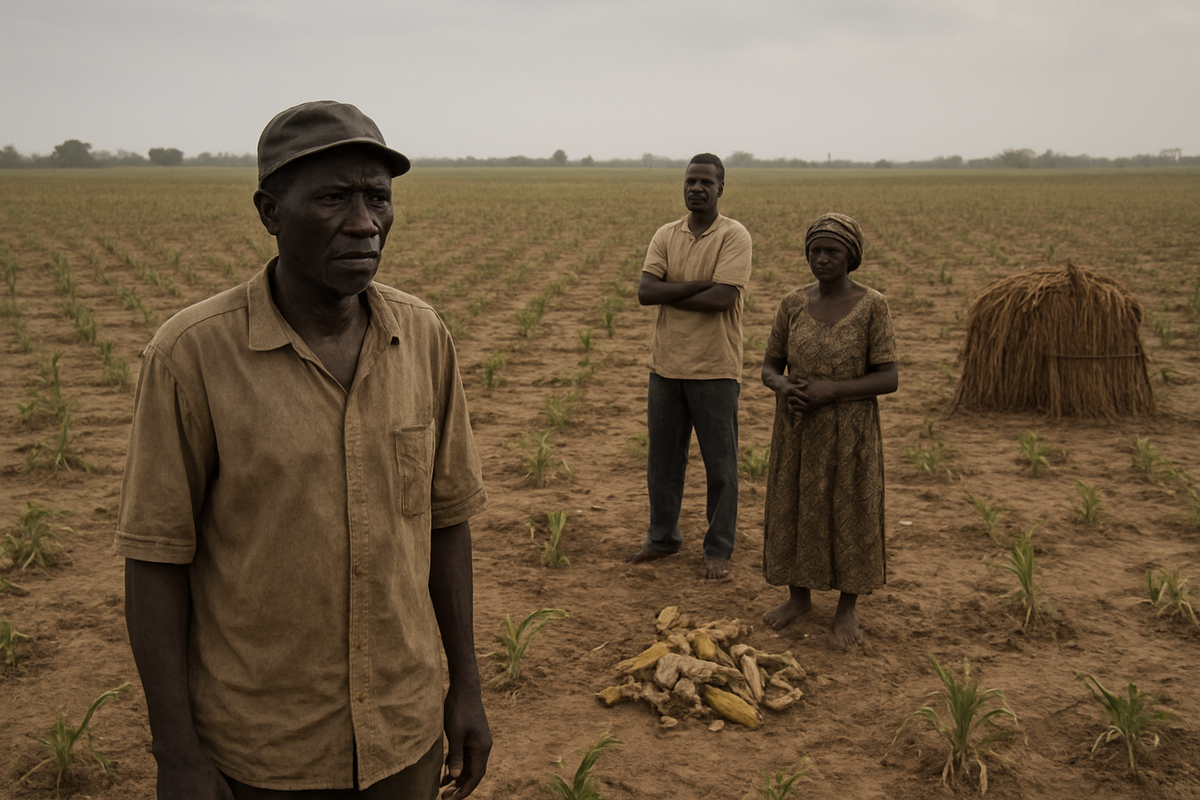
Nigeria's vital food trade sector is currently grappling with profound structural pressures, with recent analyses revealing a staggering nearly N5 trillion impact from combined food imports and exports, alongside significant financial losses for the nation's farmers. As of December 9, 2025, these challenges are not just theoretical; they are actively manifesting as crippling post-harvest losses, soaring production costs, and pervasive insecurity, collectively threatening Nigeria's food security, economic stability, and the livelihoods of millions. The immediate implications are severe: a deepening food insecurity crisis for millions of Nigerians, stubbornly high food inflation that erodes purchasing power, and a reduced dietary diversity that disproportionately affects vulnerable households across the country.
Unpacking the N5 Trillion Conundrum: A System Under Strain
The core of Nigeria's food trade crisis is a multifaceted and deeply entrenched problem. While the nation's food import bill soared to almost N6 trillion in 2024, exposing the economy to global price volatility and supply disruptions, food and agro-commodity exports, valued between N4.8 trillion and N5 trillion, barely matched this outflow. This significant trade imbalance highlights a fundamental weakness in domestic production capacity and value addition, leaving Nigeria heavily reliant on external markets for essential food items.
A particularly devastating blow to the food system comes from colossal post-harvest losses. ActionAid Nigeria reported in October 2024 that these losses amount to a staggering N3.5 trillion annually, equating to a shocking 50% of total food production. This figure alone surpasses the annual agricultural budgets of most Nigerian states, underscoring systemic inefficiencies in storage, processing, and transportation infrastructure. For instance, Nigeria reportedly possesses fewer than 1,000 refrigerated trucks against an estimated need for 25,000 to adequately handle perishable fresh fruits and vegetables, leading to immense waste.
Farmers, the bedrock of the food system, are bearing the brunt of these pressures. During the 2025 major wet season, maize farmers recorded average losses of approximately N40,560 per hectare, while rice farmers faced losses of about N20,220 per hectare. Beyond these staple crops, the 2023 ginger blight epidemic decimated up to 90% of ginger yields, leading to an estimated N12 billion loss for affected farmers. These financial setbacks are compounded by escalating production costs driven by persistent naira depreciation, high fuel prices, and expensive agricultural inputs like fertilizers and quality seeds, many of which are imported. Furthermore, insecurity, particularly banditry and farmer-herder clashes, forces many farmers to abandon their lands or even pay levies to armed groups, further reducing productive capacity.
The timeline of these unfolding events is remarkably recent and ongoing. Analyses from the National Agribusiness Policy Mechanism (NAPM) workshop in Abuja in December 2025 have directly spotlighted the N5 trillion trade flows and the specific farmer losses during the current wet season. Earlier reports from late 2024 and throughout 2025 have consistently highlighted mounting food insecurity projections, the impact of economic reforms, and persistent agricultural challenges. Key stakeholders involved include various government bodies (e.g., Ministry of Agriculture), farmer cooperatives and associations, international NGOs like ActionAid, and a broad spectrum of agribusiness players. Initial market reactions have seen food inflation stubbornly high, hovering around 21-22% in mid-2025, despite a temporary lifting of import bans on certain food staples in early 2025. While this provided some consumer relief by dropping grain prices, it simultaneously caused losses for local grain dealers who had stored harvests, demonstrating the complex interplay of policy and market dynamics. The government's response, including the new NAPM framework, aims for more coordinated, data-driven planning, but its long-term impact on these deep-seated issues is yet to be fully realized.
Corporate Fortunes in a Volatile Food Landscape
The structural pressures gripping Nigeria's food trade create a challenging environment where some public companies face significant headwinds, while others may find strategic opportunities amidst the chaos.
Companies heavily reliant on local agricultural produce for their raw materials are likely to be among the primary losers. Food processing companies such as Flour Mills of Nigeria Plc (NGX: FLOURMILL) and Nestlé Nigeria Plc (NGX: NESTLE) could face increased costs for locally sourced grains and other commodities due to farmer losses, reduced yields, and inefficient supply chains. While they may have some capacity to import, this exposes them to foreign exchange volatility, which has been a major factor in rising input costs. Furthermore, disruptions in the supply of raw materials can lead to underutilized production capacity and higher operational expenses, impacting their profitability. Similarly, companies in the animal feed industry, like Premier Feed Mills Co. Ltd. (a subsidiary of Flour Mills of Nigeria), would likely face higher costs for maize and other feed components, which could translate into higher prices for livestock farmers and potentially reduced demand.
Conversely, companies with robust and diversified supply chains, or those involved in addressing the structural deficiencies, might find opportunities. Large-scale agricultural companies that possess significant land holdings and can invest in modern farming techniques, improved storage, and processing facilities could potentially mitigate some of the losses faced by smallholder farmers. However, the high capital expenditure required and the security risks remain substantial barriers. Companies specializing in agricultural technology (AgriTech) or logistics, particularly those offering cold chain solutions or efficient transportation, could see increased demand for their services. While specific publicly traded logistics companies focused solely on cold chain in Nigeria are limited, diversified logistics providers that can adapt, or new entrants, could benefit. Companies involved in the importation and distribution of food staples, such as BUA Foods Plc (NGX: BUAFOODS) with its significant sugar and rice operations, might see short-term gains from government policies that temporarily lift import bans, allowing them to fulfill domestic demand. However, this strategy is often met with criticism regarding its long-term impact on local production and can lead to inventory valuation losses if domestic prices suddenly drop due to policy shifts. Ultimately, the companies that can innovate to reduce post-harvest losses, enhance local productivity, and navigate the complex policy landscape will be better positioned to succeed.
Wider Significance: A Looming Crisis Beyond the Farm Gate
The structural pressures in Nigeria's food trade extend far beyond the direct losses incurred by farmers and the immediate impact on agribusinesses; they represent a looming crisis with profound wider significance for the nation's economy and social stability. This event fits squarely into broader industry trends characterized by increasing global food price volatility, the persistent effects of climate change, and the growing imperative for national food security, particularly in rapidly urbanizing developing economies. Nigeria's reliance on food imports, exacerbated by a weak domestic agricultural base, leaves its economy highly vulnerable to external shocks and currency fluctuations.
The ripple effects of this crisis are substantial. Beyond the agricultural sector, industries such as transportation, packaging, and food processing face significant challenges due to unreliable supply chains and escalating costs. The high cost of food, driven by inflation and supply shortages, directly impacts the purchasing power of average Nigerians, particularly low-income households, potentially fueling social unrest and exacerbating poverty. Moreover, the inability of the agricultural sector to thrive hinders rural development, exacerbating rural-urban migration and placing further strain on urban infrastructure. Regulatory and policy implications are immense; the current situation underscores the urgent need for consistent, long-term agricultural policies that address foundational issues rather than short-term fixes. The National Agribusiness Policy Mechanism (NAPM) is a step towards coordinated planning, but its success hinges on effective implementation and sustained commitment. Historically, Nigeria has faced similar challenges with food production and distribution, often responding with import waivers or temporary subsidies. However, the current scale of losses and the N5 trillion trade imbalance suggest that these piecemeal approaches are no longer sufficient, demanding a more comprehensive and strategic overhaul of the entire food system.
What Comes Next: Navigating a Path Towards Resilience
The immediate future for Nigeria's food trade will likely be characterized by continued volatility and the urgent need for strategic interventions. In the short term, high food prices are expected to persist, driven by ongoing production shortfalls, logistical bottlenecks, and inflationary pressures. The government will likely continue with targeted market interventions, potentially including further temporary import facilitations, to ease consumer burden. However, these measures, while offering temporary relief, often fail to address the root causes and can sometimes destabilize local markets. Therefore, a critical short-term focus must be on improving market access for existing produce, reducing post-harvest losses through better storage and transportation, and providing timely support to farmers for the upcoming planting seasons.
In the long term, Nigeria faces a monumental task of building a resilient and sustainable food system. This will require significant, sustained investment in critical infrastructure, including modern irrigation systems, rural roads, and cold chain logistics. Enhancing access to affordable finance for smallholder farmers, coupled with training in modern agricultural practices and climate-resilient farming techniques, will be crucial for boosting productivity. Addressing the pervasive insecurity in farming communities is paramount, as no amount of investment will yield results if farmers cannot safely access their lands. Market opportunities may emerge for companies that can provide innovative solutions in value addition, such as processing facilities that convert raw produce into longer-lasting goods, or AgriTech startups that offer data-driven farming insights and supply chain optimization. The potential scenarios range from a continued spiral of food insecurity and economic strain if structural issues are ignored, to a gradual but significant improvement if the government, private sector, and communities collaborate effectively on comprehensive, long-term strategies.
Comprehensive Wrap-up: A Call for Urgent and Coordinated Action
The N5 trillion impact on Nigeria's food trade and the profound losses faced by its farmers underscore a critical juncture for the nation. The key takeaways are clear: Nigeria's food system is under severe strain from structural inefficiencies, including immense post-harvest losses, escalating production costs, inadequate infrastructure, and pervasive insecurity. This confluence of factors is directly contributing to widespread food insecurity, stubbornly high inflation, and economic vulnerability. The challenge is not merely about increasing production, but about creating an efficient, equitable, and resilient value chain that benefits both producers and consumers.
Moving forward, the market will remain dynamic and susceptible to both domestic policy shifts and global economic trends. While the immediate outlook suggests continued pressure on food prices and farmer livelihoods, there is also an undeniable imperative for strategic investment and policy reform. For investors, the coming months will demand close attention to government agricultural policies, particularly the implementation and effectiveness of initiatives like the National Agribusiness Policy Mechanism. Monitoring the performance of key agricultural companies, food processors, and logistics providers, alongside inflation data and foreign exchange rates, will be crucial for identifying potential risks and opportunities. Ultimately, addressing Nigeria's food trade crisis requires a coordinated, multi-stakeholder approach that prioritizes long-term solutions over short-term fixes, aiming to build a food system that is truly secure, sustainable, and inclusive for all Nigerians.
This content is intended for informational purposes only and is not financial advice