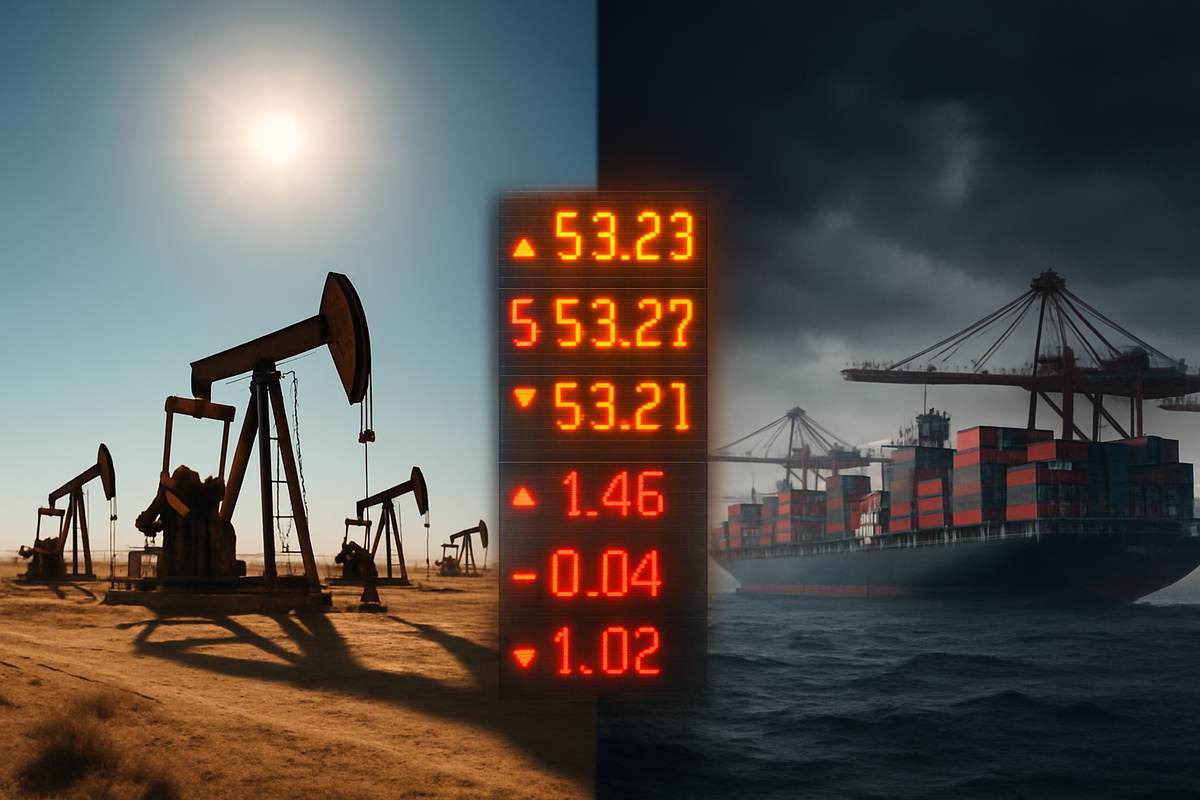
As of February 11, 2026, the global energy market has become a theater of conflicting forces, leaving investors and analysts grappling with unprecedented volatility. On one side, the U.S. administration’s aggressive "Drill, Baby, Drill" policy has unleashed a torrent of new domestic production, pushing West Texas Intermediate (WTI) crude toward the mid-$60s. On the other, an escalating trade war with China and persistent geopolitical instability in the Middle East have created a fragile floor for prices, as the market weighs the risk of a massive supply glut against the threat of a sudden regional conflict.
The immediate implications are a "lopsided" market environment. While domestic production is reaching historic highs and regulatory hurdles are vanishing, the "risk premium" associated with the Strait of Hormuz and the Red Sea is the only thing preventing a total price collapse. With the International Energy Agency (IEA) warning of a potential 4 million barrel-per-day (bpd) surplus by the end of the year, the American energy sector is standing at a crossroads between "energy dominance" and a self-inflicted commodity price crash.
The Regulatory Revolution: Permitting Surges and Federal Sales
The transition in U.S. energy policy over the last twelve months has been nothing short of a paradigm shift. Following the 2025 passage of the "One Big Beautiful Bill" (OBBB) Act, the federal government has effectively dismantled the regulatory framework that previously limited fossil fuel expansion. In the first year of this new policy regime, drilling permits on federal lands surged by 55%, with over 5,700 permits approved. This aggressive stance was underscored by the immediate lifting of the pause on Liquefied Natural Gas (LNG) export permits, a move intended to fuel both European allies and burgeoning domestic AI data centers.
The timeline of this acceleration reached a milestone in late 2025 with a landmark lease sale in the Gulf of Mexico, which generated over $300 million in bids. Most recently, the Department of the Interior announced the reopening of 1.56 million acres in the Arctic National Wildlife Refuge (ANWR) for development, with a major lease sale scheduled for March 2026. This "all-of-the-above" approach to extraction has been coupled with an EPA overhaul that repealed Biden-era carbon pollution standards, effectively ending the requirement for 90% carbon capture at power plants by 2032.
Initial market reactions have been a mix of enthusiasm and caution. While the immediate removal of "bureaucratic red tape" has lowered the breakeven cost for many domestic projects, it has also spooked global markets that were already worried about oversupply. As of today, February 11, WTI is trading at $64.58 per barrel, a nearly 10% decline year-over-year despite the heightened tensions in the Middle East.
Corporate Scoreboard: The Winners and Losers of Abundance
The impact of this high-supply, high-risk environment has been uneven across the major US oil producers. ExxonMobil (NYSE: XOM) has emerged as a primary beneficiary of the new landscape, reporting record production of 4.7 million barrels of oil equivalent per day (boe/d) in early 2026. The company’s massive scale and integrated model have allowed it to weather lower commodity prices better than its peers, with its stock rising approximately 19% year-to-date due to aggressive cost management and the startup of high-value projects in the Permian Basin and Guyana.
Chevron (NYSE: CVX) has also shown resilience, despite a slightly weaker revenue performance in the final quarter of 2025. The company has pivoted its strategy to target a 10% production growth rate for 2026, aiming to generate an additional $12.5 billion in free cash flow. Chevron’s diversified portfolio, including significant midstream assets, has helped it capture margins even as raw crude prices softened, leading to a 15% YTD gain for its shares.
Conversely, pure-play exploration and production (E&P) firms like ConocoPhillips (NYSE: COP) are facing a more challenging environment. Without the cushioning effect of refining or chemical divisions, ConocoPhillips is more directly exposed to the decline in WTI prices. The company is currently managing high capital expenditures for its Willow project in Alaska, and management has cautioned investors that 2026 will be a "tougher year" for margins. Its stock has trailed the supermajors, gaining only 9% YTD. Similarly, Occidental Petroleum (NYSE: OXY) remains a point of focus for investors, as its heavy focus on domestic shale and secondary recovery projects makes it highly sensitive to the administration’s regulatory rollbacks, but equally vulnerable to the projected global supply glut.
The Global Chessboard: Trade Wars vs. Middle East Tensions
The volatility currently seen in the energy sector cannot be understood without looking at the broader geopolitical context. The primary headwind for oil demand is the deepening trade war between the U.S. and China. With U.S. tariffs on Chinese goods reaching 145% and Beijing retaliating with 125% duties, the global economy is showing signs of "demand destruction." The Energy Information Administration (EIA) recently slashed its 2026 demand growth forecast to 1 million bpd, citing the economic slowdown in China as the leading cause.
Simultaneously, a "risk premium" of $4 to $6 per barrel remains baked into current prices due to the volatility in the Middle East. While shipping giants like A.P. Møller - Mærsk A/S (CPH: MAERSK-B) have begun a cautious return to the Red Sea, the security environment remains precarious. Tensions with Iran regarding the Strait of Hormuz—the world’s most important oil transit point—continue to simmer. Iran’s "oil on water," currently estimated at 170 million barrels in floating storage, represents a dual-edged sword: a potential supply shock if the U.S. intercepts tankers, or a price collapse if a sudden diplomatic deal releases that volume into an already oversaturated market.
This historical moment echoes the price wars of 2014 and 2020, where a surge in U.S. shale production met with tepid global demand, leading to a prolonged downturn. However, the current situation is unique because of the active "Drill, Baby, Drill" policy. Unlike previous cycles where the government sought to balance environmental concerns with production, the current administration is explicitly prioritizing volume, regardless of the impact on global price stability.
Looking Ahead: The April Summit and 2027 Projections
The market is now laser-focused on the planned April 2026 summit between the U.S. and Chinese administrations. The outcome of these talks will likely dictate the direction of oil prices for the remainder of the year. A breakthrough in trade relations could revive global demand and push prices back toward $75, while a collapse in negotiations could lead to secondary sanctions on Chinese energy buyers, potentially removing 1 million bpd of sanctioned Iranian or Russian oil from the market—a move that would paradoxically tighten supply while hurting demand.
In the short term, investors should prepare for a period of "strategic adaptation" from U.S. producers. If prices dip below $60, we may see a sudden cooling of the current drilling frenzy as companies prioritize shareholder returns over volume. However, the long-term outlook remains bearish. With the IEA projecting one of the largest supply gluts in history for 2026, the era of "energy dominance" may lead to a buyers' market that lasts well into 2027.
The Bottom Line
The U.S. energy sector is currently caught in a paradoxical state: it is more productive and less regulated than ever before, yet it faces significant economic headwinds from the very trade policies and geopolitical tensions that define the current era. The "Drill, Baby, Drill" movement has successfully increased supply, but it has also contributed to a looming global surplus that threatens the profitability of the producers it aims to help.
For investors, the coming months will require a discerning eye. The performance of giants like ExxonMobil and Chevron suggests that scale and diversification are the best defenses against a low-price environment. However, the real story will be told in the trade negotiations and the stability of the Middle East. If the trade war deepens, no amount of domestic drilling will be able to offset the loss of global demand. Investors should watch for the results of the March ANWR lease sale and the April trade summit as the definitive markers for the energy sector's trajectory in 2026.
This content is intended for informational purposes only and is not financial advice