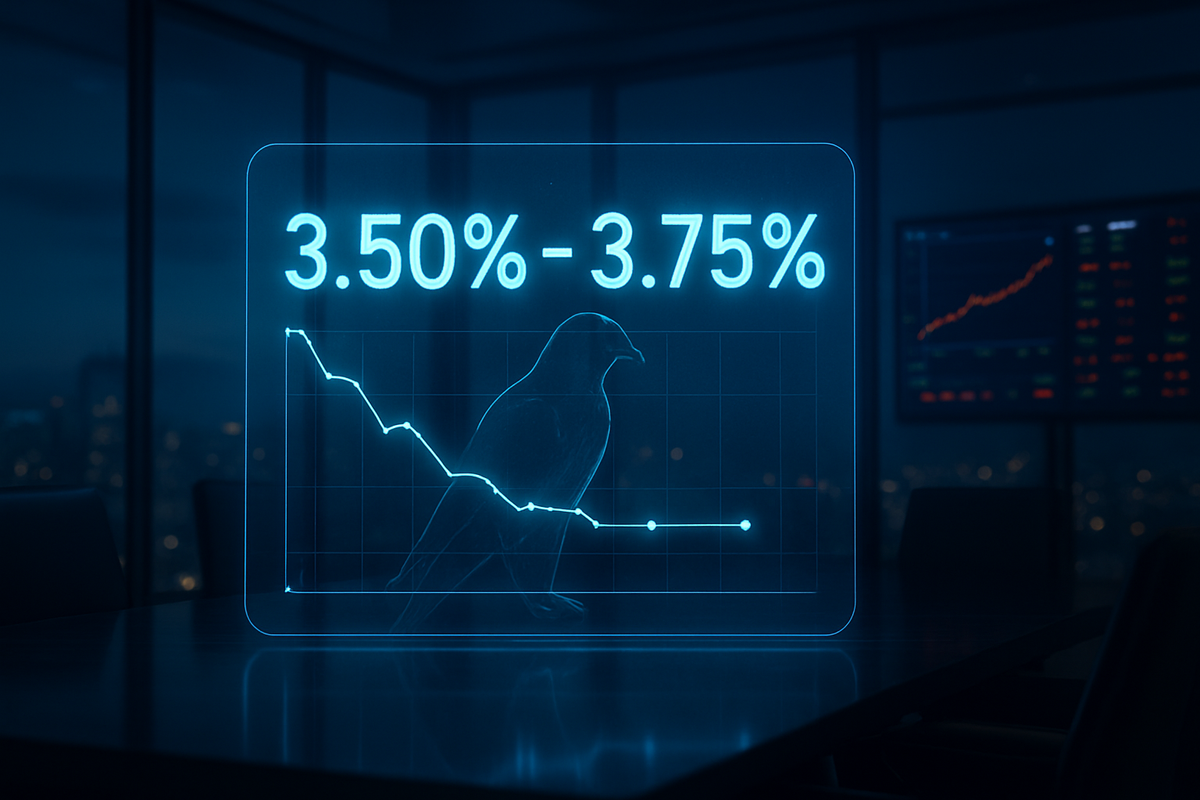
In a significant pivot that has sent ripples through the fixed-income and equity markets, Dallas Fed President Lorie Logan signaled on February 10, 2026, that the Federal Reserve may be at the end of its easing cycle. Speaking at the FIA-SIFMA Asset Management Derivatives Forum in Austin, Texas, Logan expressed a growing reluctance to support further interest rate cuts in the near term, suggesting that the current federal funds rate—sitting in the 3.50% to 3.75% range—may have already reached the elusive "neutral" level.
The immediate implications of Logan’s stance were felt across Wall Street, as investors recalibrated their expectations for the remainder of 2026. Her comments effectively poured cold water on hopes for a spring rate cut, reinforcing a "higher-for-longer" sentiment that many had hoped was a relic of 2024. With the 10-year Treasury yield climbing in response, the market is now pricing in a period of prolonged stability, characterized by high borrowing costs and a "wait-and-see" approach to inflation and labor data.
The Austin Declaration: A Shift in the Winds
President Lorie Logan’s speech on Tuesday was more than just a routine policy update; it was a calculated signal to a market that had perhaps grown too optimistic about the pace of monetary easing. Following three consecutive 25-basis-point cuts in late 2025, the Federal Open Market Committee (FOMC) appeared to be on a glide path toward a more stimulative stance. However, Logan argued that the progress on inflation has reached a delicate plateau. "I am more worried about inflation remaining stubbornly high than about a potential downturn in the labor market," Logan stated, emphasizing that while she remains cautiously optimistic, upward pressure on prices remains a clear and present danger.
The timeline leading to this moment has been one of cautious recalibration. Throughout late 2024 and much of 2025, the Fed managed a "soft landing" that many economists thought impossible. As the labor market showed signs of cooling last year, the Fed began lowering rates from their decade-highs. Yet, as of February 11, 2026, the economic reality has shifted. Recent retail sales data and resilient consumer spending have suggested that the economy is far from needing further stimulus. Logan’s comments suggest that the FOMC is now divided, with a growing "hawkish neutral" faction emerging among the governors.
Market reaction was swift. The yield on the 10-year Treasury note spiked, dragging the iShares 20+ Year Treasury Bond ETF (NASDAQ: TLT) down as bond prices fell. Stakeholders, including institutional asset managers and hedge fund macro desks, are now shifting their focus toward the upcoming March FOMC meeting. The key players in this drama are not just the current voters like Logan, but also the looming leadership transition. With Jerome Powell’s term set to expire in May, the nomination of Kevin Warsh to lead the central bank has introduced a new layer of uncertainty, as Warsh is traditionally viewed as a policy hawk who prioritizes price stability above all else.
Winners and Losers in a High-Rate Environment
The prospect of a "hawkish hold" creates a bifurcated landscape for public companies. Major financial institutions, such as JPMorgan Chase & Co. (NYSE: JPM) and Bank of America Corp. (NYSE: BAC), often find a silver lining in a plateaued rate environment. Higher-for-longer rates allow these banks to maintain wider net interest margins—the difference between what they earn on loans and what they pay out on deposits. Following Logan’s remarks, bank stocks showed relative resilience compared to the broader market, as the threat of an immediate rate-cut-driven margin squeeze evaporated.
Conversely, the technology sector and growth-oriented stocks face a more challenging road. Companies like Apple Inc. (NASDAQ: AAPL) and Microsoft Corp. (NASDAQ: MSFT), which serve as heavyweights in the SPDR S&P 500 ETF Trust (NYSEARCA: SPY), are highly sensitive to the discount rates used to value future cash flows. When the 10-year yield rises, these valuations often come under pressure. Furthermore, capital-intensive sectors such as real estate are feeling the pinch; with mortgage rates hovering around 6.25%, residential developers and Real Estate Investment Trusts (REITs) are bracing for a slowdown in transaction volume.
The automotive sector and other consumer discretionary industries may also struggle as financing costs for big-ticket items remain elevated. For firms like Tesla, Inc. (NASDAQ: TSLA), high interest rates act as a direct headwind to consumer affordability, potentially forcing further price cuts to maintain volume, which in turn pressures profit margins. The "losers" in this scenario are clearly those dependent on cheap credit to fuel expansion or consumer demand.
Broader Significance and Historical Precedents
Logan’s stance fits into a broader industry trend of "post-pandemic normalization," where central banks globally are struggling to find the "r-star"—the real neutral rate of interest. This event mirrors the "taper tantrum" or the "higher for longer" narrative of late 2023 and early 2024, where the Fed had to repeatedly push back against market expectations of early easing. The historical precedent suggests that when the Fed reaches this "neutral" zone, volatility tends to increase as the market searches for the next major catalyst.
The ripple effects extend beyond U.S. borders. A hawkish Fed keeps the U.S. dollar strong, which can create headwinds for multinational corporations and put pressure on emerging market economies that hold dollar-denominated debt. Furthermore, the policy implications are intertwined with the current political climate. The Trump administration has historically been vocal about desiring lower interest rates to stimulate growth. Logan’s insistence on Fed independence and a data-driven "pause" sets up a potential friction point between the central bank and the executive branch as the 2026 mid-term elections approach.
The Path Forward: Scenarios and Strategic Pivots
Looking ahead to the next quarter, the market is now braced for two primary scenarios. In the first, inflation data for January and February (due in the coming weeks) comes in hotter than expected, potentially forcing the Fed to not only hold rates steady but to discuss the possibility of a "insurance" hike. In the second, more optimistic scenario, a significant cooling in the labor market could provide the "material cooling" Logan mentioned as a prerequisite for further cuts.
In the short term, corporations will likely pivot toward "capital discipline," prioritizing share buybacks and debt reduction over aggressive, debt-fueled acquisitions. For investors, the "market opportunities" may lie in high-quality fixed income, which now offers attractive yields without the duration risk of a rapidly changing rate environment. However, the challenge remains: if the Fed stays on hold while the economy slows more than expected, the risk of a "policy error"—keeping rates too high for too long—could become the dominant market narrative by the summer of 2026.
Wrap-Up: What to Watch in the Coming Months
The key takeaway from President Lorie Logan’s Austin speech is that the "easy money" phase of the recovery is officially over. The Fed has transitioned from a posture of active easing to one of strategic patience. For the markets, this means the era of predictable, incremental cuts has been replaced by a data-dependent grind. Investors should maintain a diversified stance, recognizing that the "neutral rate" is a moving target that the Fed is still trying to pin down.
Moving forward, the market will be hyper-focused on three things: the transition of Fed leadership to Kevin Warsh, the upcoming CPI and PCE inflation reports, and any signs of cracks in the labor market. While the S&P 500 remains near historical highs, the lack of further rate relief suggests that earnings growth, rather than multiple expansion, will have to be the primary driver of stock performance in 2026. As Logan suggested, "humility" is the word of the day for both policymakers and investors alike.
This content is intended for informational purposes only and is not financial advice.