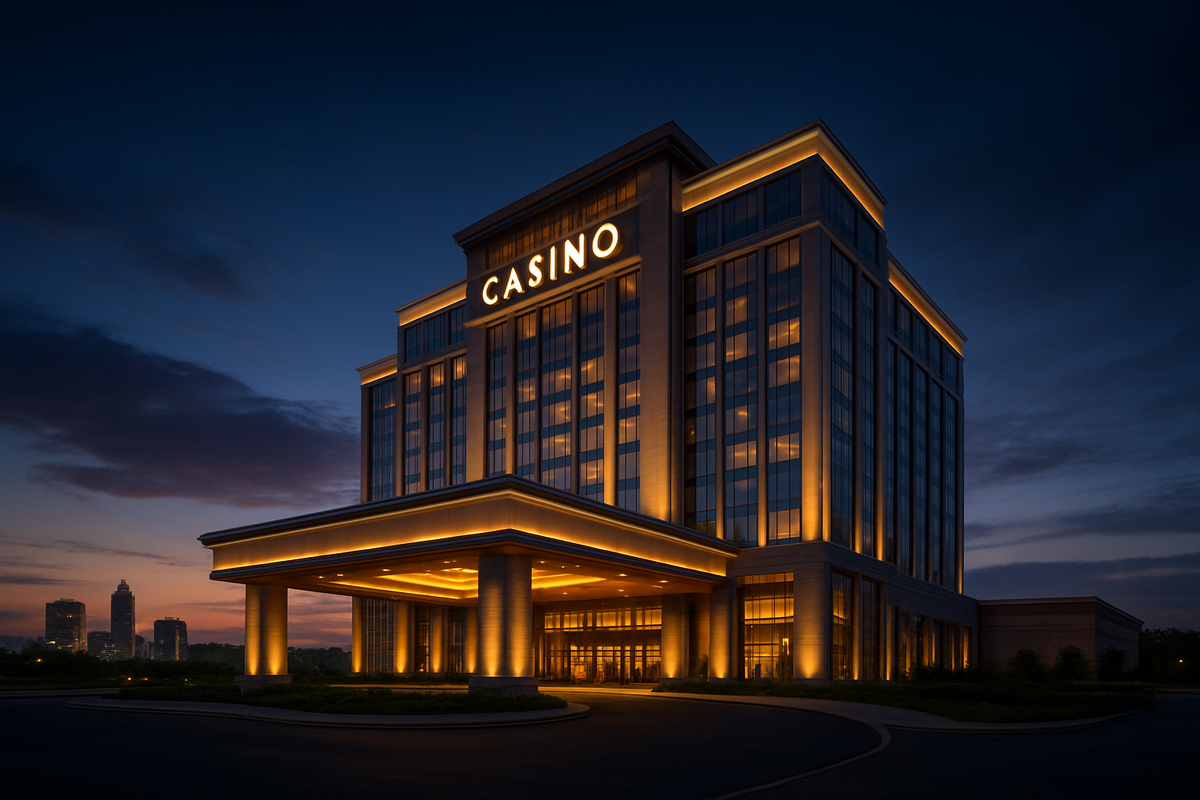
Gaming and Leisure Properties (NASDAQ: GLPI) officially announced the closing of its $700 million acquisition of the real estate assets belonging to Bally’s Twin River Lincoln Casino Resort in Rhode Island. The deal, which finalized on February 11, 2026, marks one of the most significant regional gaming transactions in recent years, further cementing GLPI’s status as a powerhouse in the triple-net lease REIT sector. By bringing this "trophy" asset into its portfolio, GLPI has secured a high-performing revenue stream while providing its tenant with the critical liquidity needed for its ambitious expansion plans.
The immediate implications of the deal are twofold: for GLPI, it represents a substantial boost to recurring lease income backed by one of the strongest regional casino markets in the United States. For Bally's Corporation (NYSE: BALY), the influx of $700 million serves as a lifeline for its multi-billion-dollar development pipeline, particularly its massive permanent casino project in Chicago. As the gaming industry watches this consolidation of real estate, the transaction highlights a growing trend of operators de-leveraging through sale-leaseback agreements to fund capital-intensive flagship projects.
A Masterful Real Estate Play in the Northeast
The acquisition of the Twin River Lincoln Casino Resort was executed as a sale-leaseback transaction, with the property being integrated into the existing Bally’s Master Lease II. Under the terms of the agreement, GLPI paid $700 million for the real estate, which will generate an initial annual cash rent of $56 million. This reflects an 8.0% capitalization rate, a figure that analysts view as highly accretive given the property’s historical performance. The lease is set for an initial term ending in 2039, with four subsequent five-year renewal options, ensuring a long-term partnership between the REIT and the operator.
This closing is the culmination of a strategic roadmap that began years ago. Originally discussed as part of a broader master lease structure in 2022, the Lincoln asset was often considered the "crown jewel" of Bally’s regional holdings. Located just outside Providence and within easy reach of the Boston metropolitan area, the facility generated over $490 million in Gross Gaming Revenue (GGR) in 2025. The inclusion of the property in Master Lease II brings the total number of assets under that specific agreement to five, significantly diversifying the geographic risk and improving the overall credit profile of the lease.
The timing of the deal was critical for Bally’s. In tandem with the $700 million payout, Bally’s secured a new $1.1 billion term loan facility due in 2031. This massive recapitalization allowed the company to retire approximately $1.47 billion in debt that was set to mature in 2028. By clearing these hurdles, Bally’s has effectively reset its balance sheet, moving from a position of defensive debt management to offensive project execution.
Initial market reactions have been cautiously optimistic. Shares of GLPI saw a modest uptick following the announcement, as investors cheered the addition of a high-coverage asset (with a "four-wall" rent coverage ratio of over 1.9x). Meanwhile, Bally’s stock stabilized after months of volatility, as the path toward completing its Chicago flagship became clearer.
Evaluating the Stakeholders: Winners and Losers
Gaming and Leisure Properties stands out as the primary winner in this transaction. By acquiring a premier asset in a stable, high-barrier-to-entry market like Rhode Island, GLPI has insulated itself against the more volatile fluctuations seen in the Las Vegas Strip. While competitors like VICI Properties (NYSE: VICI) have focused heavily on the luxury tourism market in Nevada, GLPI’s focus on regional "drive-to" markets has proven resilient. This acquisition adds a reliable, CPI-indexed income stream that provides a hedge against inflation, with rent escalations built-in at a 1.0% floor.
Bally’s Corporation finds itself in a more complex position. On one hand, the company has successfully unlocked the value of its real estate to survive a looming debt wall and fund its future. On the other hand, it no longer owns its most profitable regional asset and is now committed to a long-term lease with significant annual rent obligations. The "win" for Bally’s is entirely dependent on the success of the Chicago project; if the permanent Chicago casino fails to meet expectations, the loss of the Lincoln real estate could be seen in hindsight as a costly sacrifice.
For other players in the sector, such as Penn Entertainment (NASDAQ: PENN) and Boyd Gaming (NYSE: BYD), the deal signals a competitive tightening in the Northeast. GLPI’s ownership of the Lincoln real estate ensures that the facility will remain a well-capitalized competitor for years to come. However, the high valuation of the deal may also set a new benchmark for other regional operators looking to monetize their own real estate, potentially driving up property values across the sector.
Regional Resilience and the Shift in REIT Strategy
The $700 million Lincoln deal fits into a broader industry trend where gaming REITs are becoming more than just landlords—they are becoming essential investment partners. In an era where interest rates have remained higher for longer than many anticipated in the early 2020s, traditional bank financing for massive casino developments has become harder to secure. REITs like GLPI have stepped into the void, providing "sale-leaseback" capital that functions as a surrogate for high-interest debt.
This event also highlights the divergence between regional gaming and destination gaming. Throughout 2025, Las Vegas saw a slight softening in tourism numbers as consumer discretionary spending tightened. Conversely, regional casinos like Twin River Lincoln maintained steady foot traffic, proving that local gaming remains a "sticky" consumer habit even in uncertain economic times. This trend has led to a valuation gap where regional-focused REITs are increasingly prized for their stability.
Furthermore, the deal underscores the regulatory stability of the Rhode Island market. Unlike newer gaming jurisdictions that are still finding their footing, Rhode Island has a mature regulatory environment that provides a predictable landscape for real estate investors. This predictability is a key component of why GLPI was willing to pay a 12.5x rent multiple for the property, a premium compared to more speculative gaming markets.
The Road Ahead: Chicago and Beyond
Looking forward, all eyes will shift to the "Windy City." The $700 million from the Lincoln sale is being funneled directly into the $1.7 billion Bally’s Chicago project. GLPI has already committed over $1.1 billion to this endeavor, including land acquisition and construction funding. The success of the Lincoln deal was essentially the final domino that needed to fall to ensure the Chicago project remains on track for its projected 2027 opening.
In the short term, Bally’s is navigating a delicate construction timeline. The company recently sought legislative extensions in Illinois to allow its temporary casino at Medinah Temple to operate through September 2027, providing a buffer against potential construction delays at the permanent site. For GLPI, the next 18 months will be focused on monitoring the progress of its various construction-funded projects and potentially looking toward Tribal gaming as the next frontier for growth.
The market may also see further consolidation. With Bally’s now having successfully recapitalized, other mid-tier operators may look to mirror this strategy. We could see a wave of "Master Lease" expansions where REITs bundle multiple regional assets to provide operators with the massive liquidity injections required for digital gaming expansion or international ventures.
Final Assessment: A Stabilizing Force in the Market
The closing of the Bally’s Lincoln acquisition is a landmark event that reaffirms the strength of the gaming REIT model. GLPI has demonstrated its ability to act as a stabilizing force, providing the capital necessary for industry evolution while securing high-quality, recurring income for its shareholders. The deal effectively de-risks Bally’s immediate future, though it raises the stakes for the company's long-term performance in the competitive Chicago market.
For investors, the key takeaway is the resilience of regional gaming real estate. As of February 2026, the sector is moving away from "rate-driven" volatility and toward "fundamental-driven" growth. The 8.0% cap rate on the Lincoln deal suggests that there is still significant value to be found in regional markets, even as the larger destination hubs face saturation.
In the coming months, investors should watch for the quarterly earnings reports of both GLPI and Bally’s to see how the debt retirement impacts Bally's interest expense and how the new rent income flows into GLPI’s Adjusted Funds From Operations (AFFO). The progress of the Chicago vertical construction will also serve as a barometer for whether this $700 million gamble will ultimately pay off for the operator.
This content is intended for informational purposes only and is not financial advice.