On February 11, 2026, Meta Platforms Inc. (NASDAQ: META) officially broke ground on a sprawling $10 billion data center campus in Lebanon, Indiana, marking a monumental shift in the company’s infrastructure strategy. The 1-gigawatt (1GW) facility, situated within the state’s burgeoning LEAP Research and Innovation District, is designed to be the primary engine behind CEO Mark Zuckerberg’s most ambitious project to date: the deployment of "personal superintelligence" across Meta’s global ecosystem.
This massive investment represents Meta’s 27th data center site in the United States and underscores the escalating "arms race" for AI-ready computing power. As the company moves beyond foundational large language models (LLMs) toward deeply personalized, agentic AI tools, the Lebanon site serves as a physical testament to the sheer scale of energy and silicon required to bring Zuckerberg’s vision of a ubiquitous, highly contextual digital assistant to billions of users.
A High-Tech Fortress in the Heartland
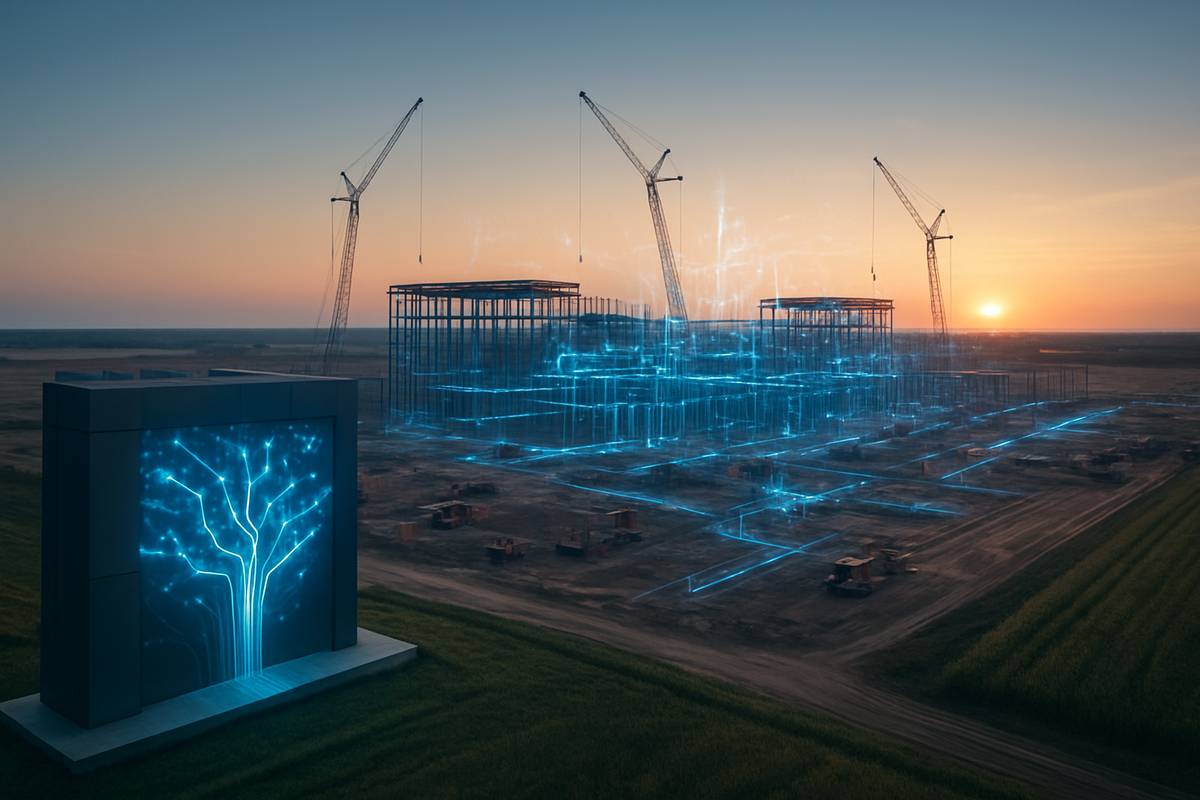
The groundbreaking ceremony in Boone County signals the start of a multi-year construction phase for what will be a 1,500-acre "mega-campus." At full build-out, the site will encompass approximately 4 million square feet across 13 to 15 buildings, including a dozen massive data halls. The facility’s defining characteristic is its unprecedented 1-gigawatt power capacity—roughly enough to power 750,000 homes—making it one of the most power-dense computing hubs on the planet. This "gigawatt-scale" architecture is purpose-built to accommodate the liquid-cooling systems and high-density server racks necessary for the next generation of AI chips.
The path to this moment began in late 2024 when the Indiana Economic Development Corporation (IEDC) prioritized the LEAP District for high-tech industrial growth. Following Meta’s successful $800 million project in Jeffersonville, Indiana, the company quietly negotiated for a much larger footprint in Lebanon, drawn by the state’s aggressive utility infrastructure upgrades and available land. Key stakeholders, including Indiana Governor Eric Holcomb and executives from Meta’s infrastructure team, emphasized that this site is not merely for storage, but for the active "training and inference" of Meta’s most advanced AI models yet.
The timing is critical. During Meta’s Q4 2025 earnings call just weeks ago, Zuckerberg described 2026 as the year Meta would "pivot from generalized AI to personal superintelligence." This strategy relies on the Lebanon facility to process the massive amounts of real-time data required for AI agents to understand a user’s unique context—from their social connections on Instagram to the visual data captured by Ray-Ban Meta glasses—delivering a level of personalized utility previously confined to science fiction.
The Infrastructure Winners: From Silicon to Power
Meta’s $10 billion commitment creates a significant ripple effect across the technology and utility sectors. The primary beneficiary remains Nvidia Corp (NASDAQ: NVDA), whose high-end Blackwell and subsequent-generation GPUs are the standard for the high-density racks planned for the Lebanon campus. Meta’s massive capital expenditure (CapEx) guidance for 2026, which this project helps anchor, serves as a bullish signal for the entire AI hardware supply chain.
In the networking and infrastructure space, Arista Networks (NYSE: ANET) is expected to provide the high-speed switching fabric required to link thousands of GPUs within the 1GW site. Furthermore, the shift toward a 1GW liquid-cooled design places Vertiv Holdings Co (NYSE: VRT) in a prime position to supply the advanced thermal management systems Meta has pioneered. On the utility side, AES Corp (NYSE: AES) and Duke Energy Corp (NYSE: DUK) stand to benefit from the massive, long-term power demand, though they face the daunting task of scaling grid capacity to meet Meta’s 100% renewable energy mandate.
Conversely, the sheer scale of Meta’s spending may put pressure on smaller competitors who lack the balance sheet to build 1GW facilities. While Alphabet Inc. (NASDAQ: GOOGL) and Microsoft Corp (NASDAQ: MSFT) can match this scale, mid-tier cloud providers may find themselves priced out of the specialized real estate and power markets that Meta is currently dominating.
Redefining the Industrial Landscape
The Lebanon project reflects a broader trend in the tech industry: the "industrialization of AI." We are moving past the era of standard data centers into the era of "AI Factories." Meta’s decision to build its 27th site in a rural Indiana district, rather than a traditional tech hub like Northern Virginia or Silicon Valley, highlights the desperate search for "power and space." The LEAP District, which also hosts a massive complex for Eli Lilly and Company (NYSE: LLY), is becoming a blueprint for how states can use utility-ready "mega-sites" to attract the infrastructure of the future.
This move also carries significant regulatory and policy implications. As data centers begin to consume gigawatts of power, the tension between tech growth and grid stability will intensify. Meta has attempted to get ahead of this by pledging $1 million annually to local energy assistance and investing $120 million in local water and road infrastructure. However, the precedent set by a 1GW site will likely trigger new federal and state debates over how to balance the energy needs of "superintelligent" AI with the requirements of residential and manufacturing consumers.
The Road to 2030: What’s Next for Meta?
In the short term, the Lebanon groundbreaking will keep Meta’s CapEx high, a point of constant scrutiny for investors. However, the long-term strategic pivot is clear: Meta is betting that "personal superintelligence" will be the next great computing platform, succeeding the smartphone. If successful, the Lebanon data center will be the "brain" that powers millions of AI agents capable of scheduling meetings, coding software, and managing digital lives in real-time.
As construction progresses over the next 24 to 36 months, the market will be watching for Meta’s ability to secure enough green energy to keep the 1GW site operational without relying on fossil fuels. Any delays in power delivery or shifts in the regulatory environment regarding AI energy consumption could pose a risk to the project’s timeline and, by extension, Meta’s AI rollout schedule.
The Bottom Line for Investors
Meta’s Lebanon groundbreaking is a definitive statement of intent. By building a $10 billion, 1GW "AI Factory," Meta is moving to insulate itself from the hardware constraints that have slowed other tech giants. For investors, the takeaway is twofold: first, Meta remains fully committed to its high-CapEx strategy, viewing physical infrastructure as its most durable competitive moat. Second, the concept of "personal superintelligence" is no longer a theoretical goal but a multi-billion dollar roadmap.
Moving forward, the focus will shift from how much Meta is spending to how effectively it can monetize the intelligence generated within these walls. The success of the Lebanon site will ultimately be measured not by its square footage, but by its ability to turn "personal superintelligence" into a revenue-generating reality for billions of users.
This content is intended for informational purposes only and is not financial advice.