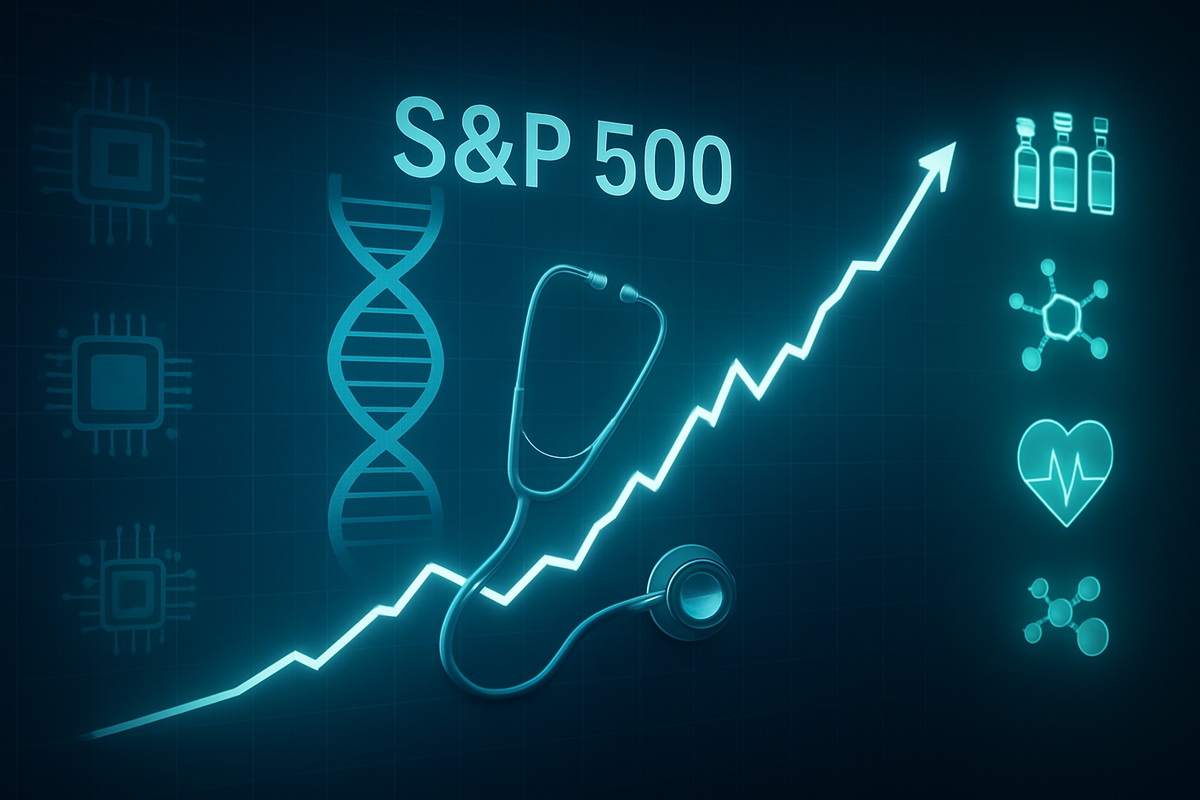
As of February 12, 2026, the financial landscape has undergone a tectonic shift, with the healthcare sector decisively seizing the mantle of market leadership. After years of dominance by high-flying technology giants, investors have executed a massive "Great Rotation," fleeing overextended tech valuations in favor of the stability and renewed growth prospects of healthcare value plays. Since the final quarter of 2025, the healthcare sector has surged by a remarkable 10%, outpacing every other major industry group in the S&P 500 (INDEXSP:.INX).
This resurgence marks a dramatic departure from the narrative of the early 2020s. For much of the previous decade, the sector was haunted by the specter of "policy overhang" and the uncertainty of drug pricing reform. However, as 2026 begins, that fear has transformed into a strategic advantage. With the first waves of Medicare drug price negotiations now fully implemented and "de-risked," the market has finally found a floor for pharmaceutical valuations, sparking a buying spree that has propelled several industry titans to historic highs.
The Dawn of the Healthcare Era
The path to healthcare’s 2026 dominance began in earnest during a volatile Q4 2025. As the artificial intelligence fervor that propelled the "Magnificent Seven" began to show signs of exhaustion, institutional capital sought refuge in sectors with resilient cash flows and lower price-to-earnings ratios. The Healthcare Select Sector SPDR Fund (NYSEARCA:XLV) became the primary beneficiary of this migration. The catalyst was a series of better-than-expected earnings reports from major drugmakers, who demonstrated that they could not only survive the new regulatory environment but thrive within it.
The timeline of this ascent is closely tied to the "de-risking" of the Inflation Reduction Act (IRA). On January 1, 2026, the first set of negotiated Maximum Fair Prices (MFPs) for 10 blockbuster drugs took effect. While critics once feared these price cuts—ranging from 38% to 79%—would cripple the industry, the reality proved far less dire. Most major pharmaceutical companies had already adjusted their long-term guidance and R&D pipelines years in advance. By the time the prices went live, the "worst-case scenario" was already baked into stock prices, leaving room for a massive relief rally.
Key stakeholders, from hospital administrators to biotech venture capitalists, have noted that the sector is now benefiting from a "double tailwind." First, the demographic reality of an aging global population continues to drive record demand for chronic care and weight-loss treatments. Second, the stabilization of the regulatory landscape has allowed for a resurgence in mergers and acquisitions (M&A). Throughout January 2026, the industry saw a flurry of multi-billion-dollar deals as "Big Pharma" used its cleaned-up balance sheets to acquire specialized biotech firms, further fueling investor optimism.
Separating the Winners from the Laggards
In this new market regime, the "Winners" are those who have successfully navigated the transition to the next generation of blockbuster therapies. Eli Lilly and Company (NYSE: LLY) has emerged as the undisputed titan of the sector, becoming the first pharmaceutical firm to reach a $1 trillion market capitalization in early 2026. Driven by the stratospheric demand for its GLP-1 obesity and diabetes medications, Zepbound and Mounjaro, Lilly’s stock is up over 60% over the last year. The company’s mid-2026 roadmap, which includes the anticipated launch of the oral medication Orforglipron, has kept investors firmly in the "buy" camp.
Merck & Co. (NYSE: MRK) has also secured a winning position, trading near $122 as of mid-February. By successfully extending the patent runway for its flagship cancer drug, Keytruda, through new subcutaneous formulations and diversifying into rare diseases with the success of Winrevair, Merck has proven that the "patent cliff" can be managed. Similarly, AbbVie Inc. (NYSE: ABBV) has defied skeptics by successfully backfilling the revenue lost from Humira’s biosimilar competition with newer immunology hits like Skyrizi and Rinvoq.
Conversely, the managed care space has faced a more difficult start to 2026. UnitedHealth Group (NYSE: UNH), once the bedrock of the sector, has lagged significantly, with its stock price hovering around $339—a sharp decline from its 2024 peaks. The company has struggled with a "perfect storm" of higher-than-anticipated medical utilization rates and less favorable Medicare Advantage reimbursement rates from the government. While the broader sector thrives on drug innovation, insurers like UnitedHealth and CVS Health (NYSE: CVS) are currently navigating a painful period of margin compression, making them the primary "losers" in the initial stages of the Great Rotation.
Analyzing the Broader Significance
The healthcare sector's rise is more than just a momentary trend; it represents a fundamental re-rating of the industry's risk profile. Historically, healthcare traded at a discount due to political uncertainty. However, the successful implementation of the 2026 price caps has provided something the market craves above all else: predictability. Analysts now view the pharmaceutical industry through a lens similar to consumer staples—reliable, defensive, and essential—but with the added "kicker" of high-margin innovation in fields like gene therapy and AI-driven drug discovery.
This shift has profound ripple effects across the market. The rotation out of tech and into healthcare has softened the blow of slowing growth in Silicon Valley, preventing a broader market collapse and helping the S&P 500 maintain its upward trajectory toward the 7,000-point milestone. Furthermore, the "de-risking" of drug pricing has set a precedent for how the government and private industry can coexist in a regulated market, potentially calming fears about future interventions in other sectors like energy or banking.
Comparisons are already being drawn to the late 1990s, where a post-dot-com bubble market saw a similar flight to quality in defensive sectors. However, unlike the "value" of the past, the 2026 healthcare sector is high-tech. The integration of generative AI into drug development cycles has shortened the time from discovery to clinical trials by nearly 30%, according to some estimates. This fusion of "Value" and "Innovation" is what makes the 2026 rotation unique and, potentially, more sustainable than previous market cycles.
The Road Ahead: What to Watch Next
Looking toward the second half of 2026 and beyond, the healthcare sector faces both new opportunities and looming challenges. The short-term focus will remain on the "Round Three" selection of drugs for Medicare negotiation, which includes high-profile obesity medications. How the Centers for Medicare & Medicaid Services (CMS) handles these blockbuster drugs will be a critical test for the stability of pharmaceutical margins. If the "negotiated" prices remain reasonable enough to permit continued R&D, the rally is likely to extend into 2027.
Strategically, the next pivot for the sector will be the "Retailization of Healthcare." As companies like Amazon (NASDAQ: AMZN) and Walmart (NYSE: WMT) continue to integrate more deeply into the pharmacy and primary care space, traditional players will need to adapt their delivery models. We may see a wave of partnerships between "Big Pharma" and "Big Retail" as they seek to capture the growing trend of home-based and digital-first medical care.
Investors should also keep a close eye on interest rates. The "Great Rotation" has been supported by a stabilizing rate environment that favors the long-term cash flows of healthcare companies. Should inflation reignite or the Federal Reserve pivot back to a hawkish stance, the high-dividend-paying stocks in the healthcare space could face competition from rising bond yields. However, for the moment, the sector remains the preferred destination for those seeking a "safe harbor" that doesn't sacrifice growth.
Summary and Market Outlook
The healthcare sector's 10% gain since Q4 2025 is a testament to the industry's resilience and the market's evolving appetite for value. By weathering the storm of drug pricing reform and emerging with a clearer, more predictable roadmap, the sector has transformed from a source of anxiety into a pillar of market strength. The Great Rotation has rewarded companies with strong pipelines and penalized those caught in the squeeze of rising utilization costs and regulatory friction.
Moving forward, the market appears poised for continued healthcare outperformance, provided that clinical innovation continues to outpace regulatory pressure. For investors, the takeaway is clear: the era of tech-only dominance has ended, and a more balanced, sector-diverse market has taken its place. While the "Magnificent Seven" may still hold a place in portfolios, the "Healing Giants" of the healthcare world are now the ones driving the S&P 500's next leg up.
Watch for the Q1 2026 earnings season to provide further confirmation of these trends. If the leaders like Eli Lilly and Merck continue to post double-digit growth despite the new pricing caps, it will confirm that the healthcare bull market is just getting started.
This content is intended for informational purposes only and is not financial advice.