Under the decisive leadership of CEO Brian Niccol, Starbucks (NASDAQ: SBUX) has reached a pivotal milestone in its multi-year "Back to Starbucks" transformation. As of February 2026, the Seattle-based coffee giant is reporting its first sustained period of domestic traffic growth in two years, a feat attributed to its "National Champions" initiative. This strategy prioritizes the "human craft" of coffee over the sterile efficiency of recent years, effectively pivoting the brand away from being a mere transactional utility and back toward its heritage as a premium "Third Place" for social connection.
The immediate implications are significant: Starbucks has successfully reversed a dangerous trend of declining U.S. store visits, which had plagued the company throughout late 2024 and 2025. By empowering its elite "National Champions"—baristas who have won top-tier internal craft competitions—to lead training and culture at the store level, the company has seen a 3% increase in transaction volume in the first quarter of 2026. This tactical shift is coupled with a massive capital investment in store "uplifts" designed to restore the warmth and community atmosphere that originally defined the brand.
The Resurrection of Coffee Craft: From Assembly Lines to Artistry
The "National Champions" strategy is the cultural cornerstone of a broader operational overhaul that began when Brian Niccol took the helm in late 2024. At that time, the company was reeling from operational complexity, inconsistent service, and a growing perception that it had become an "overpriced fast-food window." Niccol’s response was to elevate the role of the barista from a "drink assembler" to a "craftsperson." By early 2026, this has manifested in the empowerment of Regional and National Barista Champions to serve as "Coffeehouse Coaches," a new management layer dedicated solely to maintaining service excellence and craft standards across 14,000+ North American locations.
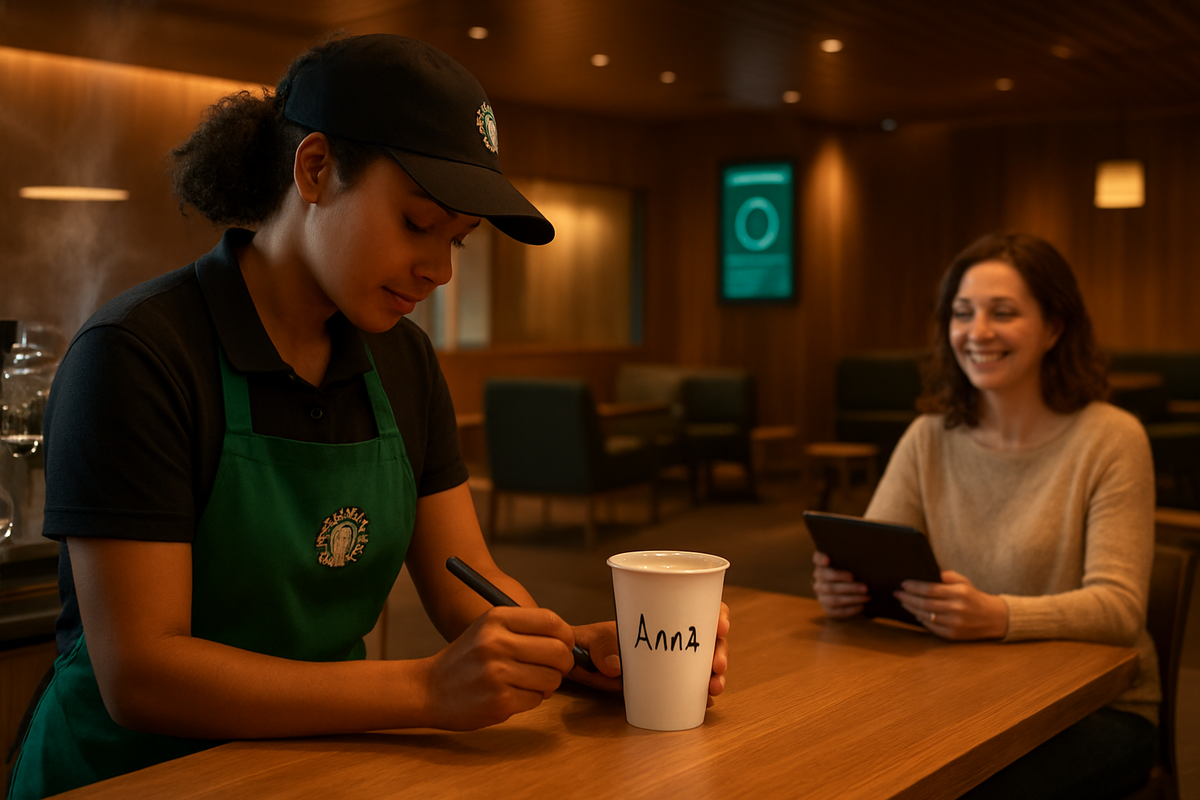
The timeline leading to this moment was marked by a series of aggressive "Back to Basics" moves. In 2025, Starbucks re-introduced condiment bars to all U.S. stores and mandated the return of hand-written messages on cups using Sharpies—rituals that had been phased out for speed but were found to be essential for customer loyalty. Simultaneously, the company began a "disciplined footprint" strategy, closing nearly 900 underperforming or overly sterile pickup-only locations that could not support the new "Third Place" vision. Market reaction has been increasingly optimistic, with analysts noting that the focus on "quality over quantity" is finally paying dividends in customer frequency.
Winners and Losers in the Premium Coffee Pivot
Starbucks (NASDAQ: SBUX) itself stands as the primary beneficiary of this pivot, with its stock trading near $98—a 14% year-to-date increase—as investors regain confidence in the brand's domestic resilience. The move to premiumize the experience also benefits high-end bakery suppliers and merchandise manufacturers, as the company leans into high-margin artisanal food and viral "Bearista" collectibles to drive order value. Furthermore, technology partners that provide the underlying AI for "Green Dot Assist"—a tool that handles back-of-house logistics—are seeing increased integration as Starbucks automates the "boring stuff" to free up human labor.
However, the strategy creates challenges for competitors. Mid-market players like Dunkin' or JDE Peet’s (AMS:JDEP) may struggle to compete with Starbucks’ renewed focus on the premium experience without significant capital investment. Conversely, the "National Champions" strategy leaves a vacuum in the high-speed, low-cost segment, potentially creating an opening for drive-thru-only specialists like Dutch Bros (NYSE: BROS) or specialized tech-heavy players like Luckin Coffee (OTCMKTS:LKNCY) to capture the purely transactional customer who prioritizes speed above all else. Within the Starbucks ecosystem, the "losers" include store managers who fail to adapt to the new cultural standards, as the company has signaled a zero-tolerance policy for stores that cannot meet the high-touch service requirements.
A Wider Significance: The Death of the Transactional-Only Model
The Starbucks pivot reflects a broader industry trend toward "experiential retail" in an age of AI and automation. For years, the restaurant industry chased "frictionless" transactions, often at the expense of brand identity. Starbucks' decision to re-humanize its stores suggests that the limit of digital-only interaction has been reached for premium brands. This event serves as a bellwether for other service industries, indicating that while automation is essential for backend efficiency, the customer-facing "front" must remain deeply human to justify premium pricing.
Furthermore, this strategy has regulatory and labor implications. By positioning baristas as "National Champions" and craftspeople, Starbucks is effectively attempting to redefine the labor relationship. While the company still faces unionization pressure from groups like Starbucks Workers United, the shift toward higher-skilled, better-trained "coaches" could be seen as a way to improve employee retention and morale without traditional collective bargaining. This "craft-first" approach echoes historical precedents set by luxury brands like Apple (NASDAQ: AAPL) in the early 2000s, where the store experience became the primary marketing engine for the product.
The Horizon: Loyalty Revamps and Margin Management
Looking ahead to the remainder of 2026, the market is bracing for a major revamp of the Starbucks Rewards program scheduled for March. This update is expected to leverage the new "AI Ordering Companion," which allows customers to place complex orders using natural language. The challenge for the company will be balancing this high-tech digital experience with the "National Champions" human-centric focus. The goal is a "Coffeehouse of the Future" prototype—a smaller, 32-seat model that costs 30% less to build but retains the "stay-and-sip" culture of larger cafes.
In the long term, Starbucks must navigate the tightrope of margin compression. While traffic is up, the heavy investment in labor training, store renovations (averaging $150,000 per "uplift"), and high coffee commodity prices are weighing on operating margins, which currently hover between 12% and 14%. Strategic pivots may be required if global coffee prices continue to rise, potentially forcing further price hikes that could test the price elasticity of even the most loyal "Third Place" enthusiasts.
Conclusion: Watching the Steam Rise
The "National Champions" strategy marks a significant turning point in the Brian Niccol era, signaling that Starbucks has successfully diagnosed its brand rot and is applying the right cultural and operational medicine. By early 2026, the company has transitioned from a defensive posture to an offensive one, leveraging its scale to offer an experience that smaller "third-wave" shops cannot match and that "fast-coffee" competitors cannot replicate. The return to positive U.S. traffic is the strongest evidence yet that the brand’s core value proposition remains intact.
For investors, the coming months will be about watching the execution of the 1,000-store "uplift" program and the reception of the March loyalty overhaul. While the stock's recovery is promising, the true test will be whether Starbucks can maintain its 4% same-store sales growth without eroding margins through excessive labor costs. If the "National Champions" can truly transform the store culture, Starbucks may not just be selling coffee again—it will be selling the "Third Place" to a new generation of digital-native consumers.
This content is intended for informational purposes only and is not financial advice.