In a move that signals a massive shift in the semiconductor landscape, Texas Instruments (NASDAQ: TXN) has officially announced a definitive agreement to acquire Silicon Laboratories Inc. (NASDAQ: SLAB) for approximately $7.5 billion in an all-cash transaction. The deal, announced on February 4, 2026, represents Texas Instruments' most aggressive expansion since its landmark acquisition of National Semiconductor over a decade ago. By absorbing Silicon Labs, TI is positioning itself to dominate the burgeoning Internet of Things (IoT) and wireless connectivity markets, leveraging its superior manufacturing scale to undercut rivals in the "edge-to-cloud" race.
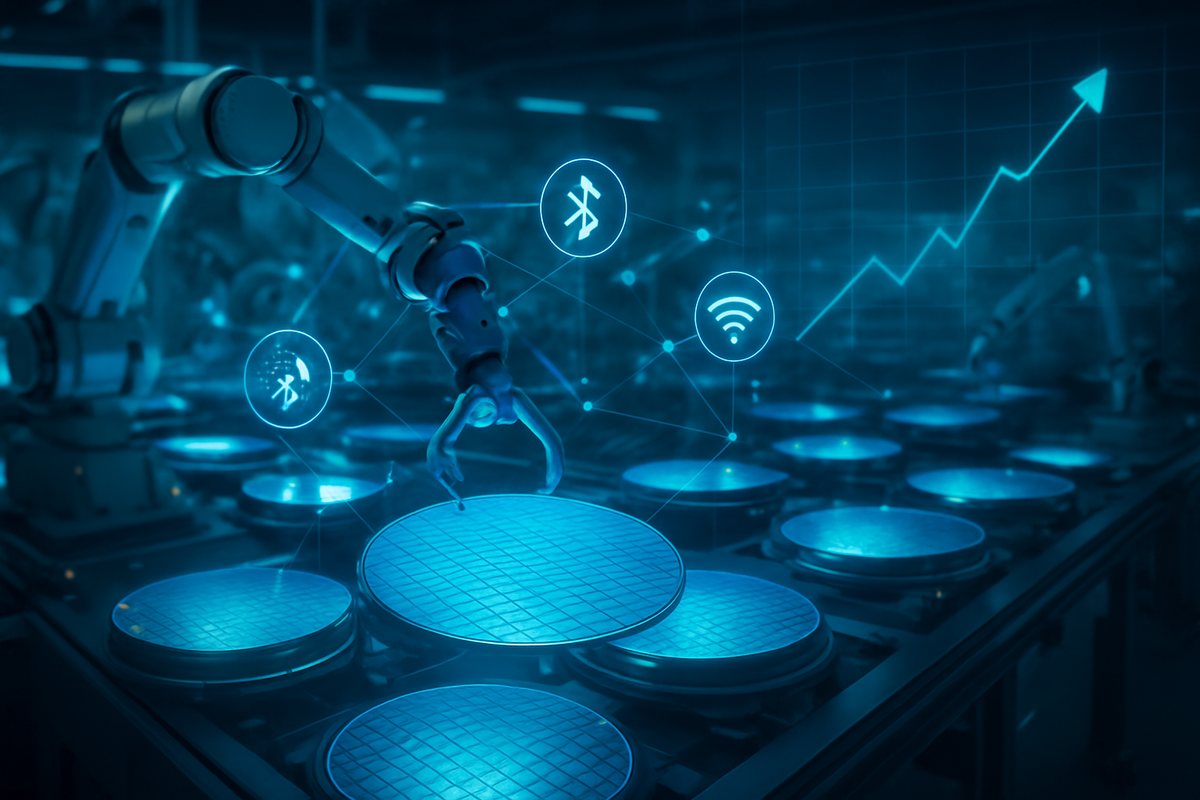
The $7.5 billion price tag—equivalent to $231.00 per share—offered a staggering 69% premium over Silicon Labs' last unaffected closing price. For Texas Instruments, this isn't merely a purchase of market share; it is a strategic "onshoring" play. TI plans to migrate Silicon Labs' specialized wireless portfolio from external foundries to its own state-of-the-art 300mm wafer fabs in the United States. This vertical integration is expected to yield $450 million in annual synergies within three years, fundamentally altering the economics of wireless chip production.
A New Era of Connectivity: The Deal Mechanics
The agreement, which received unanimous approval from the boards of both companies, targets a formal closing in the first half of 2027. Under the leadership of TI CEO Haviv Ilan, the Dallas-based giant is betting that the future of industrial and consumer technology lies in "secure, intelligent wireless" connectivity. Silicon Labs brings a library of over 1,200 specialized products to the table, including industry-leading stacks for Bluetooth, Zigbee, Thread, and Z-Wave—technologies that are the backbone of smart homes, industrial automation, and smart cities.
The timeline leading up to this moment reflects a year of intense speculation. Following the 2024–2025 semiconductor recovery, Silicon Labs had emerged as a prime target due to its "pure-play" focus on wireless IoT, despite facing headwinds from high manufacturing costs as a fabless entity. Initial market reactions were explosive: shares of Silicon Laboratories Inc. (NASDAQ: SLAB) surged 49% on the day of the announcement, nearing the $231 deal price. Conversely, Texas Instruments (NASDAQ: TXN) saw its stock dip a modest 2% as investors weighed the significant cash outlay and the 8.5x price-to-sales multiple against the long-term promise of manufacturing efficiencies.
Winners and Losers: Reshaping the Competitive Map
The clear winners in this transaction are the Silicon Labs shareholders, who have realized immediate, massive value. However, the long-term victor may be Texas Instruments itself. By moving Silicon Labs’ production to its internal 300mm fabs—such as the SM1 facility in Sherman, Texas—TI can produce wireless chips at a cost roughly 40% lower than competitors who rely on external foundries like Taiwan Semiconductor Manufacturing Co. (NYSE: TSM). This "manufacturing arbitrage" creates a formidable barrier to entry for smaller, fabless rivals.
On the losing side, traditional foundries stand to lose significant high-volume business as TI "reshores" production. Competitors like Nordic Semiconductor (OTC: NDVNF) may also find themselves in a squeeze; while they might pick up customers who prefer boutique engineering support over TI’s massive corporate structure, they will struggle to match TI’s new pricing power. Furthermore, NXP Semiconductors (NASDAQ: NXPI) and STMicroelectronics (NYSE: STM) now face a rival that offers a "full-stack" solution—combining analog power, high-performance processing, and world-class wireless connectivity in a single, vertically integrated bundle.
The Global Significance: Geopolitics and Industry Trends
This acquisition is a textbook example of the "reshoring" trend currently sweeping the technology sector, heavily influenced by the U.S. CHIPS Act and the National Defense Authorization Act (NDAA) for fiscal year 2026. By bringing critical IoT IP under the roof of a U.S.-owned-and-operated manufacturing powerhouse, the deal aligns with national security interests. However, this same alignment makes the deal a potential flashpoint in U.S.-China relations. The transaction must still clear the State Administration for Market Regulation (SAMR) in China, which has a history of delaying or "pocket-vetoing" U.S. semiconductor deals as a bargaining chip in trade negotiations.
Historically, this deal mirrors the consolidation seen in the analog sector during the 2010s, but with a software-centric twist. The true value of Silicon Labs lies in its "Simplicity Studio" software ecosystem. If TI can successfully integrate this software moat without alienating the developer community, they will have achieved what many hardware-first companies fail to do: creating a "sticky" platform that makes it difficult for engineers to switch to rival hardware.
Looking Ahead: Integration Challenges and Strategic Pivots
As the industry looks toward the 2027 closing date, the primary challenge for Texas Instruments will be cultural and operational integration. Silicon Labs has built its reputation on high-touch support and flexible software development kits (SDKs). TI, known for its "Amazon of chips" high-volume, low-cost model, must ensure it doesn't stifle the innovation that made Silicon Labs attractive in the first place. Strategic pivots are already underway; TI is expected to accelerate the development of "Edge AI" chips that combine its low-power processors with Silicon Labs' wireless tech, enabling devices to "think" and communicate without relying on the cloud.
The short-term focus for investors will be the regulatory dance in Beijing and Washington. Should the deal face significant "behavioral remedies" from Chinese regulators—such as forced technology sharing or price caps—the projected $450 million in synergies could be at risk. However, if the deal closes as planned, TI will emerge as the undisputed titan of the IoT era, possessing the rare combination of high-end wireless IP and the world’s most efficient manufacturing footprint.
Summary and Investor Outlook
The acquisition of Silicon Labs for $7.5 billion is a defining moment for Texas Instruments. It successfully addresses TI's historical weakness in specialized wireless protocols and provides the high-margin IP needed to fill its massive new 300mm fabs. While the premium paid was high, the strategic fit is undeniable, creating a powerhouse capable of dominating the industrial and consumer IoT markets for the next decade.
Investors should closely monitor two key metrics in the coming months: the timeline of regulatory approvals from China’s SAMR and any shifts in Silicon Labs’ customer retention. The semiconductor market is moving toward a future defined by scale and vertical integration; with this move, Texas Instruments has firmly planted its flag at the summit of that future.
This content is intended for informational purposes only and is not financial advice.