In a dramatic shift for India’s commodities markets, precious metals experienced a sharp sell-off on Friday, March 13, 2026. The Multi Commodity Exchange of India Ltd (NSE: MCX) saw a significant retreat in both gold and silver futures as a "triple threat" of macroeconomic headwinds—surging energy costs, a dominant US Dollar, and recalibrated interest rate expectations—triggered a wave of liquidations among domestic investors.
The immediate implications are stark for a market that had grown accustomed to record-breaking highs throughout early 2026. As prices for April and May deliveries breached psychological support levels, the broader financial ecosystem is now bracing for a period of heightened volatility. For Indian households and jewelers alike, the sudden correction serves as a reminder that even the most resilient safe-haven assets are not immune to the gravity of global currency fluctuations and geopolitical energy shocks.
Flash Crash in the Bullion Pit: Prices Breach Key Supports
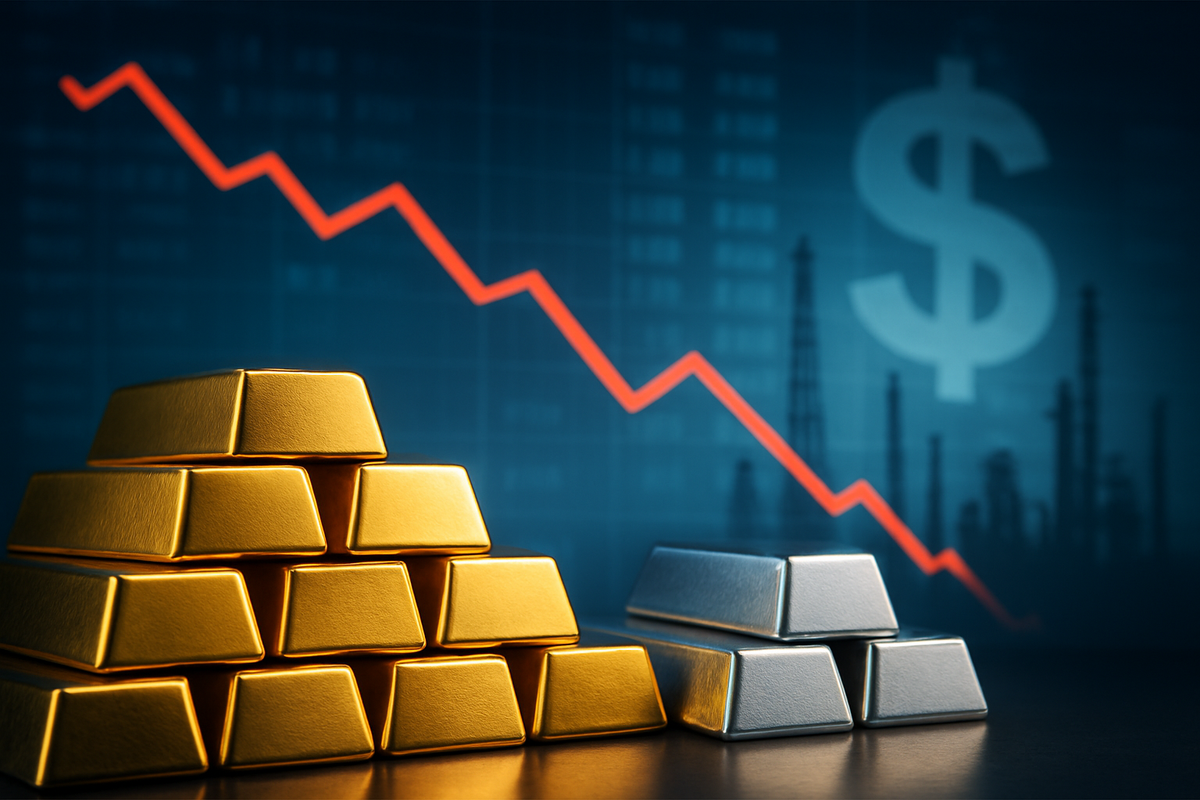
The trading session on March 13, 2026, will be remembered for its swiftness and scale. MCX silver futures for May 2026 delivery witnessed a staggering decline, dropping by over Rs 2,000 to hover around Rs 2,66,001 per kilogram. This correction follows a period in early March where silver had tested intraday peaks of nearly Rs 2,73,000, driven by industrial demand from the burgeoning electric vehicle and solar sectors. The sudden reversal has left retail traders scrambling to cover margin calls as the white metal’s volatility index spiked to its highest level in three months.
Gold, the traditional cornerstone of Indian wealth, was not spared the carnage. MCX gold futures for April 2026 delivery slipped below the critical Rs 1,60,000 mark, trading at approximately Rs 1,58,764 per 10 grams by the mid-afternoon session. The breach of this psychological floor represents a significant retreat from the Rs 1,63,800 highs seen just ten days prior. Market participants noted that the selling pressure intensified during the European market opening, as international bullion prices felt the weight of a strengthening greenback.
The timeline leading to this moment began in late February 2026, when escalating tensions in the Middle East led to the effective closure of the Strait of Hormuz. While such geopolitical instability typically bolsters gold, the specific nature of this crisis—an energy-led inflation shock—changed the calculus. By the second week of March, crude oil prices had surged past $120 per barrel, leading global central banks, including the US Federal Reserve, to signal that high interest rates might persist longer than previously anticipated to combat supply-side inflation.
Initial market reactions have been characterized by cautious deleveraging. Professional bullion dealers in Zaveri Bazaar and other major hubs reported a sudden lull in physical demand as buyers waited to see if the floor would hold. On the exchange, open interest in gold and silver contracts saw a notable decline, suggesting that speculative "long" positions are being unwound in favor of cash and dollar-denominated assets.
Corporate Fallout: Winners and Losers in a Correcting Market
The sharp decline in precious metals has sent ripples through the stock prices of listed entities tied to the bullion trade. Leading the "losers" list is Titan Company Limited (NSE: TITAN), India’s largest organized jewelry retailer. Rapid drops in gold prices can lead to short-term inventory devaluation and compressed margins if the company is unable to pass on the volatility to consumers through effective hedging. Similarly, gold loan providers like Muthoot Finance Ltd (NSE: MUTHOOTFIN) and Manappuram Finance Ltd (NSE: MANAPPURAM) face increased scrutiny; as the value of their underlying collateral (gold) drops, the Loan-to-Value (LTV) ratios of their existing portfolios tighten, potentially leading to more frequent auctions of pledged jewelry.
On the exchange side, Multi Commodity Exchange of India Ltd (NSE: MCX) itself faces a complex scenario. While high volatility typically boosts trading volumes and transaction fee revenue in the short term, a sustained bear market or a "crash" scenario can lead to a decrease in active participants and a more conservative trading environment. Companies like Rajesh Exports Ltd (NSE: RAJESHEXPO), which operate across the entire gold value chain from refining to retail, may find their integrated margins tested as the rapid price shift disrupts global supply contracts and export pricing.
Conversely, some industrial "winners" are emerging from the rubble. Manufacturers in the electronics and renewable energy sectors, who rely heavily on silver for components, may see a cooling in their raw material costs if these lower prices sustain. Long-term institutional investors and sovereign wealth funds often view such "flash" corrections as an entry point, especially given that the underlying geopolitical drivers—the energy crisis and Middle East instability—remain unresolved. For these players, the current dip is seen not as a collapse of value, but as a healthy correction in a long-term bull cycle.
Macro Headwinds and the Hallmarking Backdrop
Analyzing the wider significance of this event requires looking at the convergence of two major forces: the US Dollar and the global energy market. The US Dollar Index (USDX) has climbed to its highest level since late 2025, bolstered by the United States’ status as a net energy exporter during this period of global oil scarcity. Because bullion is priced globally in dollars, a stronger greenback makes gold and silver significantly more expensive for Indian investors who must purchase it in Rupees. This "currency tax" has dampened domestic demand exactly when international spot prices were already under pressure.
Furthermore, the surge in energy prices has fundamentally altered the interest rate narrative. Earlier in the year, markets were pricing in a series of rate cuts by the US Federal Reserve starting in March 2026. However, the energy-driven inflation spike has forced the Fed to pivot, with current expectations for a rate cut now pushed back to June at the earliest. This shift has pushed the 10-year Treasury yield to five-week highs; when yields on "risk-free" government bonds rise, non-yielding assets like gold and silver lose their luster, leading to the capital flight witnessed this week.
Domestically, the Indian government continues to push for greater transparency and standardization in the gold market. Parallel to the price volatility, the Ministry of Consumer Affairs implemented the sixth phase of mandatory gold hallmarking on March 2, 2026. This expansion brought seven additional districts—Rupnagar (Punjab), Banda (Uttar Pradesh), Beed (Maharashtra), Gomati (Tripura), Katihar (Bihar), Beawar (Rajasthan), and Neemuch (Madhya Pradesh)—under the mandatory regime. By increasing the number of hallmarking districts to 380, the government is aiming to insulate consumers from purity fraud, a move that may support long-term trust in gold as an investment vehicle even as short-term prices fluctuate.
The Road Ahead: Strategic Pivots in a High-Rate Environment
Looking forward, the immediate question for the market is whether the Rs 1,58,000 level for gold and the Rs 2,65,000 level for silver will act as a firm floor. In the short term, if the Middle East crisis continues to keep oil prices elevated, the US Dollar is likely to remain dominant, suggesting that precious metals may consolidate or drift lower before finding a definitive bottom. Traders will be closely watching the upcoming Federal Open Market Committee (FOMC) statements for any hint of a "dovish" tilt that could weaken the dollar and provide relief to the bullion pits.
In the long term, the structural story for silver remains compelling despite the current setback. With massive supply deficits projected for the 2026-2030 period due to the global energy transition, some analysts still maintain a year-end target for silver of over Rs 3,00,000. For gold, the "safe-haven" premium could return with a vengeance if the geopolitical situation in the Strait of Hormuz worsens into a direct military conflict. Market participants may need to pivot their strategies toward "dip-buying" rather than momentum-chasing, requiring a more disciplined approach to risk management.
Summary and Investor Outlook
The sharp correction in MCX precious metals on March 13, 2026, marks a pivotal moment for the Indian commodity market. With silver dropping over Rs 2,000 and gold slipping below Rs 1,60,000, the "exuberance" of early 2026 has been met with a sobering dose of macroeconomic reality. The combination of an energy-led inflation spike and a resilient US Dollar has proved to be a formidable headwind, overshadowing the traditional safe-haven appeal of bullion.
Moving forward, the market is likely to remain in a state of high-tension equilibrium. Investors should watch for three key indicators: the movement of the 10-year Treasury yield, the stability of the Strait of Hormuz, and the impact of the newly expanded hallmarking districts on domestic physical sales. While the current volatility is painful for those holding high-priced contracts, it also lays the groundwork for a more sustainable valuation of precious metals as the world navigates a complex and inflationary 2026.
This content is intended for informational purposes only and is not financial advice.