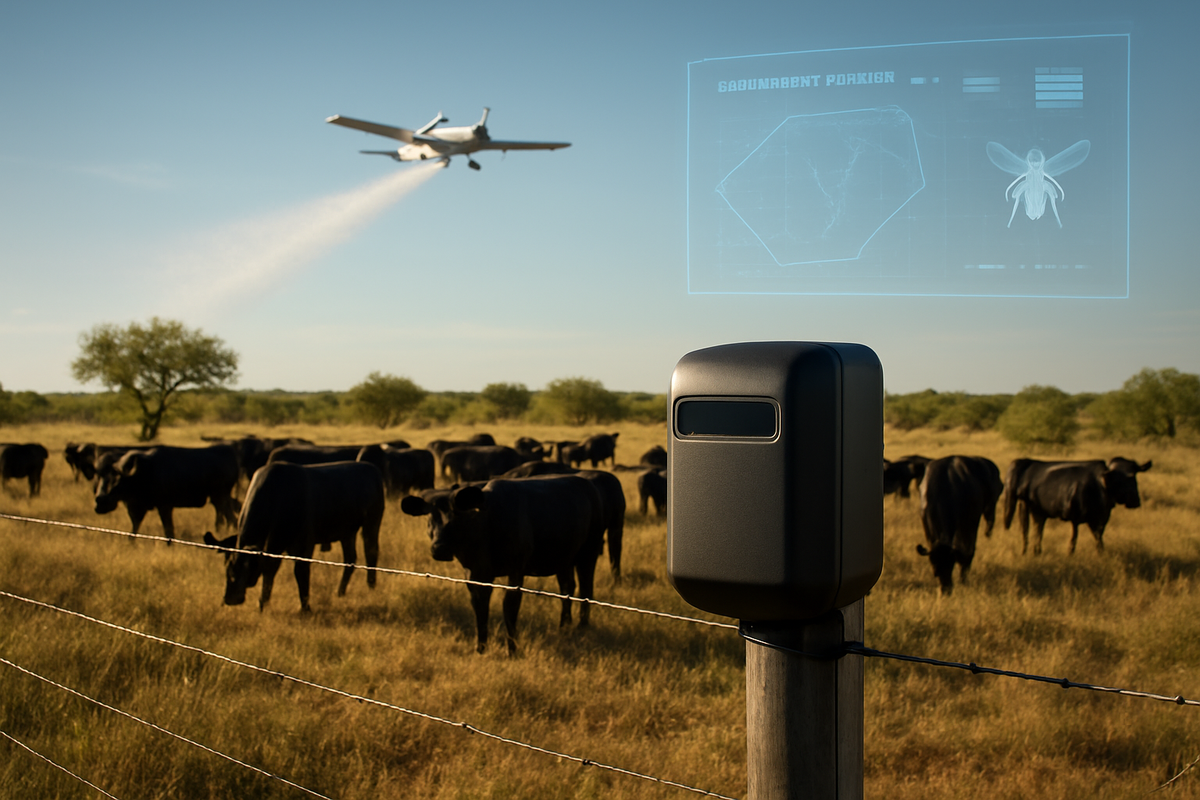
The United States Department of Agriculture (USDA) has officially greenlit a massive $100 million initiative dubbed the "Screwworm Challenge," aimed at neutralizing a resurgent biological threat that hasn't plagued the American mainland in over half a century. As of March 2, 2026, federal authorities and state governments, led by Texas, have moved into an "aggressive domestic preparedness" phase, responding to the detection of the New World Screwworm (Cochliomyia hominivorax) just miles from the U.S.-Mexico border.
The immediate implications for the multi-billion dollar livestock industry are profound. With the USDA Secretary Brooke Rollins fast-tracking funds for sterile fly production and novel therapeutics, the market is bracing for a shift in how cattle are managed, moved, and monitored. A DTN Progressive Farmer report from March 1, 2026, confirmed that screwworm anxiety has already begun to rattle feeder cattle futures, as the industry weighs the cost of potential quarantines against the necessity of maintaining a stable meat and dairy supply chain.
The Flesh-Eating Threat: A Timeline of Resurgence
The New World Screwworm is not a typical pest; its larvae feed exclusively on the living flesh of warm-blooded animals, capable of killing a full-grown cow in less than ten days if an infestation goes untreated. The current crisis traces back to July 2025, when U.S. ports of entry were abruptly closed to Mexican cattle, bison, and horses following a spike in cases south of the border. By early 2026, the situation escalated when cases were confirmed in the Mexican state of Tamaulipas—less than 70 miles from the Texas border—and a single isolated case was identified in a horse at a Florida quarantine facility.
The $100 million Screwworm Challenge, announced in late January and fully mobilized this week, seeks to modernize the aging containment infrastructure. Key stakeholders, including the Animal and Plant Health Inspection Service (APHIS) and the National Cattlemen's Beef Association, are pivoting toward a three-pronged strategy: expanding the Sterile Insect Technique (SIT), deploying high-tech lure traps, and fast-tracking systemic treatments. The March 1 DTN report highlighted that market pressure on cattle futures is largely driven by the fear that the Mexican border could remain closed indefinitely, cutting off a vital supply of nearly 1.5 million feeder cattle annually.
Market Winners and Losers: Animal Health vs. Meat Processors
The launch of the Screwworm Challenge has created a bifurcated landscape in the financial markets, pitting animal health innovators against traditional meat processors struggling with supply constraints. Zoetis Inc. (NYSE: ZTS) has emerged as a central player, having secured conditional FDA approval for Dectomax-CA1, a doramectin injection specifically formulated for screwworm prevention. While Zoetis stock has faced headwinds from its pet-care division recently, analysts suggest the NWS threat could provide a significant tailwind for its livestock segment, which represents over 40% of its international revenue.
In contrast, the meat processing giants are feeling the squeeze. Tyson Foods, Inc. (NYSE: TSN) recently reported a staggering $319 million operating loss in its beef segment, exacerbated by record-high cattle costs and a domestic herd at a 75-year low. The threat of screwworm-induced quarantines only adds to the volatility for JBS S.A. (OTC:JBSAY), which is increasingly forced to rely on its Australian and Brazilian operations to offset the shrinking U.S. supply. On the infrastructure side, Sotera Health Co. (NASDAQ: SHC) is positioned to benefit as the USDA ramps up sterile fly production, as its subsidiary Nordion provides the Cobalt-60 isotopes essential for the SIT irradiation process.
A New Era of Biosecurity and Regulatory Shift
This event represents a major shift in U.S. agricultural policy, moving from passive border monitoring to a high-stakes technological arms race. Historically, the U.S. was declared screwworm-free in 1966 after a legendary eradication campaign, but climate shifts and increased global trade have rendered the old "buffer zones" in Panama increasingly porous. The current initiative fits into a broader industry trend of "biosecurity-first" operations, where the USDA is treating pest outbreaks with the same urgency as a national security threat.
The regulatory implications are significant. We are seeing a flurry of Emergency Use Authorizations (EUAs) for products like Elanco Animal Health Inc.’s (NYSE: ELAN) Credelio line and Merck & Co., Inc. (NYSE: MRK)’s Exzolt Cattle-CA1. These rapid approvals suggest a permanent change in how the FDA and USDA collaborate during biological emergencies. For the cattle industry, the historical precedent of the 1950s—where losses totaled hundreds of millions of dollars—serves as a grim reminder of the stakes, justifying the government's $1.8 billion annual economic impact estimate for Texas alone.
The Road Ahead: SIT Factories and Digital Fencing
In the short term, the market should expect continued volatility in beef prices as the USDA begins the construction of a $750 million "Super-Factory" in Edinburg, Texas, capable of producing 300 million sterile flies per week. Producers will likely be required to adopt new "containment polygons," using digital monitoring tools to isolate herds at the first sign of an outbreak. Strategic pivots are already occurring; some ag-tech firms are developing modular SIT units that can be deployed by truck to specific "hot zones" within days, bypassing the need for massive fixed facilities.
Long-term, the success of the $100 million challenge will depend on the integration of satellite surveillance and AI-driven predictive modeling to track fly migration patterns. If the initiative fails to hold the line at the border, the U.S. cattle industry may face a structural contraction, forcing a shift toward more intensive, indoor dairy and beef production models that are easier to defend against external biological threats.
Investor Outlook and Summary
The USDA’s $100 million Screwworm Challenge is a decisive, if overdue, response to a parasite that threatens the very foundation of the U.S. protein supply. The key takeaways for investors are clear: animal health companies with specialized parasiticides and infrastructure firms tied to sterilization technology are the primary beneficiaries of this defensive spend. Meanwhile, traditional meat processors remain high-risk plays until the cattle supply stabilizes and the border threat is neutralized.
Moving forward, the market will be watching the success of the first "sterile fly drops" scheduled for later this month along the Rio Grande. Any confirmed case north of the current containment zones could trigger immediate sell-offs in livestock-related equities. For now, the Screwworm Challenge represents a bold bet that 21st-century technology can defeat a 20th-century nightmare before it reclaims its territory on the American ranch.
This content is intended for informational purposes only and is not financial advice.