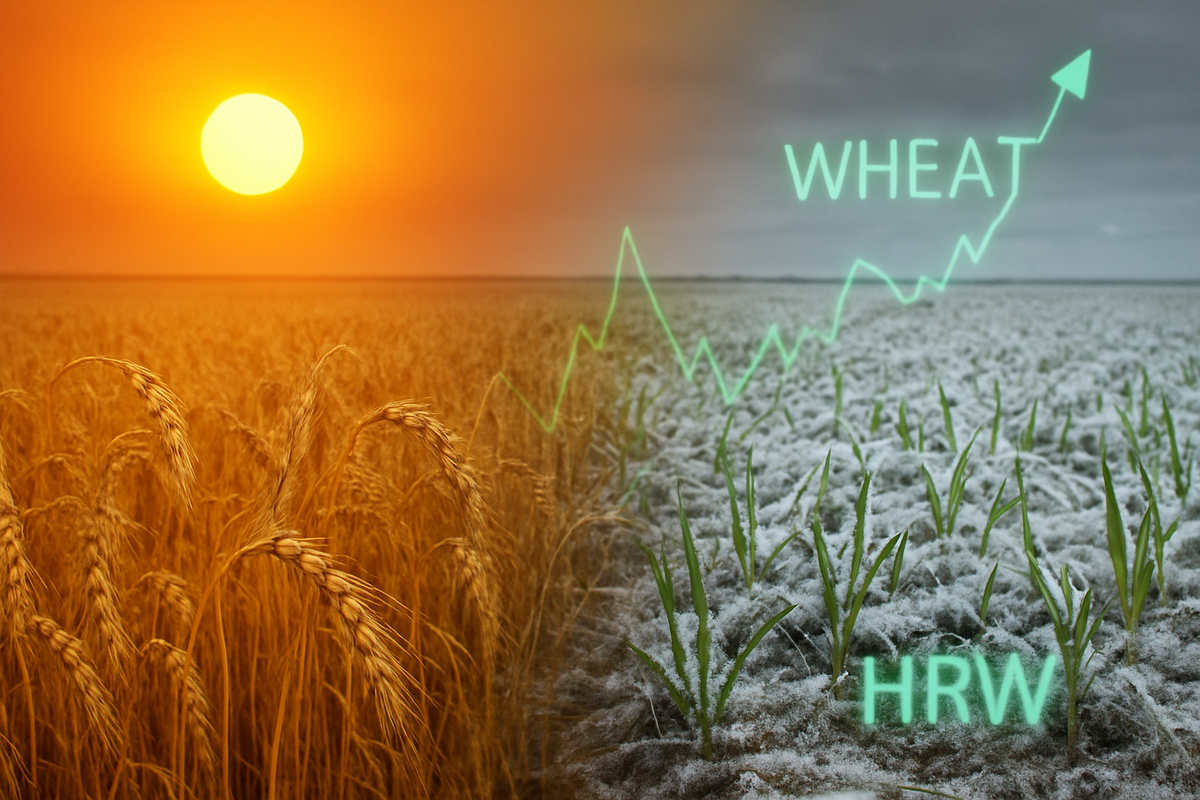
As of March 6, 2026, the global agricultural landscape is witnessing a stark divergence in commodity pricing. While the "bin-buster" harvests of 2025 continue to weigh down corn and soybean markets, wheat has decoupled from its peers, surging on the back of intensifying weather-related risk premiums. Unseasonable heat in South Asia and deteriorating conditions across the American Great Plains have injected volatility into a sector that, until recently, had been overshadowed by a global glut of other staple grains.
The firming of wheat prices reflects a growing anxiety among traders that the world’s "cushion" for the bread-making staple is thinner than previously estimated. While corn and soybeans remain in a defensive posture due to massive ending stocks, wheat futures in Chicago and Kansas City have climbed toward the $6.00 per bushel mark, driven by a "perfect storm" of climatic instability and logistical friction in key exporting corridors.
The Heat of the Harvest: India and the U.S. Face Critical Thresholds
The immediate catalyst for the price spike is a worrying weather pattern emerging in India, the world’s second-largest wheat producer. As the 2026 rabi (winter) harvest approaches, the India Meteorological Department has issued stern warnings of a "heat spike" across the northern wheat belt. Temperatures in Punjab and Haryana are currently tracking 5°C to 7°C above seasonal norms, threatening to shrivel grain kernels during the sensitive grain-filling stage. This mirrors the devastating 2022 heatwave, which upended global markets with a sudden export ban. Analysts now anticipate a potential 3% to 5% reduction in India’s total yield, pushing domestic prices toward ₹2,500 per quintal and heightening fears of government intervention in trade.
Simultaneously, the United States is grappling with a precarious transition from winter to spring. The USDA recently reported a sharp 22% month-over-month decline in "Good to Excellent" ratings for winter wheat, with Texas and Oklahoma reporting some of the lowest ratings in years due to persistent drought. Perhaps more concerning is the "premature green-up" observed across Kansas and Nebraska. An unusually warm February caused the wheat to break dormancy early, leaving the vulnerable crop exposed to potential spring freeze damage without the protection of a significant snowpack. These twin threats in the Northern Hemisphere have forced short-sellers to cover positions, fueling a rapid rally in Kansas City Hard Red Winter (HRW) futures.
Winners and Losers: Traders Gain While Machinery Giants Struggle
The resurgence of wheat volatility has created a bifurcated environment for public companies. Major grain handlers like Archer-Daniels-Midland Co. (NYSE: ADM) and Bunge Global SA (NYSE: BG) are positioned to capitalize on the increased trading volume and regional supply imbalances. While ADM has noted that landed costs for wheat are rising due to shipping disruptions in the Middle East, the firm’s robust risk-management segments typically thrive during periods of high price discovery and logistical complexity. Similarly, StoneX Group Inc. (NASDAQ: SNEX) has seen a surge in demand for hedging instruments as farmers scramble to lock in these unexpected price gains.
Conversely, the agricultural equipment sector remains under significant pressure. Despite the uptick in wheat prices, the overall farm economy is still being dragged down by low corn and soybean values, which have hit the cash flows of North American producers. Deere & Co. (NYSE: DE) and CNH Industrial N.V. (NYSE: CNHI) both issued cautious outlooks in late February, with CNH shares sliding nearly 4% as management signaled that 2026 may represent the "cyclical bottom" for machinery demand. For many multi-crop farmers, the wheat rally is not yet enough to offset the broader malaise in the grain complex, delaying big-ticket capital expenditures.
The fertilizer industry is also navigating a turbulent start to the year. Nutrien Ltd. (NYSE: NTR), The Mosaic Co. (NYSE: MOS), and CF Industries Holdings, Inc. (NYSE: CF) are currently contending with a Department of Justice investigation into alleged price-fixing, which has dampened investor sentiment. However, the wheat risk premium, combined with a 15% jump in global urea prices due to conflict-related supply disruptions in the Middle East, could provide a temporary lift to revenues—if farmers do not pull back on spring applications due to the high input costs.
Wider Significance: A Fragile Balance in Global Food Security
The current firming of wheat prices underscores a broader trend of "supply fragility" within the grain markets. While global corn and soybean stocks are at multi-year highs, the wheat "stocks-to-use" ratio among major exporters has dwindled to its lowest level in seven years, sitting at approximately 18%. This lack of a buffer means that even minor weather disruptions are magnified in the futures markets. This stands in contrast to the relative price stability seen in 2024 and 2025, suggesting that the era of "cheap bread" may be coming to an end as climate volatility becomes a permanent fixture of agricultural forecasting.
Furthermore, the geopolitical landscape continues to act as a multiplier for weather risks. With shipping routes through the Strait of Hormuz facing ongoing tension, the cost of moving grain from the Black Sea and the Mediterranean to Asian markets has escalated. This has effectively "localized" wheat prices, where the physical availability of the grain in certain regions is far more important than the global balance sheet. Regulatory bodies are also watching closely; should India implement a formal export restriction to protect domestic food security, the ripple effects could trigger a fresh wave of food inflation across developing economies.
What Comes Next: The "Spring Freeze" and May Maturity
Looking ahead, the next 60 days will be decisive for the wheat market. The primary "X-factor" is the weather in the U.S. Great Plains. If a late-season freeze occurs before the crop is fully established, the damage to the "green-up" wheat could be catastrophic, potentially pushing Chicago SRW futures toward the $7.00 mark. Investors should also monitor the IMD’s reports from India; if the heatwave persists through late March, the government may be forced to draw down its buffer stocks, further tightening the global export market.
Strategic pivots may be required for agricultural companies. Machinery manufacturers like Deere may need to shift focus toward precision agriculture technologies that help farmers maximize yields in stressful weather conditions, rather than relying on traditional equipment sales. For grain traders, the focus will remain on the "basis"—the difference between local cash prices and the futures market—as regional shortages become more pronounced.
Summary and Investor Outlook
The firming of wheat prices in early 2026 serves as a reminder that agricultural markets are never truly "settled." While abundance in corn and soybeans provides a global safety net, the specific vulnerabilities of wheat—namely its concentrated production in weather-sensitive regions like the U.S. Plains and Northern India—make it prone to sudden spikes. Key takeaways for the coming months include:
- Wheat vs. The Complex: Wheat is likely to remain the outperformer in the agricultural sector as long as weather premiums remain intact, even if corn and soybeans stay range-bound.
- Logistical Alpha: Companies like ADM and Bunge that can navigate shifting trade flows will be better positioned than those solely reliant on production volume.
- Monitor Input Costs: The intersection of rising fertilizer prices and lower farm income for corn/soy producers could lead to a volatile spring planting season in the Northern Hemisphere.
Investors should maintain a close watch on USDA crop progress reports and international weather forecasts through May. In a world of comfortable grain availability, wheat has once again become the outlier that could redefine market sentiment for the remainder of the year.
This content is intended for informational purposes only and is not financial advice.