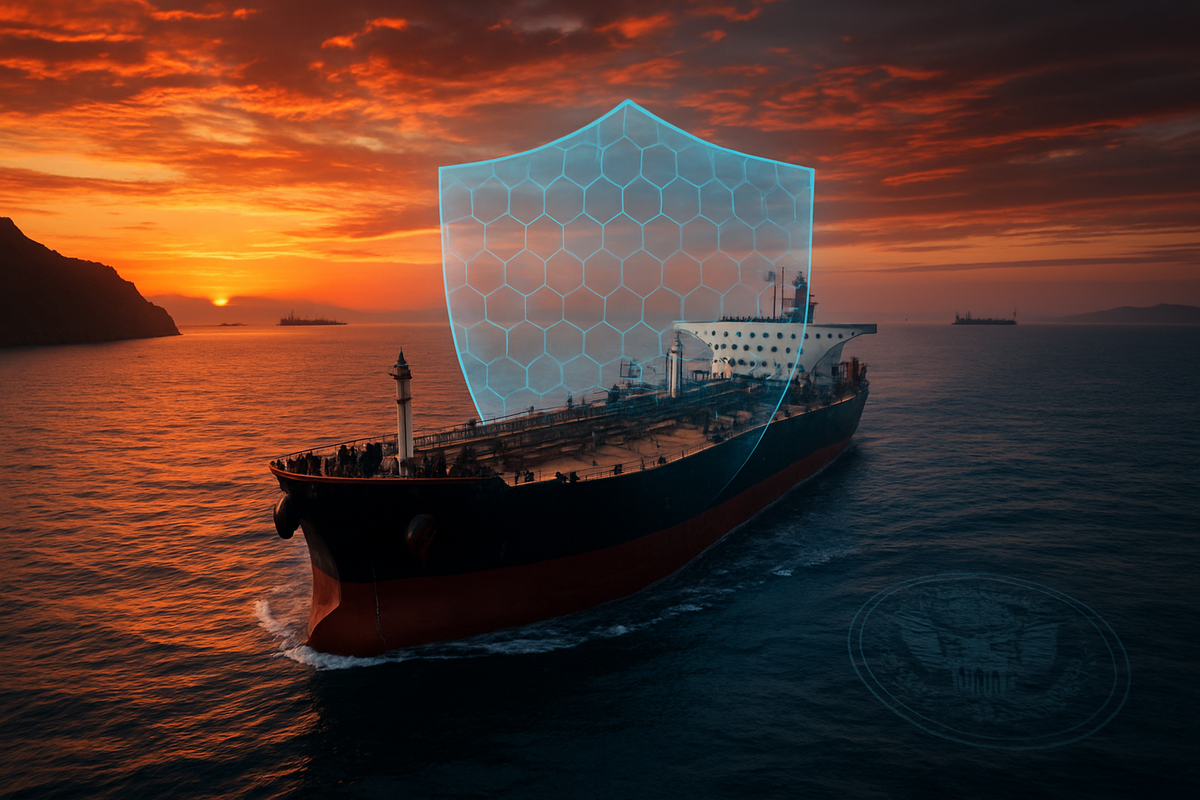
In a decisive move to avert a global energy collapse, the United States government on March 9, 2026, announced the launch of a massive $20 billion federal maritime reinsurance program. The emergency intervention is designed to backstop war-risk insurance for oil tankers and liquefied natural gas (LNG) carriers navigating the Persian Gulf and the Strait of Hormuz, where commercial insurance markets have effectively evaporated following a sharp escalation in regional hostilities.
By providing a federal guarantee against catastrophic loss, the program aims to restart the flow of millions of barrels of oil per day that have been stalled since late February. The announcement has already sent ripples through global markets, providing a much-needed floor for energy-heavy indices while signaling a significant expansion of U.S. involvement in global shipping security.
The Breaking Point: How the Gulf Markets Seized Up
The federal intervention follows the "Black Friday" events of February 28, 2026, when coordinated military strikes on Iranian infrastructure led to a near-total halt of commercial traffic through the Strait of Hormuz. Within 48 hours, vessel transits plummeted by over 80%, as private insurers, including heavyweights like the London P&I Club and NorthStandard, issued mass cancellation notices. The few remaining underwriters hiked war-risk premiums by over 1,000%, with a single transit for a Very Large Crude Carrier (VLCC) jumping from $250,000 to an astronomical $7.5 million.
The program, spearheaded by the U.S. International Development Finance Corporation (DFC) and the U.S. Treasury Department, functions as a $20 billion revolving facility. This backstop allows approved private insurance partners to offer coverage that would otherwise be actuarially impossible in a war zone. To qualify, shipping companies must adhere to strict security protocols coordinated with U.S. Central Command (CENTCOM), including specific routing instructions and potential naval escorts. This "de-risking" strategy is intended to force a restart of energy exports after QatarEnergy (Private) and other regional giants were forced to declare force majeure on shipments earlier this month.
Market Winners and Losers: The Tanker Scarcity Premium
The announcement has triggered a "flight to quality" among maritime stocks. Major tanker operators with modern fleets and the technical capacity to meet U.S. Navy security standards are emerging as the primary beneficiaries of the new federal umbrella. Frontline PLC (NYSE: FRO) and Nordic American Tankers (NYSE: NAT) saw their shares jump significantly as the market priced in the resumption of high-rate voyages under federal protection. Frontline, in particular, has seen VLCC spot rates surge past $100,000 per day, as the global shortage of "insurable" tonnage creates a massive scarcity premium.
Scorpio Tankers (NYSE: STNG) has also benefited, with its focus on refined products like gasoline and jet fuel becoming even more critical as land-based inventories in Europe and Asia dwindle. However, the news is less favorable for smaller, independent shipowners who lack the sophisticated communication and defense systems required by the DFC’s eligibility criteria. These "tier-two" operators risk being sidelined, unable to secure either commercial or federal insurance, potentially leading to a wave of consolidation or vessel scrapping in the coming months. Furthermore, regional insurance syndicates in the Middle East that were already reeling from early March losses may find themselves permanently displaced by the U.S.-backed facility.
A New Era of State-Backed Commerce
The $20 billion program represents a historic pivot in how the U.S. manages global supply chain risks. While historical precedents exist—most notably the War Risk Insurance Act during World War II and the Terrorism Risk Insurance Act (TRIA) following 9/11—the scope and speed of this intervention are unprecedented. It marks a shift from 2025's market environment, which was characterized by oversupply and $60-per-barrel oil, to a 2026 reality where geopolitical volatility is the primary driver of the "energy inflation" currently threatening global GDP growth.
This federal backstop effectively nationalizes a portion of the maritime risk previously held by the private sector, creating a hybrid model of state-sponsored trade. Critics argue that this sets a dangerous precedent, potentially moralizing high-risk behavior by shipowners, while proponents suggest that without it, Brent crude would likely have surpassed $120 per barrel by the end of the week. The ripple effects are already being felt in the offshore sector as well, with Noble Corporation (NYSE: NE) seeing increased demand for drilling outside of the contested Gulf region as majors look for "safer" barrels.
The Road Ahead: Escorts and Escalation
In the short term, the market expects the first "federally insured" convoys to begin transiting the Strait of Hormuz within 72 hours. This will likely involve high-visibility naval support, which could either stabilize the situation or lead to further tactical escalations if vessels are targeted despite the U.S. presence. For investors, the immediate focus will be on whether this insurance bridge can successfully lower the "fear premium" currently baked into oil prices, which have hovered near $95 per barrel since the March 9 announcement.
Long-term, the shipping industry may undergo a structural shift. If the U.S. reinsurance program remains in place for an extended period, it could lead to a two-tiered global shipping market: one "secure" and U.S.-aligned, and another "gray market" operating without western insurance or oversight. Companies will likely accelerate pivots toward alternative routes and pipeline investments, but for now, the world remains tethered to the tankers currently lining up for Washington’s $20 billion shield.
Summary and Investor Outlook
The U.S. government’s $20 billion reinsurance program is a massive gamble intended to unblock the world’s most critical energy artery. By stepping in where the private market failed, Washington is attempting to decouple global energy prices from the immediate tactical risks of the Gulf conflict. For the market, this move provides a temporary sigh of relief, but the underlying geopolitical tensions remain unresolved.
Investors should closely monitor the success of the first insured transits and any potential retaliatory moves in the region. Key indicators of success will include a softening of Suezmax and VLCC spot rates and a narrowing of the "war risk" spread in the oil futures market. While the federal backstop provides a safety net for companies like Frontline PLC (NYSE: FRO), the long-term viability of this intervention depends on the U.S. military’s ability to enforce the security protocols that underpin the insurance itself.
This content is intended for informational purposes only and is not financial advice.