As of today, December 23, 2025, the technology sector is reflecting on a year defined by the "Great AI Infrastructure Build," and few companies have navigated this landscape as dramatically as Western Digital Corp. (NASDAQ: WDC). Once a sprawling conglomerate struggling under the weight of a cyclical memory market and a massive debt load, the Western Digital of late 2025 is a leaner, more focused entity.
Following the historic February 2025 spin-off of its Flash memory business into the independent SanDisk Corporation (NASDAQ: SNDK), Western Digital has re-emerged as a pure-play powerhouse in Hard Disk Drive (HDD) technology. With the stock hitting all-time highs this month, investors are closely watching how the company capitalizes on the "AI Data Cycle"—a phenomenon where the massive datasets required for generative AI training have breathed new life into the high-capacity storage industry. This feature explores the transformation, the technology, and the financial health of a legacy giant that has successfully reinvented itself for the age of artificial intelligence.
Historical Background
The story of Western Digital is one of constant evolution. Founded on April 23, 1970, by Alvin Phillips as General Digital Corporation, the company originally specialized in manufacturing Metal Oxide Semiconductor (MOS) test equipment and, later, calculator chips. By the mid-1970s, it was the largest independent calculator chip maker in the world, only to be nearly bankrupted by the 1973 oil crisis and the collapse of its largest customer.
Under the leadership of Chuck Missler in the late 1970s, the company pivoted to storage controllers. Its WD1003 controller, released in 1983, became the foundation for the ATA (IDE) interface, the industry standard for personal computing for decades. The leap from making controllers to making the drives themselves occurred in 1988 with the acquisition of Tandon Corporation’s hard drive assets, leading to the legendary "Caviar" line of consumer HDDs.
The 2010s were marked by massive consolidation. In 2012, WD acquired HGST (Hitachi Global Storage Technologies) for $4.3 billion, and in 2016, it made its most controversial move: the $19 billion acquisition of SanDisk. While the SanDisk deal made WD "media-agnostic," it also saddled the company with enormous debt and exposed it to the high volatility of the NAND Flash market. This era of the "dual-business" model officially ended in February 2025, when the company split to unlock shareholder value, returning Western Digital to its roots as a storage infrastructure specialist.
Business Model
Post-split, Western Digital’s business model is centered on being the world’s leading provider of high-capacity "Mass Storage." The company now operates primarily in the HDD segment, serving three core markets:
- Cloud (54% of Revenue): This is the crown jewel of the business. WD supplies hyperscale giants (Amazon, Google, Microsoft) with nearline HDDs. These drives store the vast "data lakes" used to train Large Language Models (LLMs).
- Client (30% of Revenue): Focuses on Original Equipment Manufacturers (OEMs) for PCs and gaming. While this market is increasingly moving toward SSDs, WD still provides high-capacity mechanical drives for specialized workstations and high-end gaming storage.
- Consumer (16% of Revenue): Through its remaining WD-branded external drives, the company serves retail customers who require high-capacity, low-cost portable backup solutions.
Notably, while the Flash business is now independent (as SanDisk), Western Digital retained a 19.9% ownership stake in the new entity, which it views as a strategic asset to be monetized for future debt reduction or R&D investment.
Stock Performance Overview
Western Digital has been one of the standout performers of 2025.
- 1-Year Performance: The stock has surged approximately 185% since January 2025. This rally was triggered by the successful completion of the spin-off in February and the subsequent realization that the HDD business was entering a multi-year "supercycle" driven by AI demand.
- 5-Year Performance: Over the five-year horizon, WDC has delivered a total return of nearly 350%. Much of this gain occurred in the last 18 months, as the company moved from a cyclical trough in late 2023 to record profitability in 2025.
- 10-Year Performance: Long-term investors have seen a CAGR of roughly 15.3%. This metric hides the significant volatility of the 2016–2023 period, where the stock struggled to stay above its 2014 highs due to the heavy debt load from the SanDisk acquisition.
As of December 23, 2025, the stock is trading near $181, a far cry from its $30 lows during the 2023 semiconductor downturn.
Financial Performance
Western Digital’s financial recovery in 2025 has been nothing short of remarkable. The company’s Fiscal Year 2025 (ending June 2025) saw a return to massive profitability.
- Revenue: For the trailing twelve months, revenue hit $9.52 billion, up 51% compared to the previous year.
- Margins: Gross margins expanded to 41.3% (Non-GAAP), driven by high demand for the premium-priced UltraSMR drives.
- Debt Reduction: In a significant move to de-risk the balance sheet, the company reduced its gross debt by $2.6 billion in the June quarter alone, funded by a $1.5 billion dividend from the SanDisk spin-off and robust free cash flow.
- Dividends and Buybacks: In late 2025, the board initiated a $0.10 quarterly dividend—the first since 2020—and authorized a $2.0 billion share repurchase program, signaling management's confidence in the new structure.
Leadership and Management
The current leadership team is led by Irving Tan, who took over as CEO of the "new" Western Digital in February 2025. Tan, formerly the company’s EVP of Global Operations, is credited with streamlining the manufacturing process and ensuring that WD remains the lowest-cost producer in the industry.
While the previous CEO, David Goeckeler, moved to lead the independent SanDisk, his legacy at Western Digital remains the "Horizontal to Vertical" strategy that stabilized the company’s HDD roadmap. Under Tan, the strategy has shifted toward the "AI Data Cycle." Tan has publicly stated that he views Western Digital not as a commodity hardware maker, but as a critical infrastructure partner for the AI revolution. The board, chaired by Martin Cole, has been refreshed to focus strictly on data center and enterprise strategy.
Products, Services, and Innovations
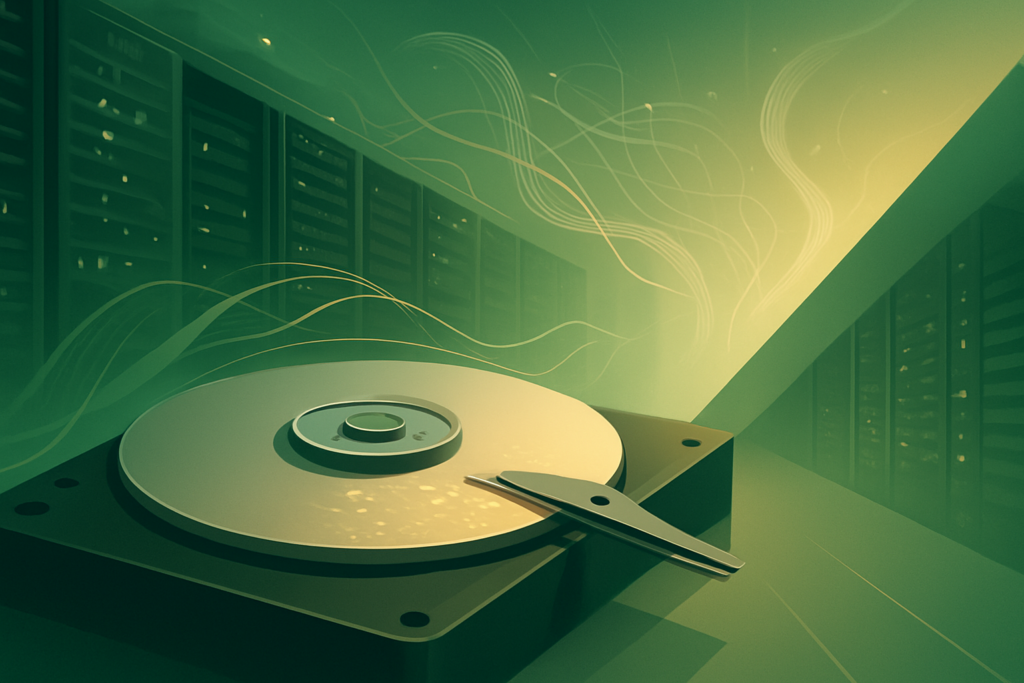
Innovation in the HDD space is about one thing: Areal Density. Western Digital has maintained a competitive edge through its "energy-assist" roadmap:
- UltraSMR (Shingled Magnetic Recording): By overlapping data tracks like shingles on a roof, WD has pushed capacity to 32TB per drive. This technology is the current standard for hyperscale cloud providers looking for the lowest Total Cost of Ownership (TCO).
- ePMR (Energy-Assisted Perpendicular Magnetic Recording): This uses a DC current to the recording head to stabilize the writing process, allowing for higher density without the complexity of lasers.
- HAMR (Heat-Assisted Magnetic Recording): While rival Seagate moved to HAMR earlier, Western Digital began shipping its own HAMR-based drives to select customers in late 2025. These drives, expected to reach 40TB to 100TB by 2030, use tiny lasers to heat the disk surface before writing data.
- The AI Data Cycle Framework: WD has pioneered a specialized framework for AI customers, optimizing drives for different stages: from massive "data lakes" (HDD) to high-speed model training (SSD/SanDisk partnership) and back to archival storage (HDD).
Competitive Landscape
The HDD market is a highly consolidated "triopoly." Western Digital’s primary rivals are Seagate Technology Holdings (NASDAQ: STX) and Toshiba.
- Seagate: The fiercest competitor. Seagate currently leads in the early rollout of HAMR technology, but Western Digital holds the lead in Exabyte market share (approx. 51%) due to the widespread adoption of its UltraSMR drives, which are seen as a more stable and cost-effective bridge for cloud providers.
- Toshiba: Primarily a third-place player focusing on the 20TB–22TB segment and client storage.
In the broader storage market, the "HDD vs. SSD" debate has shifted. In 2025, it is clear that SSDs (led by Samsung, Micron, and SK Hynix) have won the "hot data" (speed) market. However, for "cold" and "warm" data (capacity), HDDs remain 6 to 8 times cheaper per terabyte, ensuring that 90% of data center storage remains on spinning disks.
Industry and Market Trends
The dominant trend in 2025 is the AI Data Cycle. Generative AI requires two things: massive processing power (GPUs) and massive amounts of data (HDDs).
- Stage 1 (Training): AI models like GPT-5 require petabytes of raw data. This data is increasingly stored on high-capacity HDDs because of the sheer cost of using Flash for such volumes.
- Stage 2 (Inference): As models are queried, they generate new data (images, video, logs) that must also be archived.
- Cyclical Recovery: After a severe "memory winter" in 2023, the industry is now in a period of restricted supply and high demand. Manufacturers have learned from previous gluts and are maintaining disciplined production levels to keep margins high.
Risks and Challenges
Despite the stellar 2025 performance, Western Digital faces several headwinds:
- Execution Risk: The separation from SanDisk is still relatively fresh. "De-synergy" costs—the loss of shared corporate resources—could still pressure margins if the transition is not handled perfectly.
- Geopolitical and China Exposure: WD derives approximately 16% of its revenue from China and relies on facilities in Thailand and Malaysia for assembly. Any escalation in the US-China "Chip War" or new tariffs could disrupt this supply chain.
- Technology Transition: If Seagate’s HAMR technology proves to be significantly more reliable or cheaper at scale, WD could lose its market share lead in the 40TB+ segment.
- Cyclicality: The storage industry remains notoriously boom-and-bust. While the AI boom feels permanent, a slowdown in data center capex could hit WDC hard.
Opportunities and Catalysts
- SanDisk Monetization: Western Digital’s 19.9% stake in SanDisk is worth billions. Selling this stake in 2026 could allow the company to become debt-free, a milestone that would likely trigger a further stock re-rating.
- Edge AI: As AI moves from the data center to "the edge" (local servers, smart cities), the demand for localized high-capacity storage is expected to grow.
- M&A Potential: Now that it is a pure-play entity, Western Digital is a more attractive acquisition target for an industrial giant or a larger semiconductor firm looking to complete its infrastructure stack.
Investor Sentiment and Analyst Coverage
Wall Street is overwhelmingly bullish on WDC at the end of 2025.
- Ratings: Most major firms, including Morgan Stanley and Cantor Fitzgerald, maintain an "Overweight" or "Buy" rating.
- Price Targets: The consensus price target for mid-2026 sits at $215, with "bull case" scenarios reaching $250.
- Institutional Ownership: Major funds have increased their positions throughout 2025, viewing WDC as a "value play" within the otherwise expensive AI sector. Retail sentiment is also high, buoyed by the return of the dividend and the company's clear, simplified narrative.
Regulatory, Policy, and Geopolitical Factors
The regulatory landscape is a double-edged sword for Western Digital.
- CHIPS Act: While the spin-off SanDisk famously scrapped its "Project Grit" expansion in Michigan in July 2025 due to economic uncertainty, Western Digital continues to benefit from indirect subsidies and R&D credits.
- Japanese Subsidies: The company’s joint venture with Kioxia (through its SanDisk stake) remains a recipient of billions in support from the Japanese government (METI), ensuring a stable supply of advanced technology.
- Export Controls: Tightening US restrictions on AI hardware to China remain a constant concern, as they often include the high-end storage infrastructure that WD provides.
Conclusion
As we close out 2025, Western Digital stands as a testament to the power of corporate focus. By shedding the volatile Flash business and doubling down on its HDD expertise, the company has transformed from a debt-laden laggard into a high-margin leader of the AI infrastructure era.
For investors, Western Digital offers a unique proposition: a "picks and shovels" play on the AI boom that trades at a significantly lower valuation than the high-flying GPU makers. However, the path forward requires flawless execution of the HAMR roadmap and careful navigation of a precarious geopolitical environment. If Irving Tan and his team can maintain their cost leadership and successfully monetize their remaining SanDisk assets, Western Digital may well be entering a golden age of storage.
This content is intended for informational purposes only and is not financial advice.