Newspaper and digital media company The New York Times (NYSE: NYT) reported Q4 CY2025 results exceeding the market’s revenue expectations, with sales up 10.4% year on year to $802.3 million. Its non-GAAP profit of $0.89 per share was in line with analysts’ consensus estimates.
Is now the time to buy The New York Times? Find out by accessing our full research report, it’s free.
The New York Times (NYT) Q4 CY2025 Highlights:
- Revenue: $802.3 million vs analyst estimates of $791.3 million (10.4% year-on-year growth, 1.4% beat)
- Adjusted EPS: $0.89 vs analyst estimates of $0.88 (in line)
- Adjusted EBITDA: $182.5 million vs analyst estimates of $196.6 million (22.7% margin, 7.2% miss)
- Operating Margin: 20.1%, in line with the same quarter last year
- Free Cash Flow Margin: 19.6%, similar to the same quarter last year
- Subscribers: 12.21 million, up 780,000 year on year
- Market Capitalization: $11.72 billion
Company Overview
Founded in 1851, The New York Times (NYSE: NYT) is an American media organization known for its influential newspaper and expansive digital journalism platforms.
Revenue Growth
A company’s long-term performance is an indicator of its overall quality. Any business can experience short-term success, but top-performing ones enjoy sustained growth for years. Over the last five years, The New York Times grew its sales at a weak 9.6% compounded annual growth rate. This fell short of our benchmark for the consumer discretionary sector and is a poor baseline for our analysis.
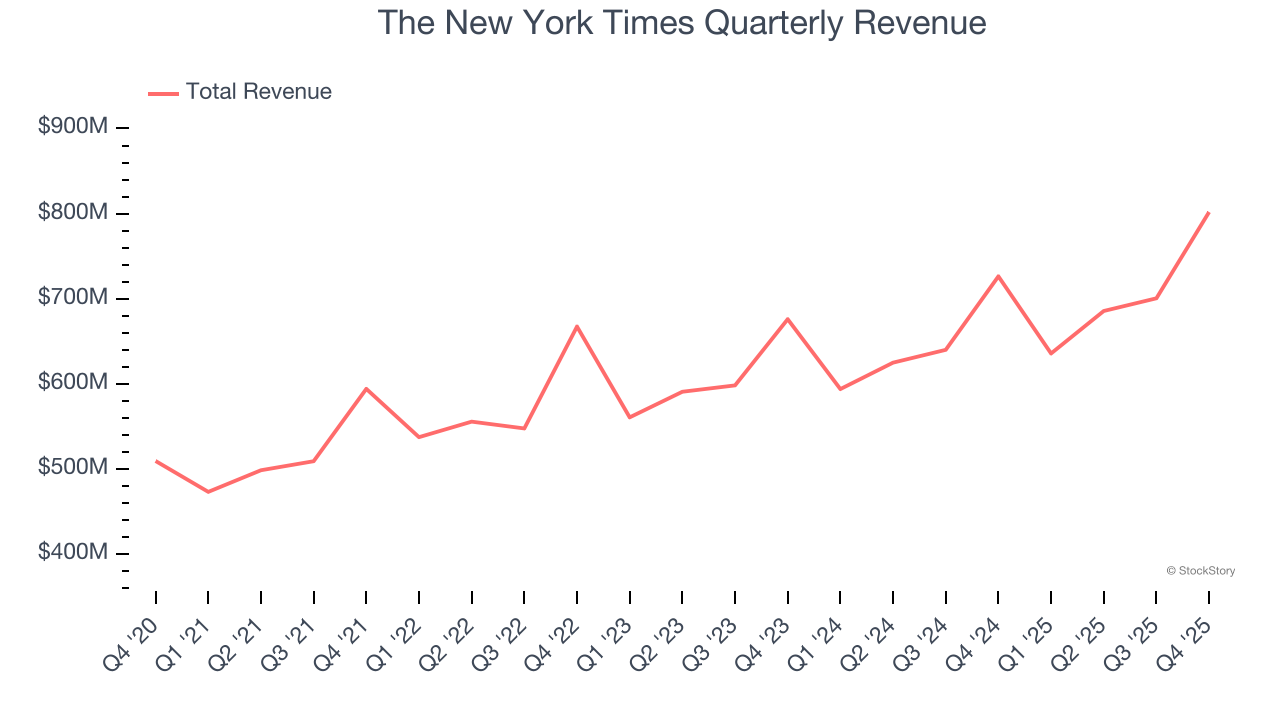
We at StockStory place the most emphasis on long-term growth, but within consumer discretionary, a stretched historical view may miss a company riding a successful new product or trend. The New York Times’s recent performance shows its demand has slowed as its annualized revenue growth of 7.9% over the last two years was below its five-year trend. 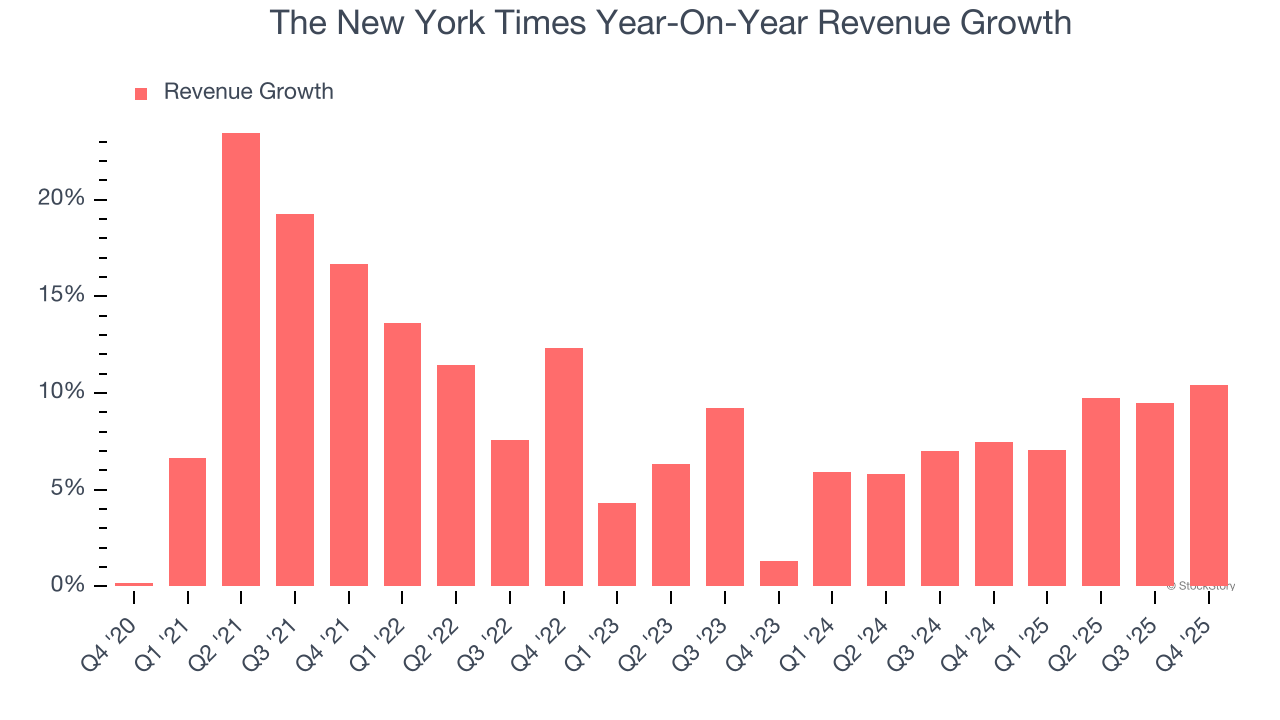
We can dig further into the company’s revenue dynamics by analyzing its number of subscribers, which reached 12.21 million in the latest quarter. Over the last two years, The New York Times’s subscribers averaged 9.6% year-on-year growth. Because this number is higher than its revenue growth during the same period, we can see the company’s monetization has fallen. 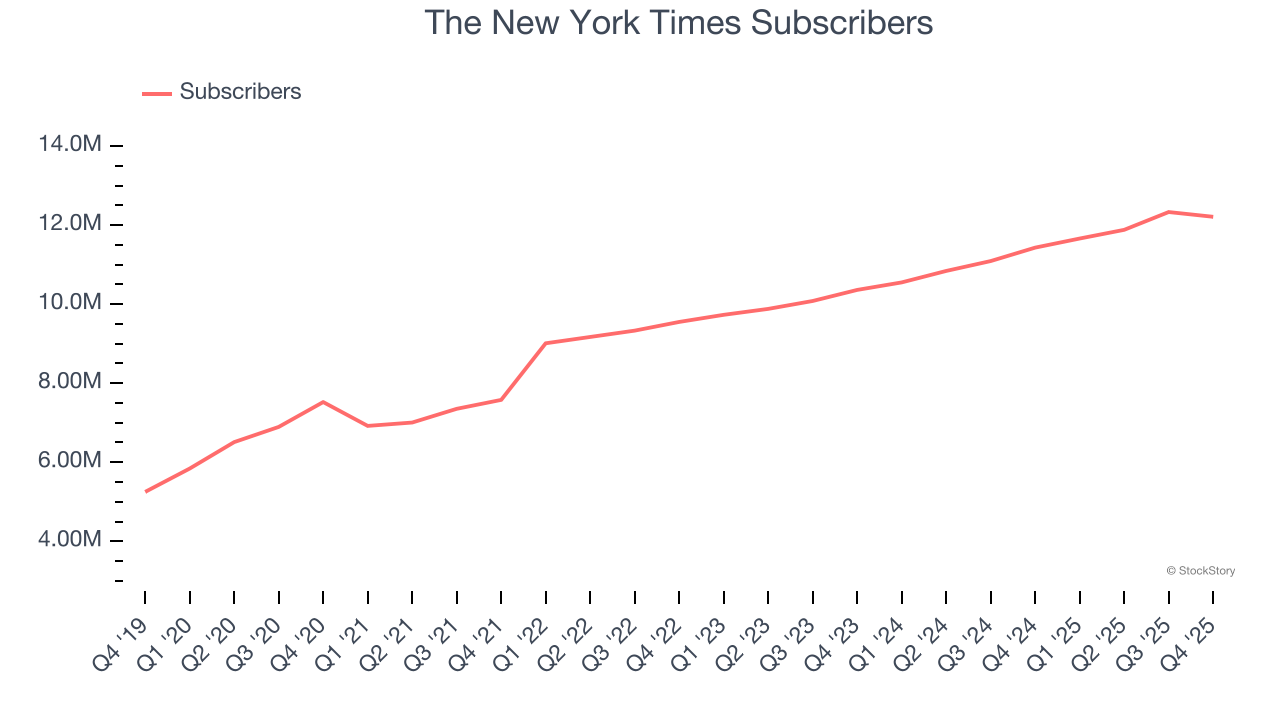
This quarter, The New York Times reported year-on-year revenue growth of 10.4%, and its $802.3 million of revenue exceeded Wall Street’s estimates by 1.4%.
Looking ahead, sell-side analysts expect revenue to grow 6.6% over the next 12 months, similar to its two-year rate. This projection doesn't excite us and suggests its products and services will face some demand challenges.
Software is eating the world and there is virtually no industry left that has been untouched by it. That drives increasing demand for tools helping software developers do their jobs, whether it be monitoring critical cloud infrastructure, integrating audio and video functionality, or ensuring smooth content streaming. Click here to access a free report on our 3 favorite stocks to play this generational megatrend.
Operating Margin
Operating margin is an important measure of profitability as it shows the portion of revenue left after accounting for all core expenses – everything from the cost of goods sold to advertising and wages. It’s also useful for comparing profitability across companies with different levels of debt and tax rates because it excludes interest and taxes.
The New York Times’s operating margin has risen over the last 12 months and averaged 14.5% over the last two years. The company’s higher efficiency is a breath of fresh air, but its suboptimal cost structure means it still sports inadequate profitability for a consumer discretionary business.
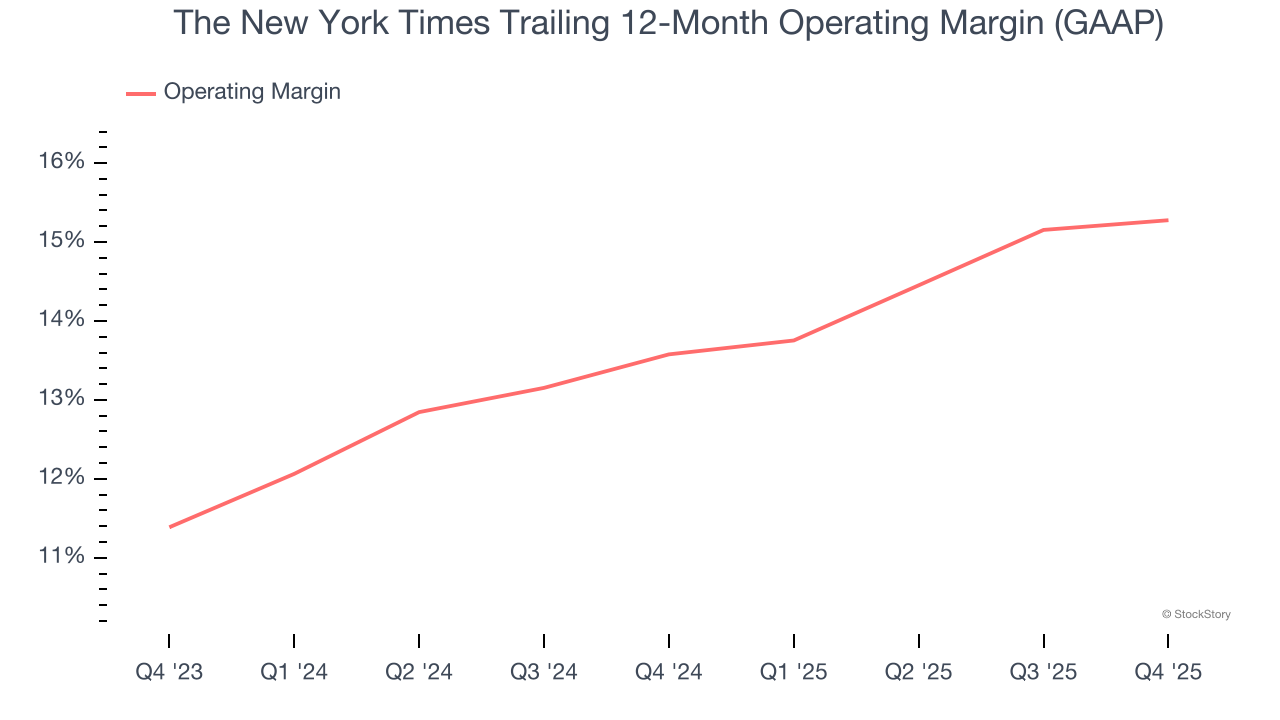
This quarter, The New York Times generated an operating margin profit margin of 20.1%, in line with the same quarter last year. This indicates the company’s overall cost structure has been relatively stable.
Earnings Per Share
Revenue trends explain a company’s historical growth, but the long-term change in earnings per share (EPS) points to the profitability of that growth – for example, a company could inflate its sales through excessive spending on advertising and promotions.
The New York Times’s EPS grew at a weak 20.6% compounded annual growth rate over the last five years. On the bright side, this performance was better than its 9.6% annualized revenue growth and tells us the company became more profitable on a per-share basis as it expanded.
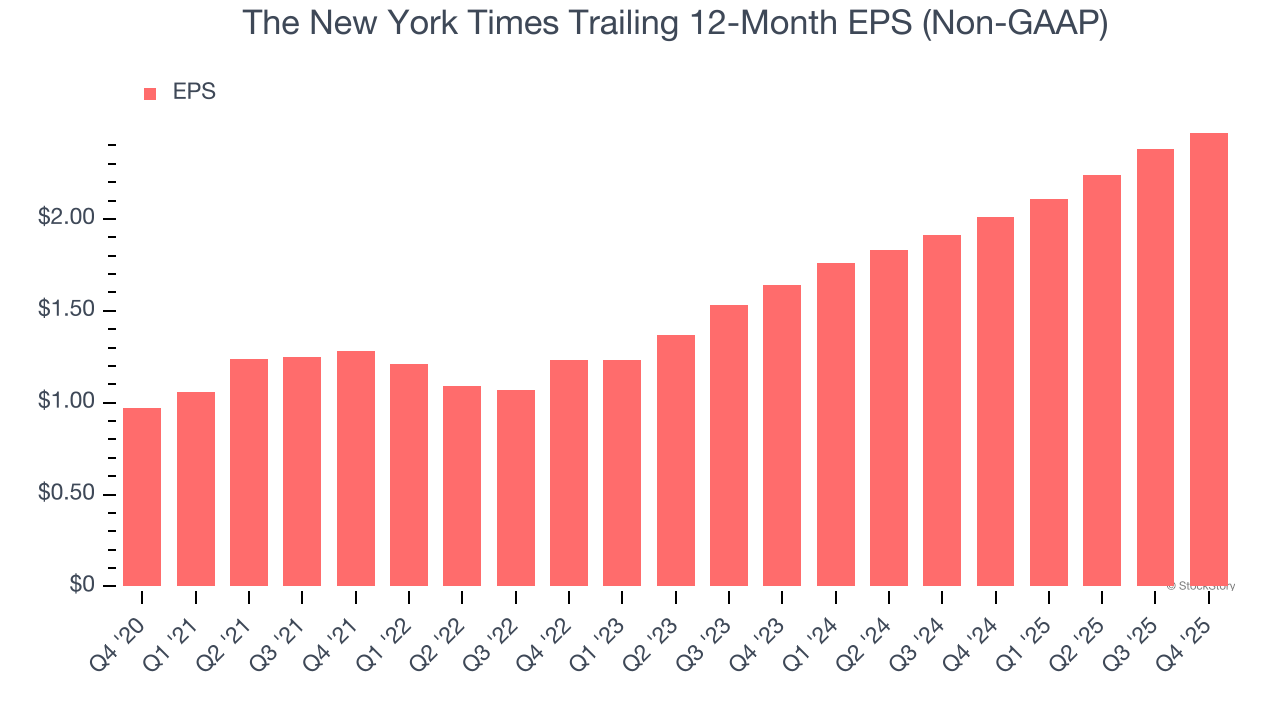
In Q4, The New York Times reported adjusted EPS of $0.89, up from $0.80 in the same quarter last year. This print beat analysts’ estimates by 1.1%. Over the next 12 months, Wall Street expects The New York Times’s full-year EPS of $2.47 to grow 9.8%.
Key Takeaways from The New York Times’s Q4 Results
It was good to see The New York Times narrowly top analysts’ revenue expectations this quarter. On the other hand, its number of subscribers missed and its EBITDA fell short of Wall Street’s estimates. Overall, this was a softer quarter. The stock traded down 2% to $70.77 immediately following the results.
Is The New York Times an attractive investment opportunity right now? When making that decision, it’s important to consider its valuation, business qualities, as well as what has happened in the latest quarter. We cover that in our actionable full research report which you can read here (it’s free).