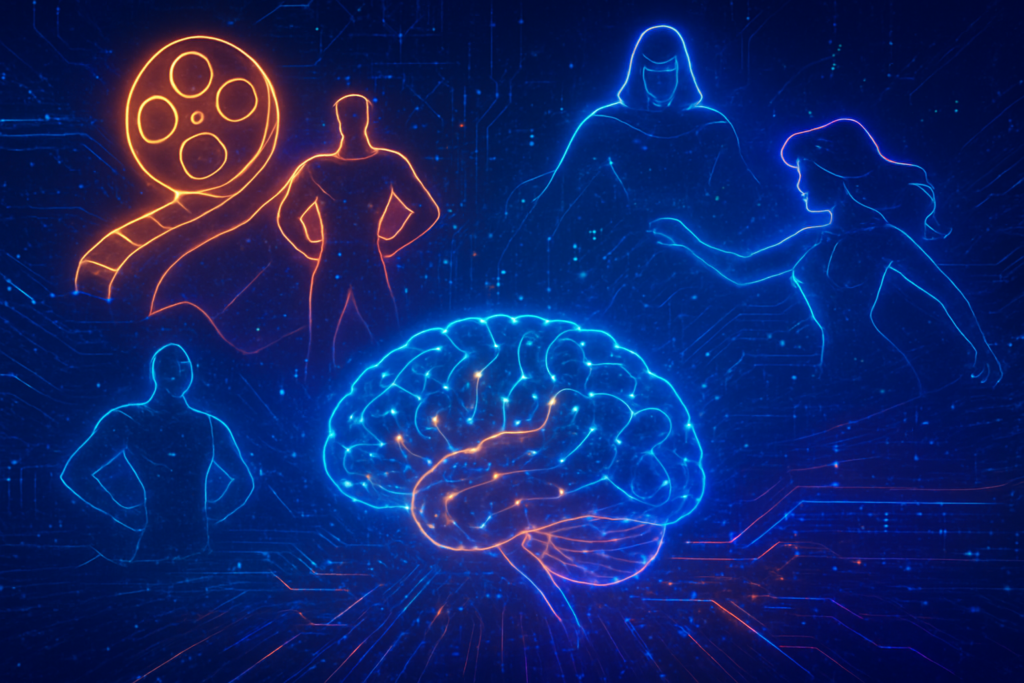
In a groundbreaking move poised to redefine the landscape of entertainment and artificial intelligence, The Walt Disney Company (NYSE: DIS) and OpenAI announced a landmark three-year licensing agreement and strategic partnership on December 11, 2025. This historic collaboration sees Disney making a significant $1 billion equity investment in OpenAI, signaling a profound shift in how a major entertainment powerhouse is embracing generative AI. The deal grants OpenAI's cutting-edge generative AI video platform, Sora, and ChatGPT Images the ability to utilize over 200 iconic animated, masked, and creature characters, along with associated costumes, props, vehicles, and iconic environments, from Disney’s vast intellectual property (IP) catalog, including Disney, Marvel, Pixar, and Star Wars.
This partnership is not merely a licensing deal; it represents a proactive strategy by Disney to monetize its extensive IP and integrate advanced AI into its core operations and fan engagement strategies. Crucially, the agreement explicitly excludes the use of talent likenesses or voices, addressing a key concern within the entertainment industry regarding AI and performer rights. For OpenAI, this deal provides unparalleled access to globally recognized characters, significantly enhancing the appeal and capabilities of its generative models, while also providing substantial financial backing and industry validation. The immediate significance lies in establishing a new paradigm for content creation, fan interaction, and the responsible integration of AI within creative fields, moving away from a purely litigious stance to one of strategic collaboration.
Technical Unveiling: Sora and ChatGPT Reimagine Disney Universes
The technical backbone of this partnership hinges on the advanced capabilities of OpenAI’s generative AI models, Sora and ChatGPT Images, now empowered with a vast library of Disney's intellectual property. This allows for unprecedented user-generated content, all within a licensed and controlled environment.
Sora, OpenAI's text-to-video AI model, will enable users to generate short, user-prompted social videos, up to 60 seconds long and in 1080p resolution, featuring the licensed Disney characters. Sora's sophisticated diffusion model transforms static noise into coherent, sequenced images, capable of producing realistic and imaginative scenes with consistent character style and complex motion. This means fans could prompt Sora to create a video of Mickey Mouse exploring a Star Wars spaceship or Iron Man flying through a Pixar-esque landscape. A curated selection of these fan-generated Sora videos will also be available for streaming on Disney+ (NYSE: DIS), offering a novel content stream.
Concurrently, ChatGPT Images, powered by models like DALL-E or the advanced autoregressive capabilities of GPT-4o, will allow users to generate still images from text prompts, incorporating the same licensed Disney IP. This capability extends to creating new images, applying specific artistic styles, and comprehending nuanced instructions regarding lighting, composition, mood, and storytelling, all while featuring beloved characters like Cinderella or Luke Skywalker. The generative capabilities are slated to roll out in early 2026.
This deal marks a significant departure from previous approaches in content creation and AI integration. Historically, entertainment studios, including Disney, have primarily engaged in legal battles with AI companies over the unauthorized use of their copyrighted material for training AI models. This partnership, however, signals a strategic embrace of AI through collaboration, establishing a precedent for how creative industries and AI developers can work together to foster innovation while attempting to safeguard intellectual property and creator rights. It essentially creates a "controlled creative sandbox," allowing unprecedented fan experimentation with shorts, remixes, and new concepts without infringing on copyrights, thereby legitimizing fan-created content.
Reshaping the AI and Entertainment Landscape: Winners and Disruptions
The Disney-OpenAI alliance sends a powerful ripple through the AI, technology, and entertainment industries, reshaping competitive dynamics and offering strategic advantages while posing potential disruptions.
For Disney (NYSE: DIS): This deal solidifies Disney's position as a pioneer in integrating generative AI into its vast IP catalog, setting a precedent for how traditional media companies can leverage AI. It promises enhanced fan engagement and new content streams, with curated fan-created Sora videos potentially expanding Disney+ offerings and driving subscriber engagement. Internally, deploying ChatGPT for employees and utilizing OpenAI's APIs for new products and tools signals a deeper integration of AI into Disney's operations and content development workflows. Crucially, by proactively partnering, Disney gains a degree of control over how its IP is used within a prominent generative AI platform, potentially mitigating unauthorized use while monetizing new forms of digital engagement.
For OpenAI: Partnering with a global entertainment powerhouse like Disney provides immense legitimacy and industry validation for OpenAI’s generative AI technologies, particularly Sora. It grants OpenAI access to an unparalleled library of globally recognized characters, offering its models rich, diverse, and officially sanctioned material, thus providing a unique competitive edge. Disney’s $1 billion equity investment also provides OpenAI with substantial capital for research, development, and scaling. This collaboration could also help establish new standards and best practices for responsible AI use in creative industries, particularly regarding copyright and creator rights.
Impact on Other AI Companies: Other generative AI companies, especially those focusing on video and image generation, will face increased pressure to secure similar licensing agreements with major content owners. The Disney-OpenAI deal sets a new bar, indicating that top-tier IP holders expect compensation and control. AI models relying solely on publicly available or unethically sourced data could find themselves at a competitive disadvantage. This might lead to a greater focus on niche content, original AI-generated IP, or specialized enterprise solutions for these companies.
Impact on Tech Giants: Tech giants with their own AI divisions (e.g., Alphabet (NASDAQ: GOOGL) with DeepMind/Gemini, Meta Platforms (NASDAQ: META) with Llama, Amazon (NASDAQ: AMZN) with AWS/AI initiatives) will likely intensify their efforts to forge similar partnerships with entertainment companies. The race to integrate compelling, licensed content into their AI offerings will accelerate. Some might even double down on developing their own original content or acquiring studios to gain direct control over IP.
Impact on Startups: AI startups offering specialized tools for IP management, content authentication, ethical AI deployment, or AI-assisted creative workflows could see increased demand. However, startups directly competing with Sora in text-to-video or text-to-image generation will face a steeper climb due to the lack of instantly recognizable and legally clear IP. This deal also intensifies scrutiny on data sourcing for all generative AI startups.
The competitive implications extend to the potential for new entertainment formats, where fans actively participate in creating stories, blurring the lines between professional creators, fans, and AI. This could disrupt traditional passive consumption models and redefine the role of a "creator."
A Landmark in AI's Creative Evolution: Broader Significance and Concerns
The Disney-OpenAI deal is a watershed moment, not just for the involved parties, but for the broader artificial intelligence landscape and the creative industries at large. It signifies a profound shift in how major content owners are approaching generative AI, moving from a defensive, litigious stance to a proactive, collaborative one.
This collaboration fits squarely into the accelerating trend of generative AI adoption across various sectors, particularly media and entertainment. As studios face increasing pressure to produce more content faster and more cost-effectively, AI offers solutions for streamlining production, from pre-production planning to post-production tasks like visual effects and localization. Furthermore, the deal underscores the growing emphasis on hyper-personalization in content consumption, as AI-driven algorithms aim to deliver tailored experiences. Disney's move also highlights AI's evolution from a mere automation tool to a creative partner, capable of assisting in scriptwriting, visual asset creation, and even music composition, thereby pushing the boundaries of imagination.
However, this groundbreaking partnership is not without its concerns. A primary worry among artists, writers, and actors is the potential for AI to displace jobs, devalue human creativity, and lead to a proliferation of "AI slop." Unions like the Writers Guild of America (WGA) have already expressed apprehension, viewing the deal as potentially undermining the value of creative work and sanctioning the use of content for AI training without clear compensation. While Disney CEO Bob Iger has stressed that the partnership is not a threat to human creators and includes strict guardrails against using actors' real faces or voices, these anxieties remain prevalent.
The deal, while a licensing agreement, also intensifies the broader intellectual property and copyright challenges facing the AI industry. It sets a precedent for future licensing, but it doesn't resolve all ongoing legal disputes concerning AI models trained on copyrighted material without explicit permission. There are also concerns about maintaining brand integrity and content quality amidst a surge of user-generated AI content, and the ever-present ethical challenge of ensuring responsible AI use to prevent misinformation or the generation of harmful content, despite both companies' stated commitments.
Compared to previous AI milestones in creative fields, such as early AI-generated art or music, or AI's integration into production workflows for efficiency, the Disney-OpenAI deal stands out due to its unprecedented scale and scope. It's the first time a major entertainment company has embraced generative AI at this level, involving a massive, fiercely protected IP catalog. This moves beyond simply aiding creators or personalizing existing content to allowing a vast audience to actively generate new content featuring iconic characters, albeit within defined parameters. It represents a "structural redefinition" of IP monetization and creative possibilities, setting a new standard for immersive entertainment and marking a pivotal step in Hollywood's embrace of generative AI.
The Horizon: Future Developments and Expert Outlook
The Disney-OpenAI partnership is not merely a static agreement; it's a launchpad for dynamic future developments that are expected to unfold in both the near and long term, fundamentally reshaping how Disney creates, distributes, and engages with its audience.
In the near term (early 2026 onwards), the most immediate impact will be the rollout of user-generated content. Fans will gain the ability to create short social videos and images featuring Disney, Marvel, Pixar, and Star Wars characters through Sora and ChatGPT Images. This will be accompanied by the integration of curated fan-created Sora videos on Disney+ (NYSE: DIS), offering subscribers a novel and interactive content experience. Internally, Disney plans to deploy ChatGPT for its employees to enhance productivity and will leverage OpenAI's APIs to develop new internal products and tools across its ecosystem. A critical focus will remain on the responsible AI framework, ensuring user safety and upholding creator rights, especially with the explicit exclusion of talent likenesses and voices.
Looking further into the long term, this collaboration is poised to foster enhanced storytelling and production workflows within Disney. OpenAI's APIs could be leveraged to build innovative tools that assist in generating story arcs, exploring character variations, and streamlining the entire production pipeline from concept art to final animation. This could lead to new narrative formats and more immersive experiences for audiences, driven by advanced AI understanding. Furthermore, the partnership could accelerate the development of sophisticated, AI-driven interactive experiences within Disney's theme parks, building upon existing AI integrations for personalization. Disney's broader AI strategy emphasizes human-AI collaboration, with the aim of augmenting human creativity rather than replacing it, signaling a commitment to an ethics-first, human-centered approach.
Potential applications and use cases on the horizon are vast. Beyond deepened fan interaction and personalized content, generative AI could revolutionize content prototyping and development, allowing filmmakers and animators to rapidly iterate on scenes and visual styles, potentially reducing pre-production time and costs. AI could also be instrumental in generating diverse marketing materials and promotional campaigns across various platforms, optimizing for different audiences.
However, significant challenges remain. The ongoing debate around copyright and intellectual property in the age of AI, coupled with potential creator backlash and ethical concerns regarding job displacement and fair compensation, will require continuous navigation. Maintaining Disney's brand integrity and content quality amidst the proliferation of user-generated AI content will also be crucial. Furthermore, like all AI systems, OpenAI's models may exhibit inherent biases or limitations, necessitating continuous monitoring and refinement.
Experts widely predict this collaboration to be a transformative event. It's seen as a "landmark agreement" that will fundamentally reshape content creation in Hollywood, with Disney asserting control over AI's future rather than being passively disrupted. The partnership is anticipated to set "meaningful standards for responsible AI in entertainment" concerning content licensing, user safety, and creator rights. While concerns about job displacement are valid, the long-term outlook emphasizes a shift towards "human-centered AI," where AI tools augment human creativity, empowering artists and storytellers with new capabilities. This deal signals increased collaboration between major content owners and AI developers, while also intensifying competition among AI companies vying for similar partnerships. OpenAI's CEO, Sam Altman, framed the deal as proof that AI companies and creative leaders can work together responsibly.
A New Chapter: The Significance of Disney-OpenAI
The alliance between The Walt Disney Company (NYSE: DIS) and OpenAI marks an undeniable turning point in the annals of both artificial intelligence and the entertainment industry. It is a strategic gambit that fundamentally redefines the relationship between content creators and cutting-edge AI technology, moving beyond the often-adversarial dynamic of the past to a model of proactive collaboration and licensed innovation.
The key takeaways from this monumental deal are multi-faceted. Firstly, it signifies Disney's strategic pivot from primarily litigating against AI companies for intellectual property infringement to actively embracing and monetizing its vast IP through a controlled, collaborative framework. Secondly, it validates OpenAI's generative AI capabilities, particularly Sora, by securing a partnership with one of the world's most recognized and valuable content libraries. Thirdly, it ushers in a new era of fan engagement, allowing unprecedented, licensed user-generated content featuring iconic characters, which could revolutionize how audiences interact with beloved franchises. Lastly, it sets a crucial precedent for responsible AI deployment in creative fields, emphasizing safeguards against talent likenesses and voices, and a commitment to user safety and creator rights.
In the grand tapestry of AI history, this development stands as a significant milestone, comparable to the early integration of CGI in filmmaking or the rise of streaming platforms. It's not merely an incremental advancement but a structural redefinition of how IP can be leveraged and how creative content can be generated and consumed. It elevates generative AI from a tool of internal efficiency to a core component of fan-facing experiences and strategic monetization.
Looking ahead, the coming weeks and months will be critical. We will be watching closely for the initial rollout of fan-generated content in early 2026, observing user adoption, the quality of generated content, and the effectiveness of the implemented safety and moderation protocols. The reactions from other major studios and tech giants will also be telling, as they navigate the pressure to forge similar partnerships or accelerate their own in-house AI content strategies. Furthermore, the ongoing dialogue with creative unions like the WGA and SAG-AFTRA regarding creator rights, compensation, and the long-term impact on employment will remain a central theme. This deal is not just about technology; it's about the future of storytelling, creativity, and the delicate balance between innovation and ethical responsibility.
This content is intended for informational purposes only and represents analysis of current AI developments.
TokenRing AI delivers enterprise-grade solutions for multi-agent AI workflow orchestration, AI-powered development tools, and seamless remote collaboration platforms.
For more information, visit https://www.tokenring.ai/.